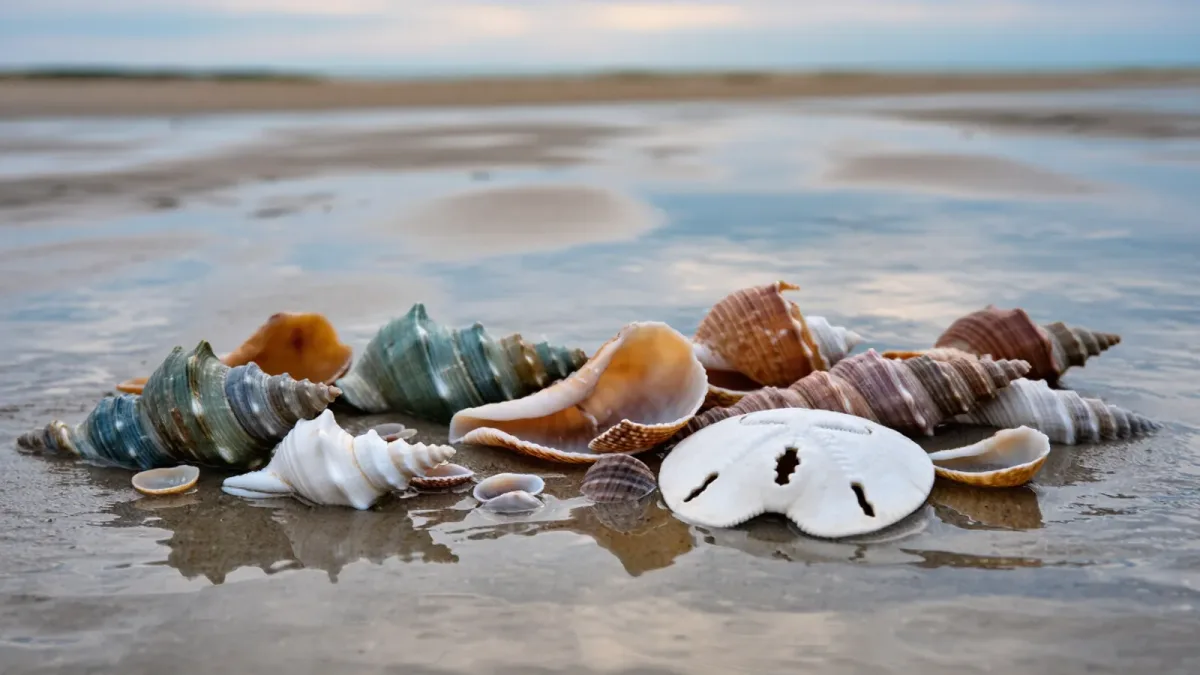
The best shelling beaches in the US are the ones where geography does the work: west- or south-facing shores, shoals offshore, and long undeveloped stretches where shells wash in and stay. On that logic, six standouts are Sanibel Island and Captiva Island in Florida, the Ten Thousand Islands and Tigertail Beach on Marco Island in Florida, Ocracoke Island in North Carolina, and Port Aransas and Mustang Island in Texas. What separates a bucket-list day from a handful of chips is timing — low tide, season, and the rules of the beach you are standing on.
Shell-collecting rules are set by the managing authority of each beach — town, county, state park, or the National Park Service — and they differ more than most visitors expect. This guide covers the logistics; live-shell and wildlife rules described here are summaries, and the authority's posted rules always control.
Why do some beaches collect so many more shells?
Shells concentrate where three things line up. First, a source: productive seagrass beds and shoals offshore feed shell material shoreward. Second, a shelf: a gently sloping bottom lets waves sort light sand from heavy shells instead of scattering both. Third, a trap: barrier islands and curves in the coastline slow the longshore current that would otherwise carry shells past. Florida's barrier islands check every box, which is why the state dominates any honest shelling list; the Texas and Carolina picks earn their places through trap geography and thin crowds.
Sanibel Island, Florida — the benchmark, rebuilt
Sanibel's east-west orientation is the reason its beaches load up with whelks, cockles, tulips, and the island's famous junonia: the island acts as a scoop in the Gulf's current system, per the Sanibel-Captiva Conservation Foundation's long-running shell research. Hurricane damage in the 2022 season closed parts of the island for an extended period, and per the City of Sanibel, recovery of beaches and facilities continued through 2025 — check the city's current status pages before planning. Collecting empty shells is permitted on the public beaches; per the city code, collecting live shells is prohibited.
Practical details: managed by the City of Sanibel · beach parks charge posted parking fees · best hours are the hour around low tide and the first light after a Gulf storm · live-shell collecting prohibited; check city code · winter is peak season for both shells and people — go at dawn · check the city's beach status page before you go.
Captiva Island, Florida — the same currents, fewer people
Captiva sits up-current of Sanibel in the same shell plumbing, with a fraction of the parking pressure. Turn-on and Bowman's Beach-style access points, county-managed, deliver the same mix of lightnings, alphabet cones, and sand dollars after north winds in winter. Per Lee County, beach parks require posted parking fees, and live-shell rules mirror the county ordinance.
Practical details: managed by Lee County Parks & Recreation · paid county beach lots · winter cold fronts are the shelling engine: go the morning after a front's winds clock around to the north · live-shell collecting restricted, check county ordinance · arrive at or before sunrise in season.
Tigertail Beach, Marco Island, Florida — the sandbar lagoon factory
Tigertail's defining feature is a tidal lagoon split from the Gulf by a sandbar: at low tide, wade the lagoon, cross to the Gulf side, and work the shell line where the bar drops steeply. Per Collier County, the park requires a posted parking fee, and the tidal crossing is easiest within a couple hours of low tide — plan the visit around the tide table, not the clock.
Practical details: managed by Collier County Parks & Recreation · paid parking · best on falling and low tide; consult NOAA tide predictions for Marco Island · facilities, rentals, and a playground on the bayside · live-shell rules per county ordinance · check the county park page before you go.
Ten Thousand Islands, Florida — shelling by boat
The shell-rich barrier beaches of the Ten Thousand Islands — Kice Island and Morgan Beach among them — are reachable only by boat, kayak, or permitted tour out of Collier County, and per the National Park Service they lie within or adjacent to Ten Thousand Islands National Wildlife Refuge boundaries. Collecting shells, including live shells, is prohibited within the refuge, per NPS rules — this is beachcombing for observation and photography, and the empty-sand solitude is the compensation. The NPS emphasizes that these are dynamic, uninhabited barrier beaches with no facilities.
Practical details: managed by US Fish & Wildlife Service and NPS units · no facilities; carry water and shade · access by paddling or licensed guide from Goodland and Marco Island · all shell collecting prohibited in refuge waters, per NPS · winter dry season is the comfortable window · check refuge current conditions before you go.
Ocracoke Island, North Carolina — Atlantic shelling with ferry logistics
Ocracoke's sixteen miles of undeveloped Cape Hatteras National Seashore beach harvest the Atlantic's rougher inventory: whelks, angel wings, sea urchins, and after nor'easters, the occasional intact sand dollar. Per the National Park Service, collecting unfertilized sea turtle eggs is protected and shell collecting is limited to reasonable personal-use quantities of uninhabited shells — the beach is wild, and the rules reflect it. The island is reachable only by ferry, per the North Carolina Department of Transportation Ferry Division, which handles the planning math.
Practical details: managed by Cape Hatteras National Seashore (NPS) · ferry required; Hatteras-Ocracoke route runs year-round, reservations for vehicles on peak routes per NCDOT Ferry Division · best shelling after storms and on falling tides at the Point and northern beaches · personal-use quantities only, per NPS rules · check ferry schedules and NPS beach access updates before you go.
Port Aransas and Mustang Island, Texas — Gulf shells without the crowd
Mustang Island's drive-on and walk-on beaches collect a steady Gulf assortment — lightning whelks, shark eyes, angel wings — and winter is the productive season, when cold fronts scour the beach and visitors thin out. Per the City of Port Aransas and Nueces County coastal parks, beach parking is along the sand in designated areas with posted rules, and the Aransas Pass ship channel jetties frame the southern end.
Practical details: managed by the City of Port Aransas and Nueces County; adjacent Mustang Island State Park is Texas Parks & Wildlife · vehicles allowed on designated beach sections per posted rules; check current beach-driving status · winter fronts are the best shelling windows · live-shell collecting restricted per state rules · check the city's beach conditions before you go.
When is the best time to go shelling?
Tide, time of day, and wind matter more than the calendar, but they stack in winter's favor: monthly low tides come in the early morning hours of the new and full moons, winter fronts produce the north and west winds that push shell beds onto the beach, and crowds are thinnest from December through February — which is precisely why these beaches' shelling reputations are built in the off-season. The formula most locals work: one to two hours around a low tide, within a day of a strong blow, as close to sunrise as the gate allows.
What are the rules every sheller should know?
Three patterns cover most of the US coast. First, empty shells are generally collectible in personal-use quantities on public beaches; live shells — animals still inside — are prohibited on many Florida beaches and Texas waters, per local ordinances. Second, parks differ: national seashores allow reasonable personal collecting, while national wildlife refuges prohibit it outright. Third, seasonally protected zones — sea turtle nesting beaches and dredge-spoil bird habitats — post their own closures that override everything else. Photograph the posted rules sign at your access point; it is the current law of that stretch of sand.