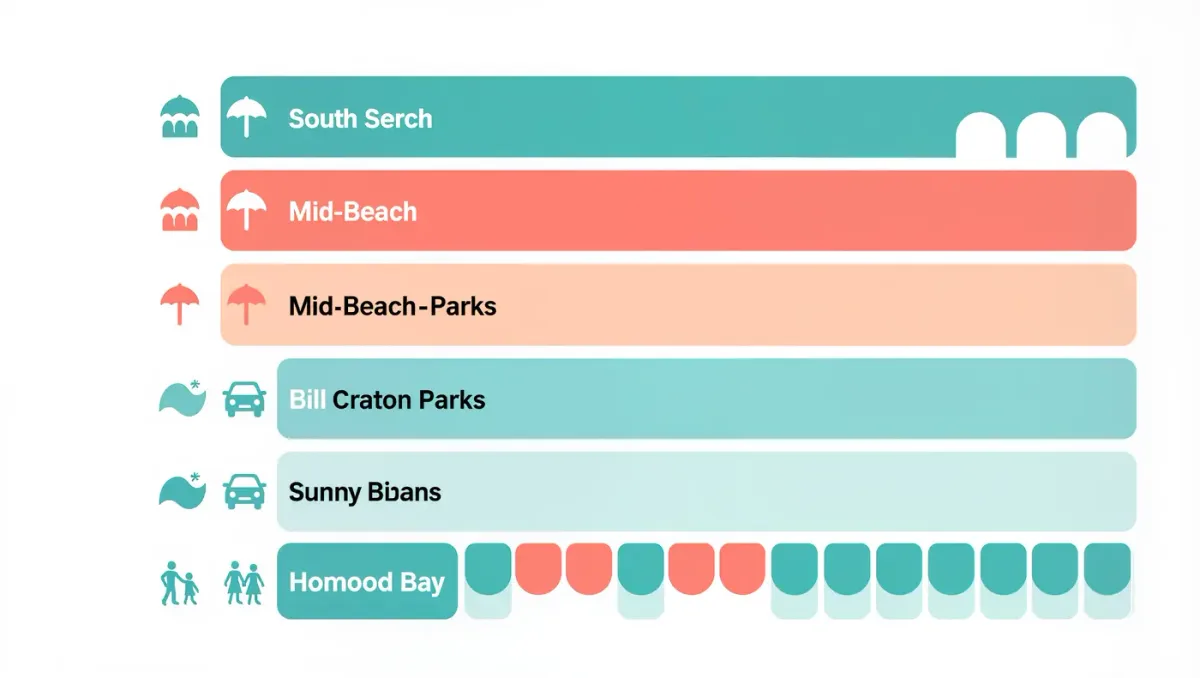
Beach parking is the hidden admission price of every coastal trip, and US beaches run four distinct systems: per-hour meters, daily flat fees, seasonal resident stickers, and — increasingly — paid reservations that sell a specific lot for a specific day. Typical day rates run from free in off-season towns to $25-$40 at the most demanded summer lots, per the managing authorities' posted schedules, and the fill-by time at those lots can be as early as 9:30 a.m. on a July weekend. Knowing which system your beach uses — and what time its lot fills — is the difference between a 10 a.m. arrival and a two-mile walk with the cooler.
Prices and rules here are patterns, not quotes: every beach's parking is set by its managing authority, and the number that counts is the one on that authority's page for your date.
System one: pay-by-plate meters and pay stations
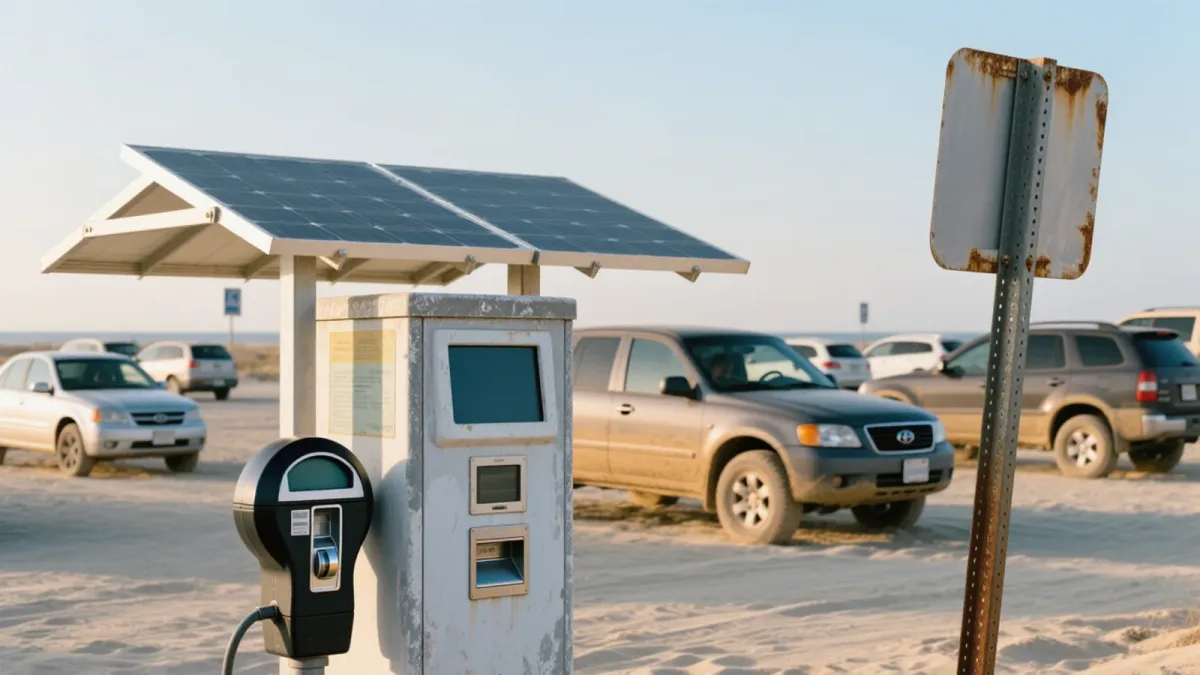
Municipal beaches from Maine to California lean on meters and pay stations, typically $2-$5 per hour in season, per posted municipal rates. The mechanics matter more than the number: most systems are pay-by-plate, meaning the kiosk or app needs your license plate, and enforcement cameras check plates rather than windshields — an expired session is visible in minutes. Two habits save real money: check whether the town's official parking app extends sessions remotely (many do, within posted maximums), and photograph the posted rate sign before paying, because kiosk screens and reality occasionally disagree, and the sign is what hearings honor.
System two: flat daily fees at managed lots
State parks, county beach parks, and national seashores mostly charge a flat per-vehicle day fee — commonly in the $4-$15 range at state-run units and higher at the most visited federal and county lots, per the authorities' published fee schedules. The fee usually covers all occupants for the day, which changes the math for families: one car, one fee. Many parks honor annual passes — a state park pass for residents, or the $80 America the Beautiful pass at federal units — so a week-long trip at a pass-covered beach can drop parking cost to zero. The fill-by dynamic is the catch: flagship lots on summer weekends routinely reach capacity mid-morning, and parks post live capacity on their pages or social accounts where they support it.
System three: resident stickers and the non-resident workaround
New England and Mid-Atlantic beach towns famously reserve their best lots for residents: a seasonal sticker, bought with a tax bill, unlocks parking that non-residents cannot buy at any price on peak days. The workarounds are published, not secret. Non-resident day passes exist at many towns in limited quantities, per posted town rules. Satellite lots with shuttle service sell unlimited non-resident parking and, on the busiest weekends, are faster door-to-beach than circling for street spots. And off-season — typically from the day after Labor Day to mid-June in the Northeast — the same sticker-only lots open to everyone free, per town postings, which reshapes when a frugal traveler visits.
System four: paid reservations and timed entry
The newest system books parking like a flight. Selected high-demand lots — certain national park coastal units, island beaches, and town-managed flagship lots — sell dated reservations through official booking platforms, per the managing authorities' announcements, with a reservation fee on top of the day rate and a posted entry window. The rules that catch travelers: reservations sell out days ahead for summer weekends, no-shows forfeit both fees, and the entry window is enforced rather than advisory. Used correctly, a reservation converts the riskiest variable of a beach day — whether there will be anywhere to park — into a line item. Used carelessly, it is the junk-fee-shaped afterthought that stings at checkout, which is why the booking screen's breakdown deserves an actual read.
What time do beach parking lots fill?
The pattern is consistent enough to plan around. On peak summer weekends at flagship lots, capacity arrives between 9:30 and 11 a.m., per the fill-time postings and live-capacity practices of managing authorities; on weekdays the same lots hold out until early afternoon. Weather modulates demand more than calendar: an overcast 80-degree Saturday fills later than a clear 74-degree one. The practical planning rule for July weekends is arrival by 9 a.m. or after 3 p.m., when turnover begins at hourly lots and day-trippers start leaving flat-fee lots.
How do you park cheaper at the beach?
- Shift the day: a Tuesday replaces the most expensive, scarcest parking of the week with the cheapest, per town rate schedules that discount off-peak.
- Buy the pass: five or more days at a state or federal beach unit usually costs less with the unit's annual pass or the America the Beautiful pass, per published fee math.
- Use the shuttle: satellite lots plus shuttle beat beachfront circling on peak weekends in nearly every town that runs one, per town mobility pages.
- Check the app first: official town or park parking apps sometimes price off-peak sessions lower and extend sessions remotely, per posted terms.
- Park once, stay put: the day rate makes a second car trip pure cost — pack the cooler as if you cannot come back.
What happens if the lot you planned on is full?
Have the fallback ranked before you arrive: the managing authority's alternative lots (state parks and seashores list overflow and satellite options on their pages), the town's paid garages a few blocks inland, and the legal street parking the town's own map shows. The one move that reliably costs money is improvising on residential streets: beach-town enforcement writes the season's budget in expired-meter and no-permit tickets, and posted fines at many beaches run into three figures, per town ordinances. Read the signage all the way to its last line — the restrictions live in the fine print.