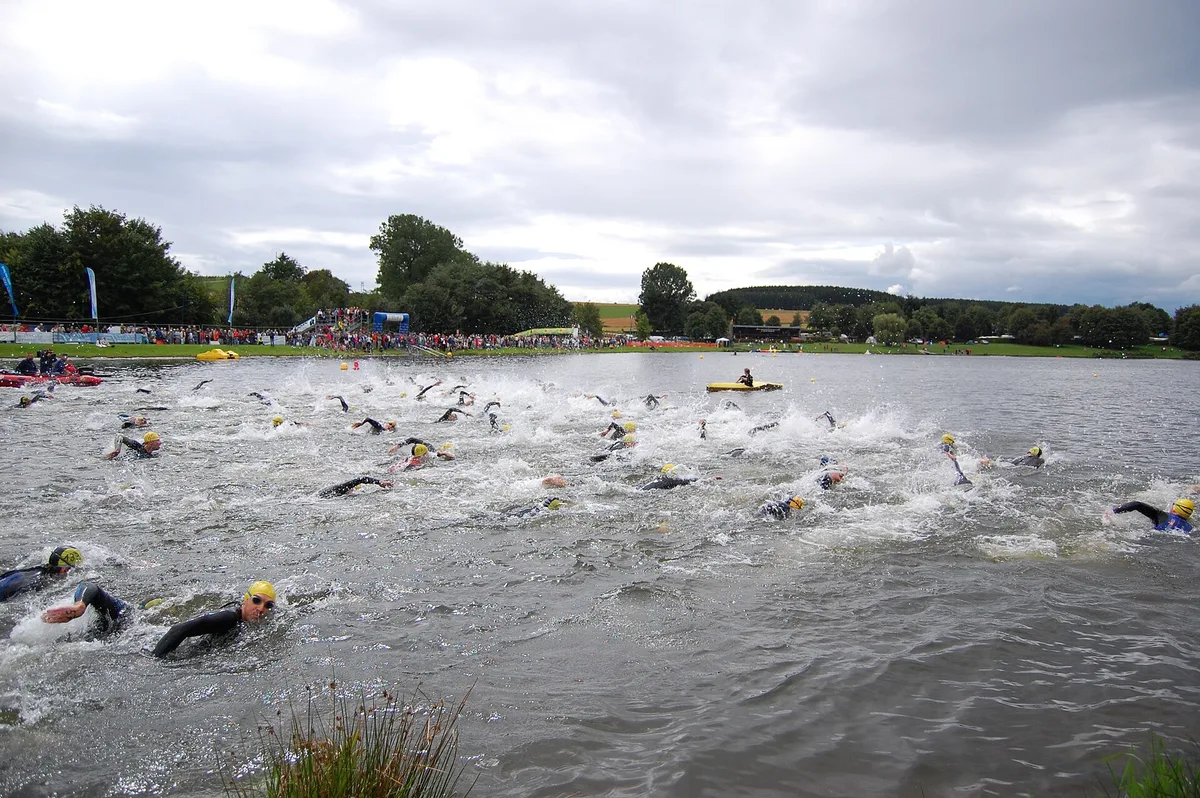
Pool swimming feels safe because everything is controlled: walls, lanes, and a lifeguard on duty. Open water offers none of that. Open water swimming takes place in outdoor bodies of water such as oceans, lakes, and rivers, and conditions there change hour by hour.
That freedom is the draw, and it is also the risk. Without a lifeline behind you, your own judgment is the safety system. The habits below cover sighting, breathing, and the first minutes in the water, which matter most of all.
Sight Your Line Before You Need It
Current, waves, wind, and poor visibility can push you off course without you noticing. Buoys mark many swim routes, but they often vanish behind chop, and goggles limit what you can see even more. For related coverage, see How to Read a Rip Current Before You Swim: NOAA's Risk Levels, the Flags, and the Escape.
The fix is triangulation, per Wikipedia's open water swimming guide: pick two land objects that line up directly behind your destination, such as the end of a pier in line with a hilltop, and check that they stay aligned as you swim. Sight every handful of strokes rather than once a minute. Small corrections early cost far less energy than a long swim back to your exit point.
Breathing: The First Minutes Matter Most
Cold water changes how you breathe fast. According to research summarized on Wikipedia's page on the cold shock response, the ability to hold your breath can fall from a normal 60-90 seconds to just a few seconds in water colder than about 15 °C (59 °F). The first moments can bring gasping and fast, shallow breaths.
Per the same source, that initial cold shock response typically lasts less than 5 minutes, so the danger window is short but sharp. Walk in slowly instead of diving. Let your breathing settle before you start swimming hard, and if your breath stays ragged, get out and try another day. We covered a connected angle in Beginner's Guide to Kayaking the Coast: Boats, Strokes, and Reading the Tide Before You Launch.
Read the Water on Entry and Exit
Shallow water deserves its own technique. Walking along the bottom works until it gets deep. From there, swimmers often use dolphining, diving down and launching up and forward, which also helps you get past incoming waves. On the way out, body surfing lets the waves do the work.
Front crawl, also known as freestyle, is the stroke most open water swimmers use because it is efficient over distance. That efficiency has history: Gertrude Ederle, the first woman to swim the English Channel, used it to beat the existing world record by more than 2 hours, according to Wikipedia's open water swimming page. A smooth stroke keeps you from exhausting yourself when conditions shift.
Gear That Adds a Lifeline
You cannot hire calm water, but you can add visibility and flotation. A bright swim buoy raises your profile to boats and to anyone watching from shore, and it tows behind you without slowing you down. Wetsuits come in many thicknesses and designs, and some leave the arms and shoulders free for a natural stroke.
The strongest gear is still a plan. Swim with a partner, tell someone on shore where you are going and when you will be back, and pick a spot with an easy exit. If the surf, current, or cold looks wrong from the beach, skip the swim. The ocean will be there tomorrow.
Conclusion: Judgment Is the Real Lifeline
Open water rewards preparation. Sight your line with two aligned landmarks, ease into cold water and give your breathing time to settle, and use simple techniques for waves on entry and exit. Add a bright buoy and a shore plan, and every swim starts with margin instead of luck. That margin, not bravado, is what lets you swim another day.