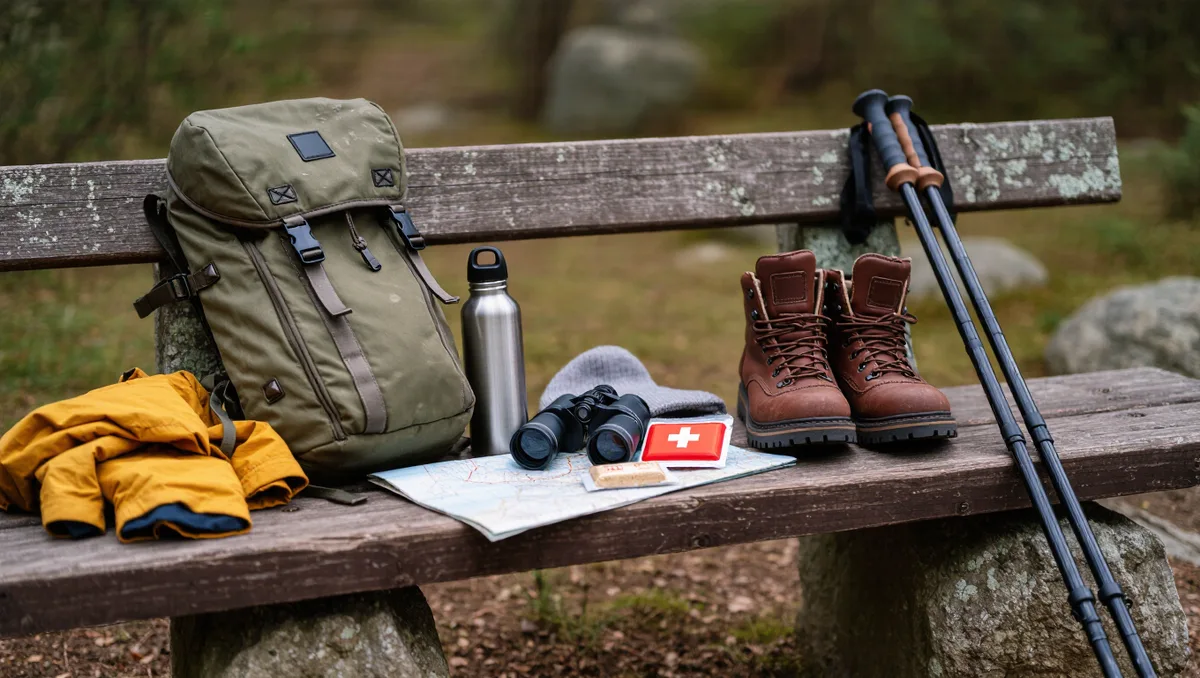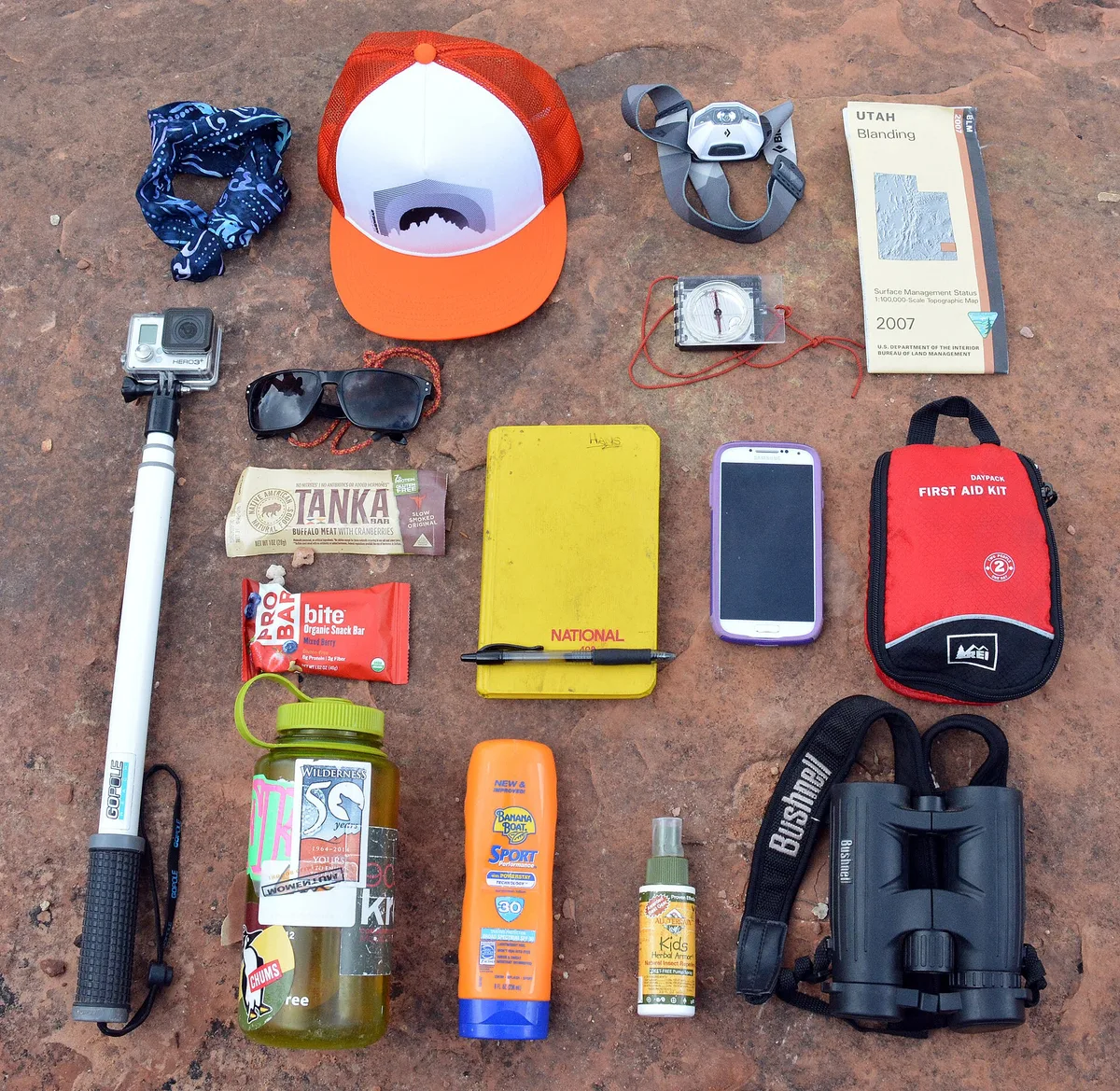
The salt-stained sign at the trailhead kiosk lists the rules. The one thing it never lists is what to bring, and that is where most day hikers get caught out. A solid day hike packing list is short: ten categories of gear, refined over decades by mountaineering organizations, that cover navigation, sun, insulation, light, first aid, fire, repair, food, water, and shelter.
The point of the list is not comfort. It is the assumption that a half-day walk can become an overnight problem — a turned ankle, a fog bank, a missed turn at an unmarked junction — and that you should be able to sit out the surprise without drama. On coastal trails, where fog rolls in fast and cell coverage drops behind every headland, the list earns its keep more often than hikers expect. For related coverage, see Beach Yoga and Fitness: How to Work Out on the Sand Without Wrecking the Vacation.
Below is each of the ten essentials explained, with what it is for and how coastal day hikers use it slightly differently than mountain hikers. If you are building out a wider trip around your walks, our planning guides cover the booking and timing side; this piece stays in the pack.
1. Navigation: map, compass, and a phone that can fail
A paper map of your specific trail and a baseplate compass are the core. A phone with a downloaded offline map is a fine supplement, but phones run out of battery, screens become unreadable in bright sun, and cold weather drains them faster. The navigation essential is really a system: know your route before you leave, carry a backup that needs no power, and know roughly how long each leg should take so you notice early when you are off pace.
On the coast, navigation has an extra wrinkle. Trails that hug the shoreline can be cut off at high tide, so your map check should include a tide check. Our guide to timing the low tide walks through reading tide tables, and the same tables apply to beach-section hikes.
2. Sun protection: the item most day hikers skip
Sunscreen, a brimmed hat, sunglasses, and light long sleeves. Coastal trails often have less shade than inland forest, and reflected glare off water makes exposure worse than the air temperature suggests. Sunburn is the most common injury on fair-weather day hikes, and it is the most preventable one on this list. Reapply sunscreen through the day rather than relying on one morning application.
3. Insulation: one layer more than you think you need
Weather at the shore changes faster than inland, and afternoon fog can drop the temperature quickly. Pack a warm layer — fleece or a light puffy — plus a rain shell, even under a clear forecast. The rule of thumb is simple: dress for the conditions at the coldest point of your route, not the trailhead parking lot. A windproof shell doubles as both rain protection and warmth on exposed bluffs.
4. A headlamp, because hikes run long
Carry a headlamp with fresh batteries on every hike, not just ones you expect to finish late. A delayed start, a longer-than-planned loop, or a slow descent with a tired companion can push you past sunset. Note that daylight length changes with the season and your latitude, and even the solar day itself varies slightly from the clock — Wikipedia's entry on the day notes a solar day can run up to about 7.9 seconds more or less than 24 hours — so "we'll be back by five" is a plan, not a guarantee.
5. First aid: built for blisters and sprains
A small kit is enough for a day hike: adhesive bandages, blister dressings, gauze, adhesive tape, tweezers, pain relievers, and any personal medications. The two injuries you should be equipped to treat are blisters (stop and dress them early) and ankle sprains (tape and a walking partner). If your route includes swimming or shoreline scrambling, add saline for rinsing sand and small cuts.
6. Fire: a lighter and something to light
A lighter or waterproof matches, plus a small fire starter, live in the bottom of most packs and almost never come out. That is fine — it is emergency gear. On many coastal parks and preserves, open fires are prohibited anyway, so this item is strictly for a genuine emergency situation where regulations and conditions allow it. Check the managing authority's rules before you ever plan to use it.
7. Repair kit: tape solves most problems
A few feet of strong tape wrapped around a pencil or water bottle, a zip tie, a spare strap, and a small multi-tool. A torn pack strap, a loose sandal sole, or a broken trekking pole will not end your hike if you can improvise a fix. The multi-tool also earns its weight for the salted-up zippers and stubborn buckles that coastal gear collects.
8. Food: more than the plan requires
Pack lunch and snacks, then add roughly a third again — food you would not normally eat, held back for a delay. Salty snacks and items that survive heat and crushing (nuts, bars, dried fruit) work best. The purpose is energy for an unplanned extra hour or two, not a picnic upgrade. This connects to our earlier piece, Wind Work: Five US Coastal Spots Where Kiteboarding and Windsurfing Run Best.
9. Water and a way to treat more
Carry enough water for the whole hike plus a reserve, since dehydration compounds every other problem on this list. For a day hike, a bottle or reservoir plus a compact filter or purification tablets covers the "way to treat more" part of the category. Coastal streams and puddles are not drinking water without treatment, no matter how clean they look.
10. Emergency shelter: the lightest item on the list
A space blanket, a bivy sack, or a large trash bag weighing a few ounces. It is for the scenario where you or someone in your group is stopped by injury or weather and needs to stay warm and dry until help arrives. This is the item that turns an uncomfortable wait into a survivable one, and it costs less than a trailhead parking fee.
What this means for a coastal day hike
Our analysis of how the classic list maps onto shoreline trails comes down to three adjustments. First, tides act as a second trail closure system, so tide awareness belongs next to map reading. Second, wind and fog make the insulation and shell layers work harder here than on calm inland paths. Third, if your route touches the water itself, the safety picture changes entirely — our guide to what NOAA's rip current guidance says to do covers the water-specific risks that no pack item fully solves.
Practical steps for your next walk: lay the ten items out the night before, weigh nothing, and note that the whole kit fits in a daypack small enough to forget you are wearing. Adjust for season — more water in summer, warmer insulation in winter — and for the specific rules of the park or preserve you are entering, since fire, dogs, and even access hours vary by managing authority.
The list has survived because it is not a gear recommendation; it is a checklist of failure modes. Navigation fails, weather fails, bodies fail, plans fail. Ten categories, each small on its own, cover the gap between a story you tell at dinner and a night on a cold bluff. Check conditions and closures with the trail's managing authority before you go — conditions change.