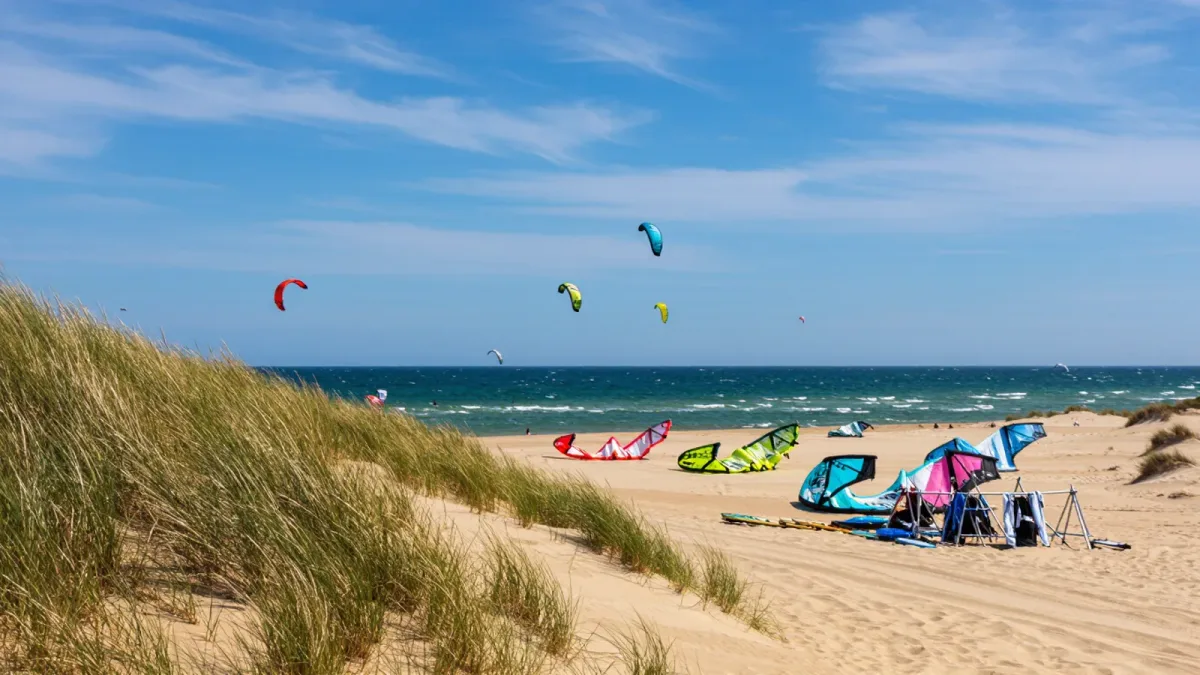
Five coastal venues reliably deliver the wind that kiteboarding and windsurfing need: Cape Hatteras, North Carolina, where summer southwest thermals and shifting Atlantic swells made the Outer Banks an East Coast sailing capital; Crissy Field in San Francisco, where the daily summer sea breeze funnels through the Golden Gate; South Padre Island, Texas, where the shallow Laguna Madre serves flat-water lessons; the Florida Keys around Islamorada, where trade-wind-style easters blow over warm water most of the year; and the Columbia River mouth country of the Pacific Northwest, where summer westerlies meet open Pacific sand. Wind, not waves, chooses the calendar at every one of them — which is why the sport's first essential check is the marine forecast from the National Weather Service, and the second is the local launch's own rules, many of which sit inside national seashores, parks, or refuges with posted requirements. This guide covers each spot and the practicalities of showing up with gear or renting it.
The honest framing for travelers: these are advanced, weather-dependent sports, and the injury statistics concentrate in riders who skipped instruction. Lessons at an established school are not a formality here — they are the difference between the sport's reputation and its reality. Every venue below has schools; book them first, gear later.
Why does Cape Hatteras dominate the East Coast scene?
The Outer Banks work because of geography: a thin barrier island chain that lets summer southwest winds blow sideshore across warm, shallow Pamlico Sound on one side of the road and open Atlantic swell on the other. The sound's flat water and waist-deep flats make it one of the country's great places to learn kiteboarding, and the ocean side serves experienced riders and windsurfers when the swell is right — the same beach that hosts beginner surf lessons in the morning can hold kite sessions by afternoon. Cape Hatteras National Seashore manages the oceanfront access, and the National Park Service's off-road vehicle and commercial-use rules apply on the ramps; schools operate under authorization, and the villages of Avon, Waves, and Rodanthe hold the highest concentration of outfitters. Wind season runs strongest April through September, with the caveat that a front or offshore system rearranges everything for days — the seashore's alerts and the marine forecast decide more than the calendar does.
What makes San Francisco's Crissy Field a destination?
Crissy Field, part of Golden Gate National Recreation Area, sits in the bullseye of Northern California's defining wind machine: summer high pressure over the inland valley pulls cold Pacific air through the Golden Gate, and the afternoon breeze at Crissy regularly blows a steady 20-plus knots while the beach towns north and south sit calm. The result is a dense scene of windsurfers and kiteboarders on a beach within sight of the Golden Gate Bridge, managed by the National Park Service with a published set of launch rules and current-only caution — the ebb tide runs hard out the Gate, and the water is cold enough that most sailors wear full wetsuits year-round. The season is the classic California one, June through August, with fog as the regular co-star; the wind usually peaks mid-to-late afternoon, and the beach's grass lawns make it one of the few sailing venues where non-sailing travel companions have a genuinely pleasant afternoon.
Where do beginners get the easiest start?
South Padre Island, Texas, offers the gentlest classroom on the Gulf: the Laguna Madre behind the island is a shallow, mean-tide lagoon of glassy flat water and steady thermal wind, and the island's schools have built a national reputation teaching kiteboarding in waist-deep water. The wind season runs long — March through November with spring the steadiest — and the Padre Island National Seashore side and county parks handle launches with posted rules. The Florida Keys run second: around Islamorada and the sandbars of Florida Bay, steady east winds and warm water make winter the high season, which suits snowbird travelers exactly; the Florida Keys National Marine Sanctuary's rules apply where the bay's shallows are concerned, and launch spots are owned and managed piecemeal, so a local school's briefing is the efficient way in.
What about the Pacific Northwest and gear logistics?
The Oregon and Washington coast sailing scene concentrates where summer westerlies meet sandy stretches near the Columbia River mouth — the Long Beach Peninsula and adjacent communities — with cold water, steady summer wind, and a strong windsurfing heritage; state parks manage most launches and publish wind and condition guidance seasonally. On gear: nearly every venue named here rents both kite and windsurf equipment through its schools, and the rental-first approach is the right one for a first visit — board and kite sizes that work at home often misread a new venue's wind range. Airlines charge for kite bags but many schools will rent you everything except a wetsuit and harness. Whatever you carry, pack the same three checks every session: the NWS marine forecast, the venue's launch rules, and a look at what the local riders are riding before you inflate anything. Conditions change — check the official advisory before you go.
| Venue | Coast | Wind season | Water | Managing authority |
|---|---|---|---|---|
| Cape Hatteras / Pamlico Sound | North Carolina | April–September | Flat sound; open ocean option | National Park Service (seashore) |
| Crissy Field | San Francisco | June–August | Cold, strong current, bay chop | National Park Service (GGNRA) |
| South Padre Island | Texas Gulf | March–November | Shallow flat-water lagoon | County parks / NPS nearby |
| Islamorada | Florida Keys | Winter easter steadiest | Warm shallows, sandbars | State/local; NOAA sanctuary nearby |
| Long Beach Peninsula | Washington | Summer westerlies | Cold ocean, bay options | Washington State Parks |