The best place to learn to surf on the East Coast is a beach with three things at once: a sand bottom, a slow-breaking wave, and a school that has taught there for years — and the towns that tick all three cluster around five names: Narragansett, Rhode Island; Montauk, New York; Cape Hatteras, North Carolina; Folly Beach, South Carolina; and Cocoa Beach, Florida. What they share is beach-break geography that softens the wave before it reaches a learner and an established school scene, from permitted operators on Cape Hatteras National Seashore to the decades-old surf shops of Cocoa Beach. Water temperature sets the calendar — NOAA buoy records show Northeast water reaching only the 60s Fahrenheit at its summer peak while Florida stays swimmable most of the year — so the right month matters as much as the right beach. This guide covers all five, section by section, with the practical details at the end.
This is travel guidance, not instruction: a qualified instructor makes the safety calls in the water, and ocean conditions — surf, wind, and tide — change daily. Check the local marine forecast from the National Weather Service and the beach manager's posted conditions before any session, lesson or not.
Why does Narragansett work for first lessons?
Narragansett Town Beach and the adjacent stretches of Rhode Island's south shore offer the Northeast's most forgiving learning setup: a wide sand beach, waves that reform gently over the bar, and a summer school scene that turns the town into New England's default learn-to-surf destination. The season runs June through early September, when water temperatures climb into the low 60s — cold by Southern standards, manageable with the 3/2 wetsuit every local school rents. Summer morning sessions beat the onshore sea breeze that roughs up the swell after noon, and the town beach's lifeguarded hours make it a straightforward family choice. Book lessons several days ahead in July and August; the schools run small groups and sell out around holiday weekends.
What makes Montauk a learn-to-surf town?
Montauk, at the eastern tip of Long Island, pairs a genuine surf town atmosphere with beginner-friendly coves on its south side, where summer swells arrive softened and the sandbars shift slowly. Several long-running schools operate out of the hamlet, and the town's own beaches — with seasonal lifeguard coverage — host most first lessons. The window is late June through Labor Day: water in the upper 60s by August, air temperatures that make dawn patrols painless, and the summer south swell producing the gentle, consistent waves a learner wants. The trade-offs are the classic Hamptons ones — July and August crowds, and lesson prices that reflect the ZIP code — which is why locals book the shoulder weeks of June and September, when the water is nearly as warm and the lineups thin out.
Is Cape Hatteras the best all-around learning beach?
For range of conditions, yes: Cape Hatteras National Seashore — the first national seashore in the National Park System, established in 1953 — offers dozens of beach-access ramps along Hatteras Island, and its geography routinely turns one swell into a hard-breaking outer bar and a soft inside wave twenty yards apart. Learning happens on the inside. Commercial operators teach on the seashore under National Park Service authorization, which means vetted operators with permits rather than informal instructors; the seashore's site lists current authorized businesses. The season is long — May through October with a wetsuit, warmest water in August and September — and the ferry-linked villages make multi-day trips easy. Two practical notes: summer afternoons bring the southwest wind that flattens or chops the surf depending on swell angle, and the Outer Banks are exposed to Atlantic weather, so a tropical system anywhere offshore changes conditions for days — check the seashore's alerts and the marine forecast.
What about Folly Beach and Cocoa Beach?
Folly Beach, the barrier-island town outside Charleston, is the Southeast's friendliest first wave: a pier-anchored beach break, mellow summer water in the 80s, and a walkable surf-shop scene that has run lessons for decades. The caveat is swell exposure — Folly needs a south swell or an offshore system to produce real waves, so some weeks are best spent on a paddleboard instead. Cocoa Beach, on Florida's Space Coast, is the opposite problem: almost always rideable, thanks to consistent Atlantic swells wrapping onto its sandbars, and home to one of the country's most famous surf retail operations, whose school has taught first lessons for over a quarter century. Water is warm enough for a swimsuit most of the year. Both towns suit travelers who want a beach vacation with surfing in it rather than a surf camp; both also show the South's seasonal rhythm — hurricane-season swells in late summer mean bigger days and better lessons in the morning.
How do you pick a school and a first lesson?
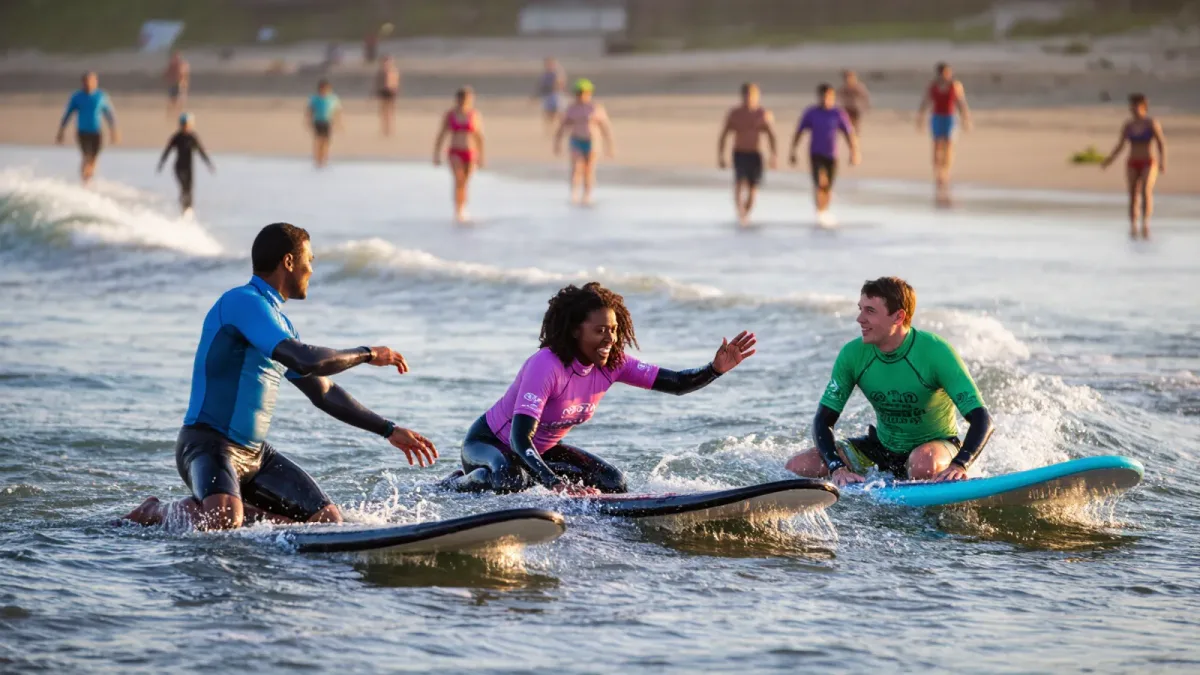
Three questions sort the field quickly. Are you permitted and insured where you teach — on public beaches this is the difference between an operator and an outlaw, and on national seashores the permit list is public. What is the ratio — one instructor to four or fewer students is the standard a good school holds for adult groups, lower for kids. And what is included — soft-top longboard, wetsuit or rash guard, and the land lesson on popping up before anyone paddles out. A first lesson is ninety minutes to two hours, most of it spent in knee-to-waist water, and a realistic goal is standing and riding to the beach several times. Book mornings, give yourself a second day in case the surf is wrong, and check the marine forecast and posted beach conditions before you go — conditions change, and the good schools reschedule on them.
| Town | Best learning months | Typical water (NOAA records) | Signature setup |
|---|---|---|---|
| Narragansett, RI | June–early September | Low 60s °F summer peak | Wide town beach, gentle bars |
| Montauk, NY | Late June–Labor Day | Upper 60s °F August | Soft south-side coves |
| Cape Hatteras, NC | May–October | 70s °F late summer | NPS-permitted schools, inner-bar waves |
| Folly Beach, SC | May–September | 80s °F summer | Pier beach break, warm water |
| Cocoa Beach, FL | Year-round | 70s–80s °F most of the year | Consistent wrapping swells |