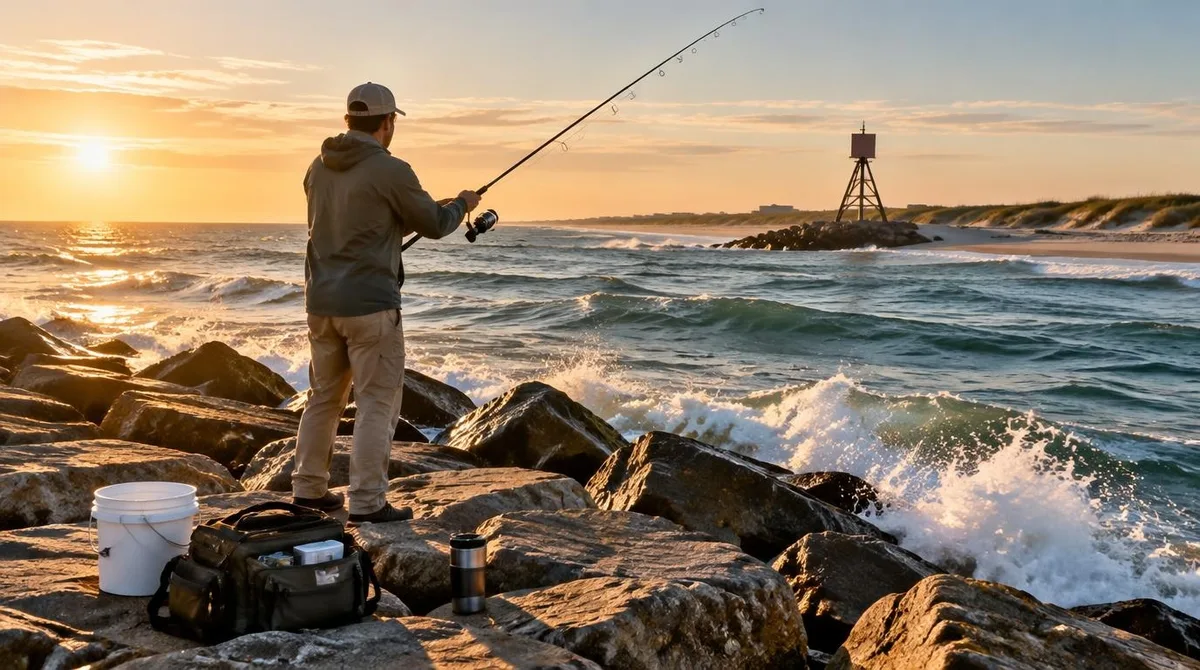
On a September morning at a New Jersey jetty, the regulars arrive before the sun does. They carry two rods, a bucket, and a coffee cup balanced on the rocks. None of it looks expensive. That is the first thing worth knowing about saltwater fishing for beginners: the entry point is modest, and the hardest part is not the gear. It is learning where the fish move and when.
You need four things to start: a rod and reel suited to salt water, a small kit of terminal tackle, a license or registration where your state requires one, and a basic sense of the tide. Everything else can wait until you know you like it. This guide walks through each of those, then covers where beginners actually catch fish from the shore — and what to check before you go.
What makes saltwater fishing different from fishing a lake?
The water itself is the difference. Ocean water carries roughly 35 parts per thousand of dissolved salts, mostly sodium and chloride, according to American Oceans — far saltier than any freshwater lake, where salinity sits below half a part per thousand. That salt changes how you care for your equipment, not how you cast.
Salt corrodes. A freshwater reel that survives years of pond duty can rust out in a single sloppy season on the coast. The fix is not fancy: rinse your rod, reel, and lures in fresh water after every trip, and dry them before storing. Waterproofing matters for your line too, since braided lines handle the abrasion of sand, rocks, and shells better than most light monofilament. We covered a connected angle in Where to Learn to Surf on the East Coast: Five Beginner Beaches With Real Schools.
The fish are different as well. Saltwater species tend to run in schools that move with the tide and the bait, rather than holding to a fixed spot the way a bass might hold to a fallen tree. That is why shore anglers talk about reading water — looking for current seams, sandbars, and birds diving on bait — instead of memorizing one productive hole.
What gear does a beginner actually need?
Start with one versatile outfit rather than a garage of specialized rods. A medium-heavy spinning rod in the nine-to-ten-foot range, paired with a saltwater-rated spinning reel, covers most shore fishing from beaches, jetties, and piers. Staff at a coastal tackle shop can match the exact weight of lure your local fish chase; that advice is free and better than any online chart, because the shop fishes the water you will fish.
Beyond the rod, a small tackle bag covers the basics:
- Terminal tackle. An assortment of hooks in a few sizes, split-shot and egg sinkers, swivels, and spare leader material. Fluorocarbon leader resists the toothy mouths of bluefish better than plain line.
- Lures and bait. A few metal lures, soft plastics, and topwater plugs will cover most situations. Where bait is allowed, a dozen bloodworms or a pack of frozen bait from the shop outfishes any lure on a slow day.
- Pliers and a landing tool. Long-nose pliers unhook fish and cut line. A rubberized landing net or a gripper saves your fingers from gill rakers and spines.
- The unglamorous items. A five-gallon bucket doubles as a seat and a bait tote. Polarized sunglasses cut glare so you can see into the water. Sun protection, water, and a trash bag round it out — the beach is a shared space, and hook litter is the fastest way to lose access.
Budget roughly the cost of a nice dinner for two for the rod-and-reel combo, and less than that again for everything else. Upgrade later, once you know which water you actually fish.
Do you need a license to fish in the ocean?
Often, yes — but the rules depend entirely on where you stand. Some states require a saltwater fishing license or a free registry for shore anglers; others exempt certain piers or charge a pier admission that covers licensing for everyone on it. Because the details change state by state and even town by town, check your state's fish and wildlife agency before the first cast, and read our breakdown of pier fishing license rules, state by state for the specifics on fishing from public piers.
One more rule worth learning early: size limits, bag limits, and closed seasons exist for nearly every popular species, and they are enforced. A printed or app-based regulation sheet from the state agency belongs in your tackle bag. If you are unsure whether a fish is legal, the safe move is to release it.
Where do stripers and bluefish run along the shore?
Along the Atlantic coast, two species dominate the shore-angler's conversation: striped bass and bluefish. Both are migratory, moving up and down the coast with the seasons and following schools of baitfish — menhaden, sand eels, and silversides — into the same places year after year. The most reliable spots share a pattern: moving water and an edge where fish can ambush bait. For related coverage, see Where to Learn to Surf on the West Coast: Five Beginner Beaches With Real Schools.
- Inlets and jetties. Current concentrates bait at an inlet's mouth on a moving tide, and both stripers and blues patrol the edges. Fish the seam where calm water meets current, not the middle of the flow.
- Beach sloughs and sandbars. On an open beach, look for the darker channel of deeper water between the shore and the first sandbar. Fish stage there, especially at dawn and dusk.
- Estuaries and river mouths. Brackish water draws bait in from the ocean, and predators follow. Estuaries are also gentler places to learn than open surf — less wave action, easier casting, easier footing.
- Piers and bridges. Structure holds fish, and a pier puts a beginner over water they could not reach from the sand. Our guide to kayak fishing from the beach covers the next step for anglers who want to reach those spots under their own power.
Timing matters more than location on many days. The hours around dawn and dusk, and the stronger parts of the moving tide, consistently produce more shore-caught fish than midday slack water. Local tackle shops post current reports; read a week of them and the pattern for your stretch of coast becomes clear.
What should you check before you go?
The shore is a working environment, and conditions change faster than the forecast on your phone. Before any trip:
- Check the tide chart. Plan to arrive and fish the moving tide, and know when the water will cut off access to a sandbar or the end of a jetty.
- Check the surf and wind. Big surf makes jetty footing dangerous and bait presentation impossible. When in doubt, fish a calmer back-bay spot instead.
- Know the water safety basics. Waders and surf fishing put you in moving water, so it is worth reading our guide to rip current safety and what NOAA's guidance says to do before you wade anywhere with swell.
- Confirm the rules. Licenses, access, and limits are set by state agencies and local authorities, and they change. Verify them the week you fish, not the week you read about them.
Our broader Outdoors coverage follows the same principle: conditions, entry points, and rules first, fish stories second.
Our analysis: start small, fish often
The evidence from decades of shore-fishing tradition points one way: the beginners who succeed are not the ones with the most gear, but the ones who show up on a moving tide with one rod and a plan. Salt water rewards repetition. Learn one jetty, one beach, or one pier through a full season, and you will outfish a well-equipped newcomer on their third spot of the morning.
What remains unknown for any first trip is the fishing itself — the run timing, the bait, the bite — and the honest answer is that no article can supply it. A local shop report, a tide chart, and a morning on the water will tell you more than any list of gear. Conditions change, so check the official state advisory and the current regulations before you go.