A beach workout is harder than the same workout anywhere else, and that is the entire point: sand shifts under every step, engages the small stabilizing muscles a floor never asks about, and adds real resistance to a simple walk. The practical question for travelers is timing — the US Environmental Protection Agency's UV Index scale puts midday summer sun in the range where experts recommend limiting exertion outdoors, which pushes the sensible beach fitness window to before 10 a.m. or after 4 p.m. — and place, because wet packed sand near the tide line is the only surface worth doing jumping or balancing work on.
Why sand works as a training surface is straightforward biomechanics: it deforms, so each stride or jump absorbs energy that a hard surface returns, and the body compensates with more muscle work at a lower impact cost. Walk a mile on dry sand and a mile on pavement and the difference is immediately measurable in effort, if not enjoyment.
When should you work out at the beach?
Two windows, and the morning one is better. Sunrise to mid-morning offers the day's lowest UV, the calmest wind for mat-based work, and — on most coasts — the lowest tide, which leaves the widest band of firm wet sand for walking and running. The late-afternoon window, roughly after 4 p.m. in summer, trades some UV relief for warmer water if your routine ends with a swim. The EPA's UV Index forecast, published daily for ZIP codes on its SunWise tools, is the objective check: values of 8 and above argue for the early window or an indoor backup, and values of 3 to 7 make the shoulder hours comfortable with sunscreen and a hat. Reapplying sunscreen with sandy hands is the classic failure point — the fix is a stick or spray format packed specifically for the beach bag.
What actually works on sand?
A short list, and it is better than it sounds. Walking and running on firm wet sand — the zone at the water's edge — gives resistance running with less joint impact, though the unevenness loads calves and ankles differently, so the standard advice is to halve your usual distance on a first sand run. Bodyweight circuits on packed sand — squats, lunges, push-ups on a towel, bear crawls — gain instability benefits without equipment. Yoga on the sand works best slightly above the wet line: too dry and the mat slides, too wet and it soaks. Swimming and bodysurfing count as the workout's best second act, and boardsports — paddleboarding especially, as covered in flatwater venues elsewhere on this site — round out a full-body day. What does not work well: heavy plyometrics on dry soft sand, where the ankle-rolling risk rises faster than the benefit, and anything requiring a hard, level floor.
Where are the public beach fitness scenes?
A few towns have turned beach exercise into public infrastructure. Santa Monica's Muscle Beach, the original, still operates its outdoor weight pen and rings area steps from the sand, with day passes managed by the city, and the boardwalk yoga class scene runs daily on good-weather mornings. Miami Beach's parks department has long programmed fitness classes in the beachfront parks and along the sand, and the morning class rows in Lummus Park are a fixture visible from Ocean Drive. Waikiki's beachfront parks host early-morning yoga with Diamond Head as the backdrop, and the resort strips from Myrtle Beach to San Diego run their own hotel and studio classes — typically sunrise sessions on the sand, priced either per class or bundled with lodging. The general pattern: municipal programs publish schedules on the city's parks site, resort classes on the hotel's activities calendar, and both thin out in the off-season.
What does a sensible beach fitness week look like?
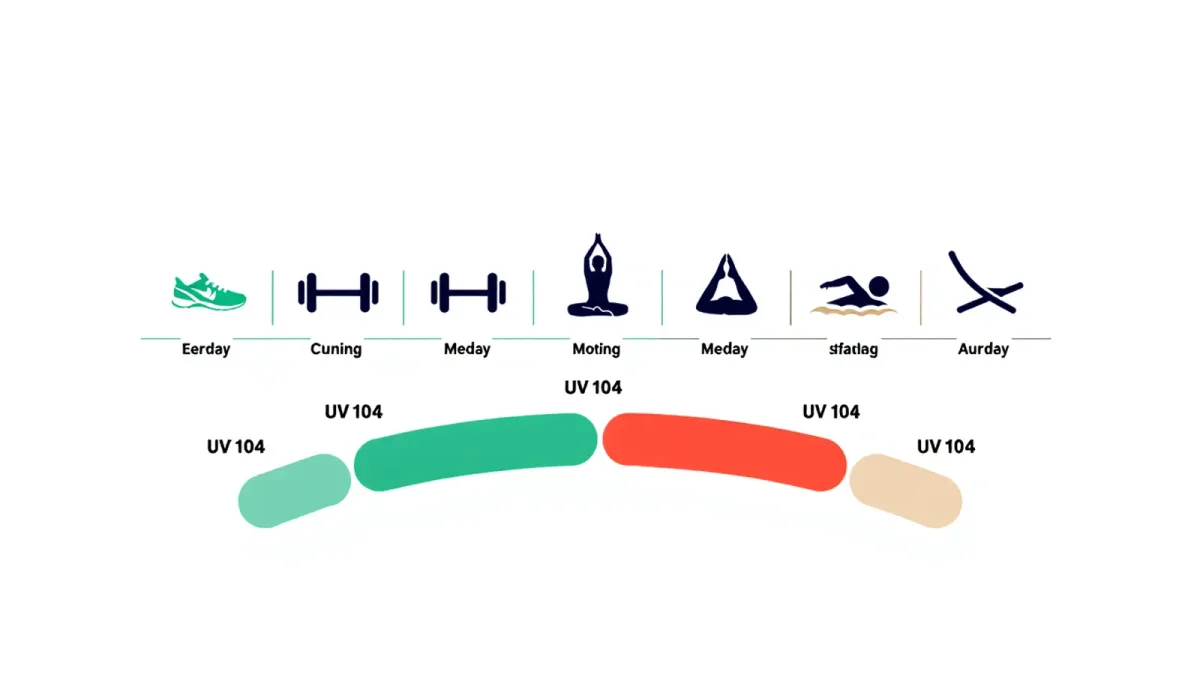
Three sessions plus incidental movement is the realistic vacation structure: an early morning walk or run on wet sand three days, a yoga session two days — a class if the town has one, a self-practice if not — and one swim or paddle day that does not feel like exercise at all. Leave rest days for the beach's actual purpose. Hydration needs run higher than a normal week — sun, wind, and salt all pull water — and the salt-air sleep bonus is real enough that many travelers find the whole week easier than home training. The two checks before each session are the same ones every beach day needs: the UV Index forecast for timing, and the tide table for the firm-sand window. Conditions change — check the official forecast before you go.
| Day type | Timing | Surface | Session |
|---|---|---|---|
| Cardio day | Sunrise–9 a.m. | Firm wet sand at tide line | 30–45 min walk/run, half your usual distance first time |
| Strength day | Before 10 a.m. | Packed sand, towel for hands | 20-min bodyweight circuit |
| Yoga day | Sunrise or after 4 p.m. | Slightly above wet line | Class or 30-min self-practice |
| Water day | Per tide and wind | Open water | Swim, bodysurf, or paddleboard |
| Rest day | Whenever | Beach chair | Reading, sunscreen, second nap |