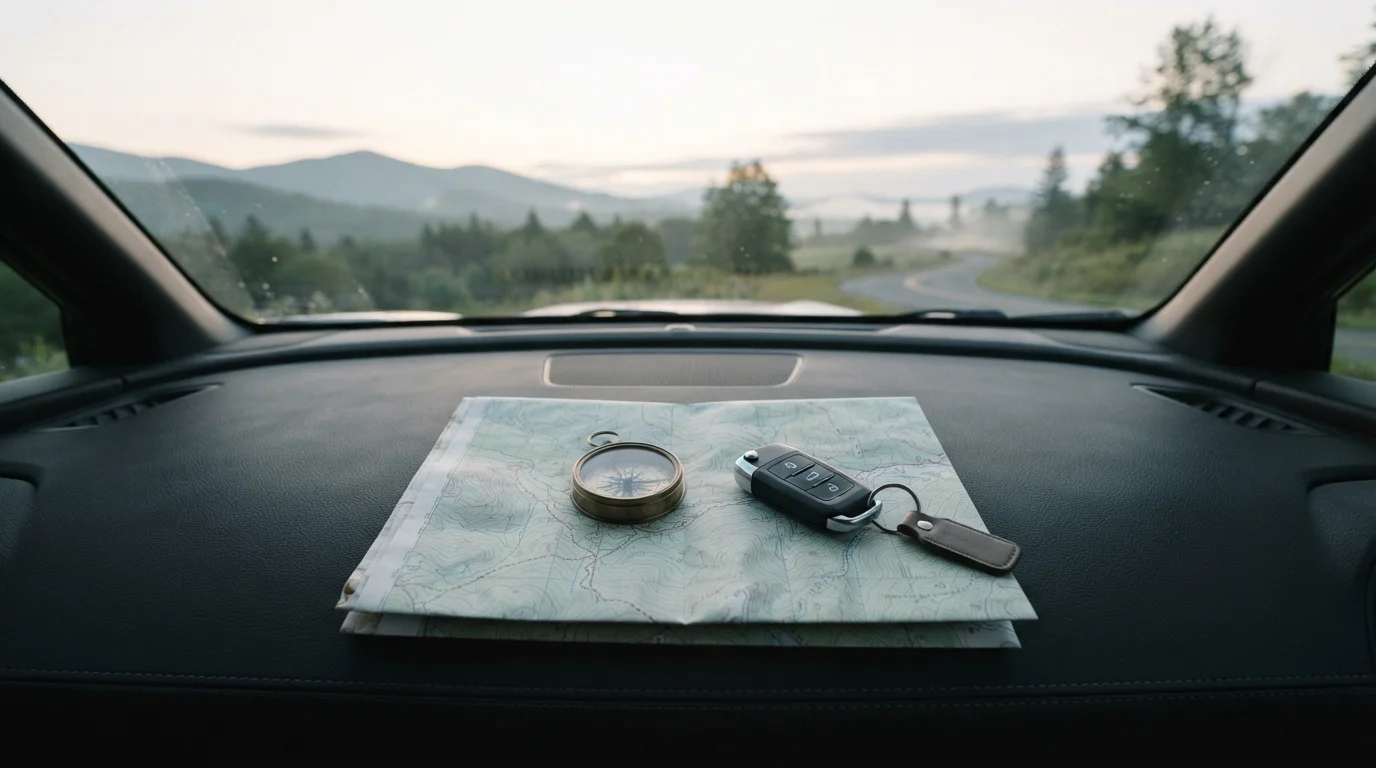
Plan your first tide pooling trip around one number: the predicted low tide, printed in feet against mean lower low water on NOAA's tide tables. On the West Coast, the richest windows of the year are the winter and spring "minus tides" — lows that drop below the zero line, often between minus one and minus two feet — because they expose the lowest, most crowded zones of the reef where anemones, sea stars, and nudibranchs concentrate. NOAA's tides and currents program publishes daily predictions for every coastal station, which means a good trip is chosen weeks in advance: find a morning low tide near or below zero, pair it with a protected rocky shore, and arrive forty-five minutes before the bottom. This guide covers the timing, the sites, and the etiquette; conditions on any given day still rule, so check the official tide prediction and the site manager's advisory before you go.
Tide pooling asks nothing of your gear and everything of your attention. Rubber-soled shoes with grip, layers for wind, and a phone loaded with the day's tide chart are the whole kit. The etiquette is what separates repeat visitors from one-time ones: walk on bare rock and sand, not on barnacle and algae mats; never pry an animal loose; and if you turn a rock to see what is beneath — on many sites you should not — roll it back exactly as found. Most tide pool animals are surviving at the physical edge of what a body can endure; a few careless minutes in the sun or under a thumb can finish them.
When are the best low tides of the year?
The lowest predicted tides of the year on the Pacific coast cluster in the months around the winter and summer solstices, when the alignment of sun and moon produces the year's most extreme ranges. In practice, late fall through spring offers the best combination for travelers: deep minus tides that fall in daylight and morning hours, before the afternoon sea breeze roughs up the water. Two things to read on the NOAA prediction table for your station: the height of the low (anything at or below roughly +0.5 feet opens the good zones; a true minus tide opens everything) and the timing (a low at 8 a.m. beats a low at 4 p.m., because morning light is flat, glare-free, and the wind is usually down). Tide tables are predictions, not guarantees — actual water level shifts with weather, and NOAA says so plainly on every table.
What makes a good tide pooling site?
Three features in combination: broad, flat rock platforms rather than steep boulders; a shore that faces away from the prevailing swell; and protection of some kind — a reserve, a park, or a marine protected area, which usually means both healthier animal populations and posted rules. On the West Coast, classic examples show the pattern. California's Cabrillo National Monument at Point Loma protects one of the state's most visited pools at the tip of San Diego, where the National Park Service posts tide-dependent access hours; the reserve status means collecting is prohibited and numbers are managed. Farther north, Olympic National Park's Pacific coast — Kalaloch and Ruby Beach among them — combines wild rocky shore with NPS ranger guidance, and Washington's designated Olympic Coast National Marine Sanctuary adds federal protection over the same water.
Where should a beginner look first?
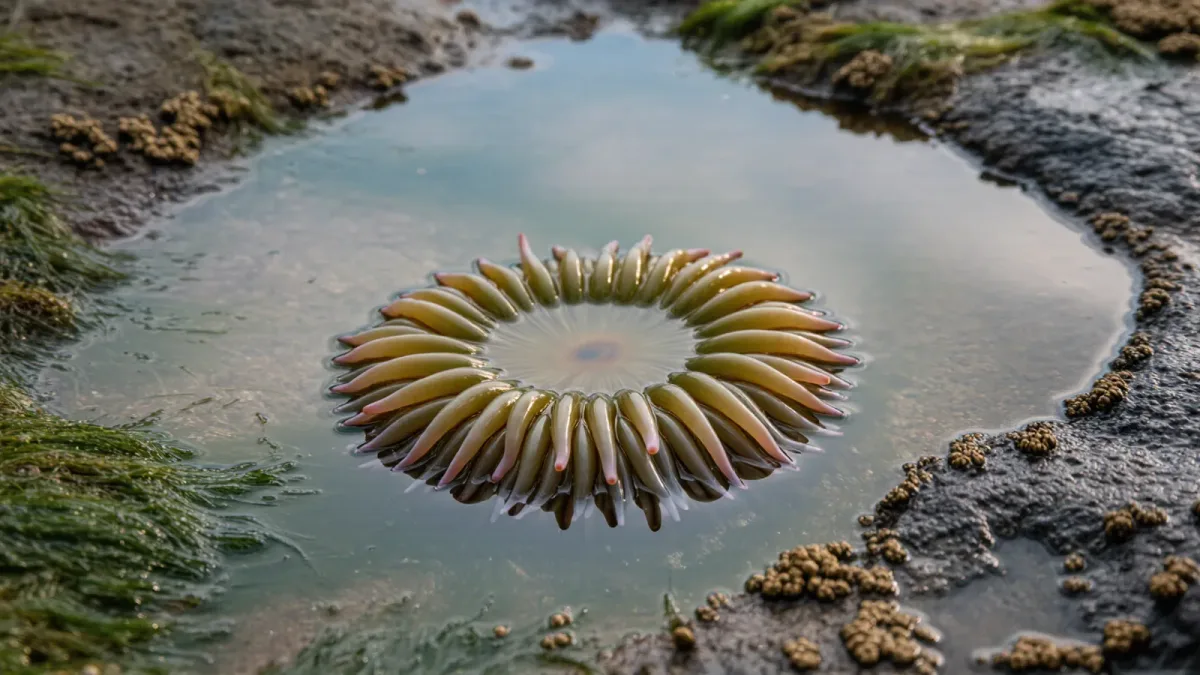
Start in the middle zone, the band of rock that the tide has exposed for an hour or two. The showiest residents are the easiest to find: aggregating anemones closed like knobs when exposed, open into rings of tentacles underwater; purple and orange sea stars shelter in crevices; hermit crabs stage formal fights over borrowed shells; and in California and the Pacific Northwest, ochre stars, chitons, and gooseneck barnacles carpet the lower zone once a minus tide drops. Work a small area thoroughly rather than a large area quickly — a single pool can hold a dozen species. With kids, set the search as a scavenger hunt by count, not by capture, and keep everyone off the slippery green algae, which is exactly as slick as it looks.
How do you stay safe at the water's edge?
The ocean sets the rules on any rocky shore. Swell sets arrive in groups, and the wave that reaches farthest up the rock is rarely the one you watched. Stand where you have dry rock at your back to retreat to, keep eyes on the water for at least a full set of waves before choosing a route, and never place yourself between a surge channel and open ocean. Closures and access hours at managed sites — Cabrillo's pools are closed during high water, for example — exist for exactly this reason. Check the site manager's current advisory and the day's marine forecast before you commit; if the forecast swell is up, the pools will be empty of people for a reason.
What changes in summer, and what about the East and Gulf coasts?
Summer tide pooling is the poor relation on the Pacific coast: the lowest tides arrive before dawn or after dark, and midday lows are shallow, so expect shorter windows and thinner crowds of animals — the pools are still worth an hour, just less of one. On the Atlantic, the Gulf of Maine and New England offer genuine rocky-shore pools around Maine's state parks and Acadia National Park, where the large northern tidal range — among the biggest on the coast, which NOAA's station data shows in the daily predictions — exposes rich zones on every modest low tide. The Gulf Coast and the Southeast have little natural rocky shore; their intertidal life concentrates on jetties and pilings, which reward a careful look but deserve a note of caution — bare rock they are not, and footing is worse. Wherever you go, the same two checks bookend the day: NOAA's prediction for your station, and the managing authority's page for the site. Conditions change — check the official advisory before you go.