On a wide, windy ocean beach, a sandbag-anchored canopy usually beats an umbrella. On a small, packed cove, a compact umbrella may be the only polite choice. And on any beach with dunes or a boardwalk edge, natural and built shade can spare you the setup entirely. The match between beach type and shade type matters more than which model you buy.
Wind is the variable that decides most of it. Canopies tested by Consumer Reports held up on a windy morning at Long Beach, New York, where gusts reached 22 miles per hour — a fresh breeze that can flip a lightly anchored umbrella in seconds. The trick is ballast: sand-filled anchors at each corner, not thin stakes.
Before you pack anything, check two things: the managing authority's rules on tents and canopies, and the forecast. Some beaches ban pop-up structures outright or limit them to a certain size, and a shade that becomes a sail in a gust is a hazard to everyone downwind. When in doubt, a wide-brim hat, a rash guard, and sunscreen do the baseline work — the shade is the comfort layer on top.
Which shade works on a windy, open-ocean beach?
Exposed coastlines punish anything that stands tall on a single pole. Umbrellas rely on a deep anchor and a tilt into the wind, and when a gust comes from the wrong side, they pull free. Sandbag canopies handle the same conditions differently: the fabric flexes and sheds the load instead of fighting it.
Wirecutter's testing found that a spandex canopy like the Sun Ninja, anchored by sand-filled corners across four poles, twisted and shrugged off gusts in calm and breezy conditions — but became unstable in stronger winds, particularly above 15 miles per hour. The same review notes the trade-off in footprint: the canopy's arms stretch roughly three feet beyond the shaded patch on each side, which is a lot of beach on a crowded day.
The practical read: on a big, open beach with steady wind and room to spread out, a sandbag canopy is the sturdiest choice. Bring the sandbags — most models require you to fill them on site — and give yourself time to get the tension right.
What about calm bays, coves, and packed town beaches?
Sheltered water changes the math. With less wind, a pop-up tent becomes practical again, and it brings things a canopy can't: privacy for naps, a floor that blocks blowing sand, and a contained play space for small children. As Our Wanders puts it in a family guide to beach shade, sheltered sandy or pebbly beaches favor tents, while small packed beaches and coves favor compact umbrellas simply because of footprint — a canopy that needs wide anchor spacing has nowhere to go.
On pebbly or rocky ground, deep sand anchors are useless anyway. A tent with a floor and a thick mat wins there, because it doesn't depend on what's under it.
The crowd factor is worth taking seriously. A canopy that commands a large patch of beach can annoy neighbors on a tight town beach, and some busy beaches restrict tent sizes during peak season precisely because of it. Check the town or park page before you go, and default to the smaller setup when the sand is tight.
When does natural and built shade beat anything you carry?
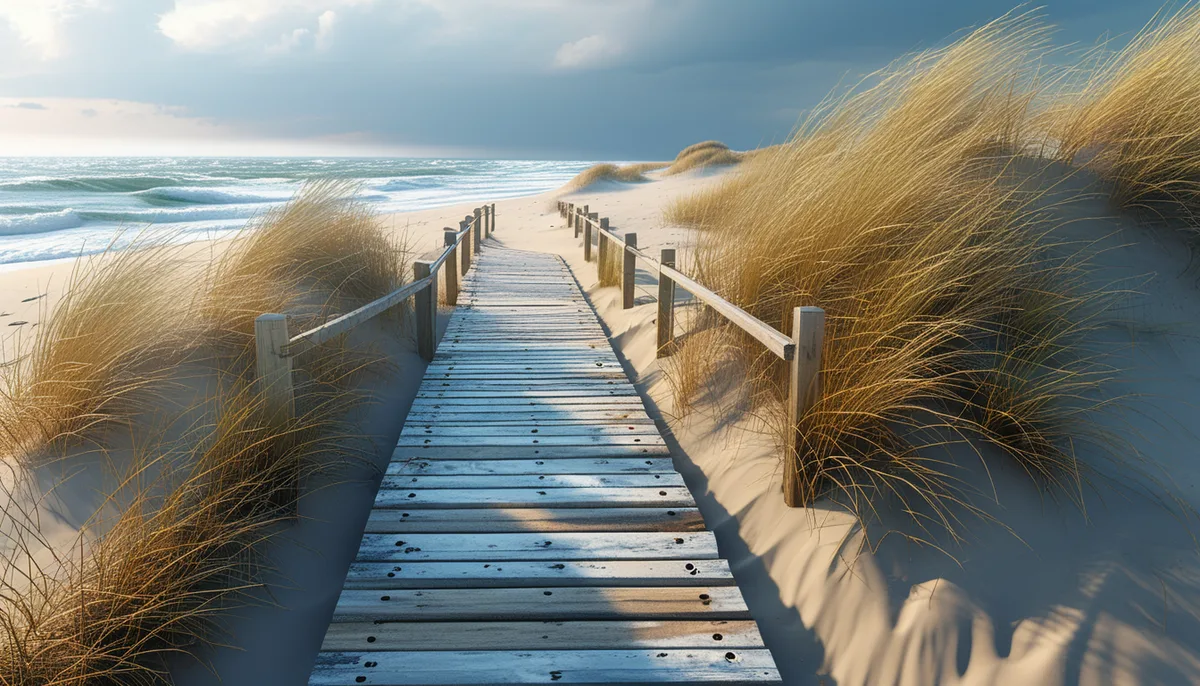
The easiest shade is the kind already there. Dune grass, a pavilion, a lifeguard station's shadow, the north wall of a boardwalk pavilion at midday — none of it needs setup, and none of it can blow away. Beaches with rental umbrellas and cabanas also remove the carry problem entirely: you rent on site and walk away at the end of the day.
Scouting this takes ten minutes at home. Look at the beach's official page or a satellite view for dune lines, pavilions, and rental stands. Then check the sun's path for your hours — a morning spot under an east-facing dune scarp is gone by early afternoon. Pair this with the tide: high tide shrinks the dry-sand strip where dune shade is even reachable. If you're planning around light and timing anyway, the same sun-path math applies to picking the best sunrise beaches on the East Coast. For related coverage, see Best Sunrise Beaches on the East Coast: 7 East-Facing Picks, With the Exact Sun-Times Math.
One caution: stay off the dunes themselves. Dune vegetation is the thing holding the beach together, and walking or camping on it is restricted at most managed beaches. Take the shade from the edge, not the middle.
What this means for your packing list
Our analysis of the options comes down to three questions. How windy is it likely to be? How much space will you have? And how far do you have to carry everything?
- Open, windy, roomy: sandbag canopy. Fill the anchors properly and angle the fabric into the breeze.
- Calm, pebbly, or family-focused: pop-up tent with a floor, for naps and contained play.
- Packed town beach or travel: compact umbrella — small footprint, quick up and down, easy to reposition as the sun moves.
- Anywhere with rentals or structures: skip the carry entirely and use what's there.
Whatever you bring, treat it as one layer. Consumer Reports' reviewers make the point plainly: even under a UPF 50+ canopy, you still need sunscreen. Shade cuts direct exposure; it doesn't remove reflected light off sand and water.
The rules and safety checks to run before you go
Shade gear intersects with beach rules more than most equipment does. Canopy and tent bans exist at some beaches, size limits exist at others, and anchored structures can be restricted near lifeguard sightlines or turtle-nesting areas in season. The managing authority — town, county, state park, or national seashore — is the source for what's allowed, and its page is also where closures and fee changes show up first. If your trip involves a state park or a national seashore, the setup rules can differ between the two, as our state park vs national seashore comparison lays out. This connects to our earlier piece, State Park Beach vs National Seashore: Which US Coast Trip Fits Your Week, Compared.
Wind safety is the other check. A canopy or umbrella that lifts is a projectile, and gusty afternoons are when it happens. If the forecast turns fresh or stronger, take the tall fabric down before it takes itself down. And since wind and water conditions travel together, the same forecast check that decides your shade also feeds the rip-current picture — our guide to how NOAA's rip current forecast works covers how to read it.
Conditions change — check the official advisory and the managing authority's rules before you go.