The best beaches in the Caribbean are less a single list than a set of trade-offs: calm water versus surf, walkable beach towns versus secluded coves, and high season convenience versus shoulder-season value. This guide sorts the region's most celebrated strands by island, so you can pick the water and the pace first, then build the trip around it.
The honest caveat up front: conditions shift by season and by storm, and no ranking survives a hurricane season untouched. Check the local forecast and any active advisories before you commit to a specific beach day. What follows is a planning framework, not a guarantee.
Where you sleep matters as much as where you swim. As Caribbean Journal reports, the luxury hospitality association Relais & Châteaux — founded in 1954 and known for evaluating rather than simply admitting member hotels — has grown its Caribbean footprint from a handful of properties a decade ago to a collection stretching from Anguilla to Grenada, with Antigua's Curtain Bluff joining in late 2024. That growth is a useful signal for travelers: the region's most rigorous hotel group keeps adding islands, and its members sit on some of the region's most photographed sand.
Which islands have the calmest, swimmable water?
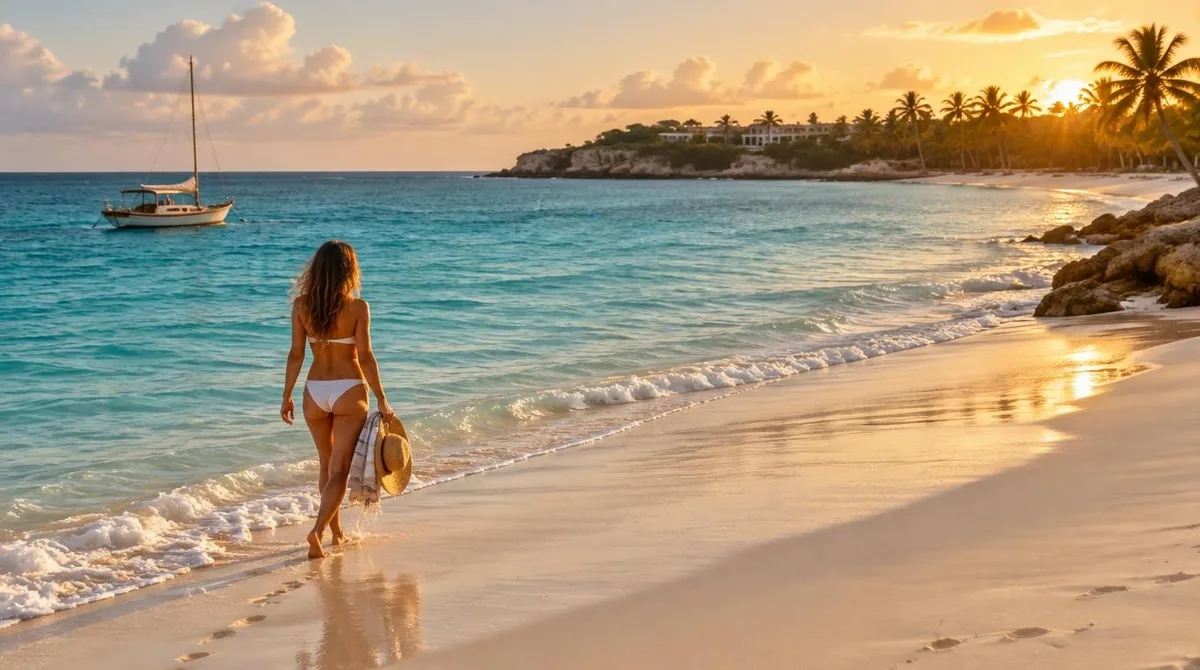
If your priority is glassy, easy swimming, look to the islands with sheltered geography. Anguilla's north- and west-facing beaches are famous for it — the island sits low and wide, with long white-sand strands and few dramatic drops. Long Bay, on the island's southwest coast, is the kind of beach that anchors a whole trip; the boutique Quintessence Hotel perches above it with just nine suites, according to Caribbean Journal's report on the region's Relais & Châteaux members.
Antigua is the other classic answer. The island markets itself on the claim of a beach for every day of the year — a marketing line, not a verified count, so treat it as a starting point rather than a fact. What is verifiable is the shape of the island: a deeply indented coastline with coves facing several directions, which means when one shore is choppy, another is often calm. Curtain Bluff, the newest Relais & Châteaux member, occupies a headland between two beaches, one facing the Atlantic swell and one facing calmer water — a built-in hedge for swimmers.
The trade-off: calm-water islands tend to attract calm-water crowds. Peak winter weeks bring the busiest sand. If quiet matters more to you than guaranteed flat water, the shoulder months are worth the small risk of a windier day.
What does a trip built around one beach actually look like?
The most reliable Caribbean itineraries are beach-anchored, not island-anchored. Pick the strand first, then find lodging within walking distance, then plan one or two excursions. This reverses the common mistake of booking a far-flung villa and spending the week in a rental car.
Anguilla is the cleanest example of the model. Nonstop flights from Miami on American Airlines, plus service from New York, Charlotte and several regional gateways, put you close to a compact island where the famous beaches sit minutes apart, as Caribbean Journal notes in its coverage of the region's top resort stays. You can swim a different beach every morning without ever driving more than a short hop. Few destinations of this quality offer that ratio of beach variety to transit time.
For a deeper dive on how to evaluate strands the same way at home, our guide to Beaches Near Me: How to Find the Best Beaches Near You This Summer walks through the criteria — access, shade, surf exposure — that translate directly to island planning. We covered a connected angle in Best Walkable Beach Towns: What Makes a Beach Town Walkable? The Criteria Behind Our Shore Rankings.
When should you go — and what does the season change?
The Caribbean's travel calendar is driven by two forces: the northern winter, which fills flights and raises rates from roughly December through April, and the Atlantic hurricane season, which runs officially from June through November per NOAA's long-standing definition. Neither fact requires a statistic to matter: high season means booking far ahead and paying for it; low season means lower rates and a real, if modest, chance of a storm disrupting your week.
Our take: for a beach-first trip, the edges of the high season — late November and late April — often deliver the best combination of reliable weather and manageable prices. For more on the logic, see The Quiet Season: Why an Off-Season Beach Vacation Is Underrated, and our Seasons coverage for month-by-month planning.
Storm-season travel needs one habit above all others: read the cancellation policy before you book, not after the forecast turns. Rebooking windows and refund terms vary widely by property, and the time to know yours is at deposit, not at the airport.
How do you match a beach to the trip you actually want?
Start with the water, not the postcard. Ask three questions:
- Swimming or walking? Calm-leeward beaches reward swimmers and families; windward Atlantic-facing strands reward long walks and wave watching. Match the beach to what you will actually do, not what photographs well.
- Resort strip or独立 cove? Developed beaches bring chairs, bars and lifeguards — and crowds. Independent coves bring quiet and, often, fewer services. Neither is wrong; mixing both in one week is the sweet spot.
- How far from the airport? On small islands the transfer is short everywhere. On larger ones, an hour's drive can decide whether a beach day actually happens.
Accessibility is worth a specific check too. Beach mats and adaptive equipment are common on US shores but far less standardized across the Caribbean, so travelers with mobility needs should confirm directly with the property or managing authority before booking. Our explainer on Beach Accessibility in the US: Access Mats, Beach Wheelchairs, and How to Find Both explains what to ask for, wherever you travel.
What this means for your booking
The Caribbean's best beaches reward the traveler who plans around water conditions and logistics rather than a single famous name. Anchor the trip on one strand with the swimming character you want, keep the transfer short, and time the booking to the shoulder of the high season. Verify current access, fees and any advisories with the local authority or your hotel before you go — conditions change, and the official source beats any list, including this one.
And if your beach ambitions extend beyond the region, the same framework travels: see how it applies in The Best Beaches in Greece, Island by Island and The Best Beaches in Portugal: From the Algarve's Coves to the Silver Coast.