A complete beach vacation packing list comes down to twelve categories, and a week on any US coast fits in one checked bag plus a beach tote when you pack by system: sun protection, swimwear duplicates, sand footwear, cover-up layers, water gear, cooling and hydration, first-aid basics, electronics protection, after-sun recovery, the evening kit, the car-and-transfer layer, and the documents-and-money layer. The two items that never justify their space are beach towels by the stack and single-use coolers — both are rentable, borrowable, or buyable cheaply at the destination, per the rental and retail patterns at major beach towns.
This list is built for US Atlantic, Gulf, Pacific, and Great Lakes beach weeks in the warm season; winter trips swap the cooling layer for the shell layer. The quantities assume a rental or hotel with laundry access, which changes the packing math more than any other single factor.
Sun protection: the non-negotiable category
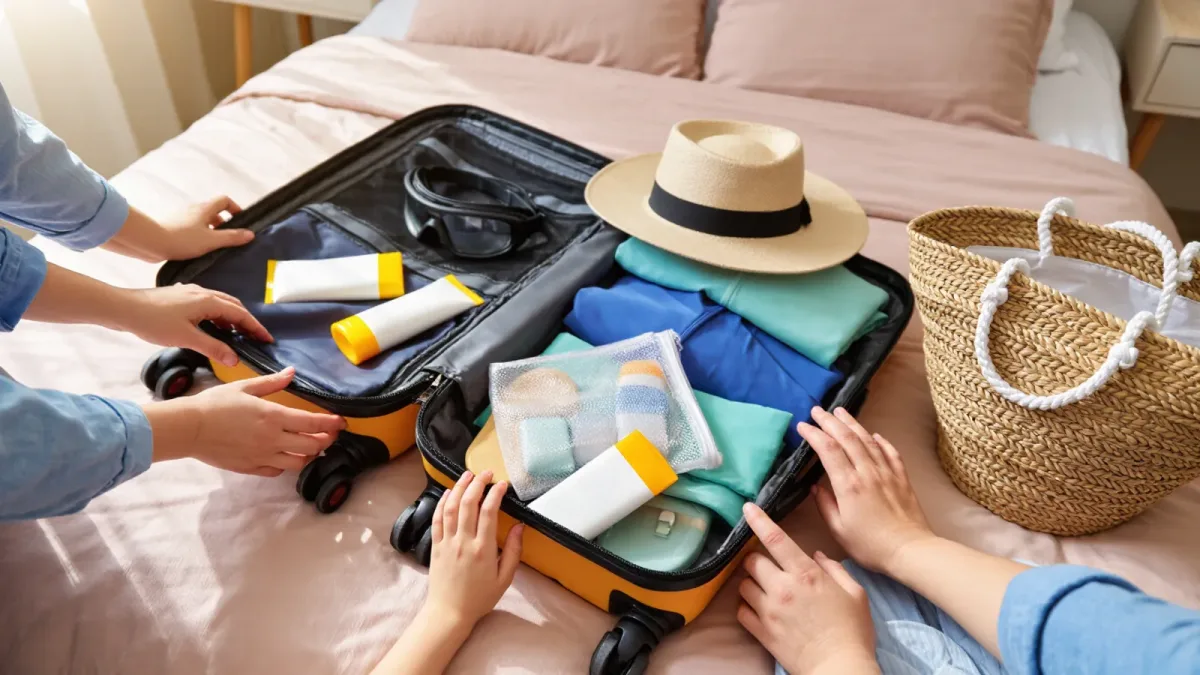
Pack sunscreen in a quantity people underestimate — roughly one ounce per adult per full beach day for the body per dermatology guidance, meaning a week for two is a six-ounce tube plus a face stick, not the travel-size tube. Add SPF lip balm, a brimmed hat that survives wind (chin strap or deep crown), UV-filtering sunglasses, and one rash guard per person, which eliminates the morning sunscreen negotiation for the back and shoulders. The American Academy of Dermatology recommends broad-spectrum, water-resistant SPF 30 or higher applied generously and reapplied every two hours, per its published guidance — the packing consequence is that you need more sunscreen than you think, and buying it at a beach town costs a premium.
Swimwear and the two-suit rule
The system is two or three suits per person, never one: a suit worn in the ocean dries too slowly to be pleasant the next morning, and saltwater-soaked fabric degrades faster, per fabric-care guidance from swimwear manufacturers. Pack a mesh bag for wet suits and a separate dry bag — the mesh goes to the beach daily, the dry bag holds the return trip. Add two swim diapers per toddler-day if applicable, since pool rules at most rentals require them fresh each session.
Footwear: three pairs, not one
Flip-flops handle the boardwalk, but the sand and the week need more. Water shoes protect against hot sand, shell-strewn shallows, and rockier Pacific and New England entries — a genuine difference outside the Gulf. One walkable sandal or sneaker covers evening town time, because the most common footwear failure at beach destinations is arriving with no shoe that can do four blocks after dinner. Pack all three; they compress.
Cover-ups, layers, and the ocean-evening gap
Coastal evenings run cooler than inland travelers expect: the sea breeze that moderates afternoon heat keeps dropping after sunset, and per NOAA climate data, coastal stations routinely run 10-15 degrees cooler than inland points on the same evening. Pack one cover-up per person, one light long-sleeve layer, and — for Pacific, Northeast, and Great Lakes trips — a windproof layer. The Gulf and South Florida versions of this category are thinner but never empty.
Water gear: bring the cheap, rent the bulky
Bring what fits in a suitcase and fails cheap: goggles, a snorkel set per person, sand toys (or plan to buy a set at the destination and leave it), a floating phone pouch per phone, and a compact frisbee or ball. Rent what does not: paddleboards, kayaks, umbrellas, and chairs are rental commodities at essentially every US beach town, per the rental shops' standard offerings — hauling them is a solved problem that costs less than airline baggage fees solve it badly.
Cooling and hydration
The category that saves the 2 p.m.: an insulated bottle per person, a soft cooler sized for the day (rent or buy locally if flying), and electrolyte packets, which weigh nothing and address the headache that ends beach afternoons, per standard hydration guidance from sports-medicine sources. Spray bottles or a bandana for neck cooling cost almost nothing and earn their space on Gulf-summer trips, where heat-index values routinely top 100 degrees Fahrenheit in July per NOAA climate data.
First aid: small, specific, ocean-aware
The beach-specific kit is short: adhesive bandages and blister pads, tweezers (for spines and splinters), aloe or after-sun gel, oral rehydration or pain-relief basics per your household's needs, and motion-sickness remedies if a boat day is planned. Jellyfish and stingray care varies by region — follow current guidance from the nearest lifeguard service or medical source rather than folk remedies; vinegar, for example, is region-specific advice, per medical sources such as the Mayo Clinic. Add a card with the address of your lodging; it goes in a pocket on every outing.
Electronics and document protection
Salt air and sand kill electronics through ports and hinges, not screens: pack zip-close bags per device, a microfiber cloth, and a small brush for sand cleanup. Documents live in one zip pouch — licenses, insurance cards, parking passes, and any beach-tag receipts — because beach towns run on proof: parking apps, rental deposits, and gate checks all want something shown, per the standard practices of managing authorities.
The evening kit and the transfer layer
Two small systems finish the bag. Evenings: one presentable outfit per person, which prevents the classic beach-week wardrobe gap when a reservation exists. Transfers: a dedicated car-kit pouch — window shade, phone mount, snacks, wipes — because beach arrivals and departures are the trip's worst hours, and the car is usually rental. Neither category earns Instagram posts; both earn the trip's gratitude by day two.
What do people always forget for a beach trip?
The forget-list is consistent: enough sunscreen, a hat that survives wind, footwear for hot sand, a light layer for evening, zip bags for electronics, and cash or a card for the parking kiosk that does not take apps. Add the one parents and dog-owners know: a plan for rinse-off before the car or lobby — a jug of fresh water in the trunk solves it. Pack by the twelve categories, check the forget-list against it, and the bag closes with margin.