Packing beach gear home is a three-enemy problem — salt, sand, and trapped moisture — and the order of operations decides whether the gear survives the trip: rinse with fresh water first, dry completely second, pack soft third. Salt crystals keep working after the beach, corroding zippers, metal frames, and electronics long after the towel dries, per corrosion fundamentals that gear manufacturers cite in care instructions; sand abrades every moving part it reaches; and wet gear sealed in a car trunk for a drive home grows the mildew that never quite washes out. A thirty-minute exit routine, done in the right order, prevents all three.
This guide covers the routine itself, then gear by gear — the items that fail most, in the order travelers usually discover them.
The exit routine: rinse, dry, pack — in that order
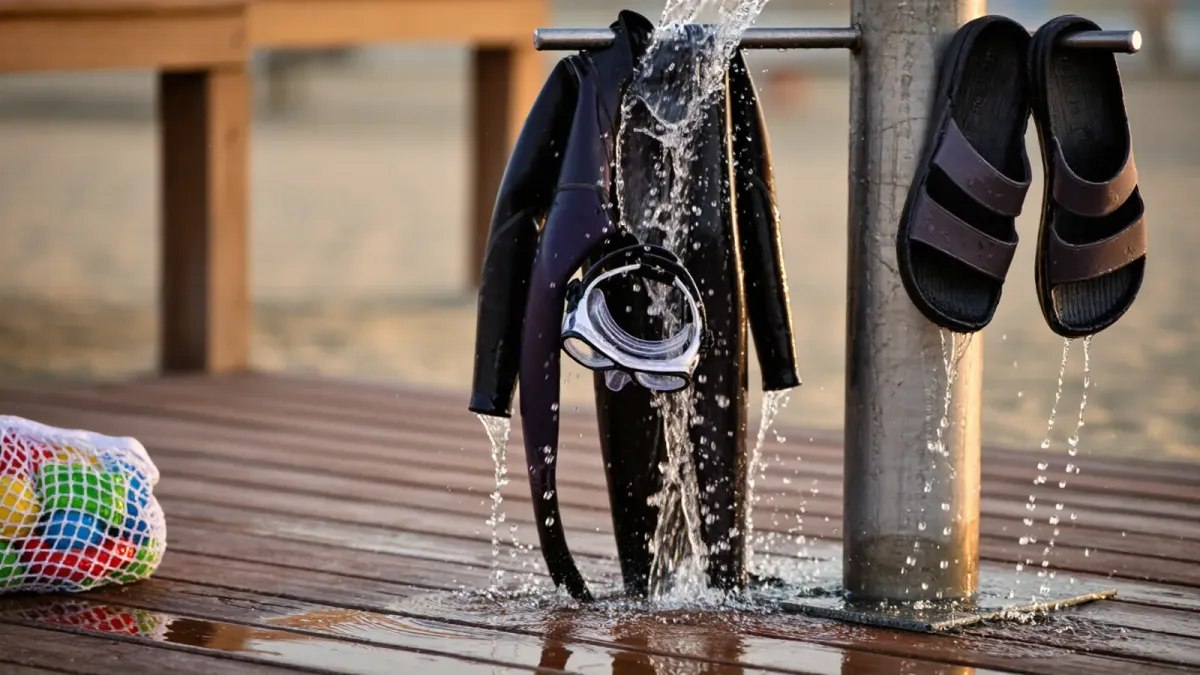
Rinse everything that touched saltwater: suits, boards, goggles, sandals, metal buckles, the cooler's latch. Fresh water dissolves salt crystals before they dry into place; a beach shower, a jug in the trunk, or the rental's outdoor hose all work, and manufacturers of wetsuits and swim gear state the rinse requirement directly in their care guidance. Dry next, and the principle is airflow over compression: hang suits and wetsuits in shade — sun degrades elastane and neoprene, per the same care instructions — and let sandals, chairs, and the umbrella shed their trapped water. Pack last, and pack differently: soft items in a mesh bag, hard items loose, and nothing sealed damp. The routine's total cost is half an hour; the alternative is a suitcase that smells like a marina by the time it opens at home.
Saltwater's slow damage: what it corrodes and why
Saltwater is an electrolyte, and its corrosion of metal — zippers, snaps, frame joints, razor blades in a dopp kit — accelerates dramatically when it dries slowly and repeatedly, per standard corrosion science. Gear manufacturers respond with rinsing instructions because the chemistry does not care about the item's price. The targeted protections: rinse metal zippers and lubricate them with zipper-specific wax if a suit or bag lives near salt; dry metal-frame chairs and umbrellas open so joints drain; and never store electronics in a sealed beach bag that spent the day in salt air — condensation finds the inside of lenses and screens. The one-weekend beach trip does little damage; the cumulative summer of unrinsed gear is what kills it, which is why the routine matters most for people who go often.
Sand: the three-part defense
Sand management happens at three moments. At the beach: a mesh bag shakes sand out of toys, a fitted sheet anchored with coolers at the corners creates a sand-catching perimeter for the setup, and baby powder dries damp skin so sand releases — the talc trick that lifeguards' families use, and a widely shared beach hack that works because it removes the moisture making sand stick. At the car: a dedicated sand bin or bag for footwear keeps the sand where it can be dumped rather than ground into carpet, and a five-gallon jug of rinse water handles feet and dog paws before anyone boards. At the unpacking: vacuum the suitcase and the car trunk once — the ten minutes that prevent the following season's beach-by-association. Rentals add a fourth moment: most lease agreements deduct for excess sand cleaning, per standard vacation-rental terms, so the exit routine doubles as deposit protection.
Wetsuits, swimsuits, and the neoprene rules
Neoprene has three rules, and they come from the material itself: rinse in fresh, cold water; dry in shade, hung folded at the waist or laid flat — never on a hot car roof or a sun-baked rail, because heat and UV break down the foam's flexibility, per wetsuit manufacturers' care documentation; and store dry, folded loosely, never crumpled wet in a trunk. Swimsuits share the first and third rules with one addition: a quick fresh-water rinse immediately after salt or chlorine keeps elastane from degrading, per swimwear care guidance — the two-second rinse at the beach shower that adds a season to a suit. A suit dried in a sealed bag is the origin of most beach-bag odors; if the day demands packing damp, a wet bag with a zipper, opened at the first opportunity, contains it.
Electronics, lenses, and the salt-air problem
Phones and cameras fail at the beach through ports, not screens: salt air enters charging ports and optical seals, and the failure appears weeks later, per repair-industry patterns that device makers acknowledge in beach-adjacent guidance. The defenses are cheap: zip-close bags per device on the sand, a rinse-free microfiber wipe-down each evening, and a full dry-out before any charging cable goes in — charging a port with moisture inside is the documented failure path device makers warn against in their water-resistance disclaimers. Camera lenses that fogged at the beach should dry open in air-conditioned air, not in a closed case, where trapped humidity finds the fungus-friendly range.
The packing-out checklist, gear by gear
- Umbrella and chairs: rinse joints, dry open, towel the pole — the sand in the pole tube is the one that ends up in the trunk.
- Cooler: drain, rinse latch and drain plug, dry with the lid open; a closed damp cooler is the trip's next odor source.
- Toys and boards: shake in mesh, rinse, and dry flat; sand inside a boogie-board's slick bottom scratches car paint on the ride home.
- Footwear: rinse and dry apart from clothes; sandals go in the sand bin, not the suitcase.
- Suits and wetsuits: the wet bag rides home damp by necessity, opened the moment you arrive.
- Electronics: bagged on the sand, wiped nightly, dried before charging.
What is the single biggest packing-out mistake?
Sealing damp gear. The compressed, damp beach bag — in a hot trunk, then a dark closet — combines the two conditions mildew and corrosion prefer, and it undoes every rinse that came before it. The fix costs nothing: unpack the night you arrive, run a fan over anything questionable, and let the suitcase itself air out before it closes on the season. The gear that gets thirty minutes of airflow on arrival night is the gear that comes out of the closet ready in June.