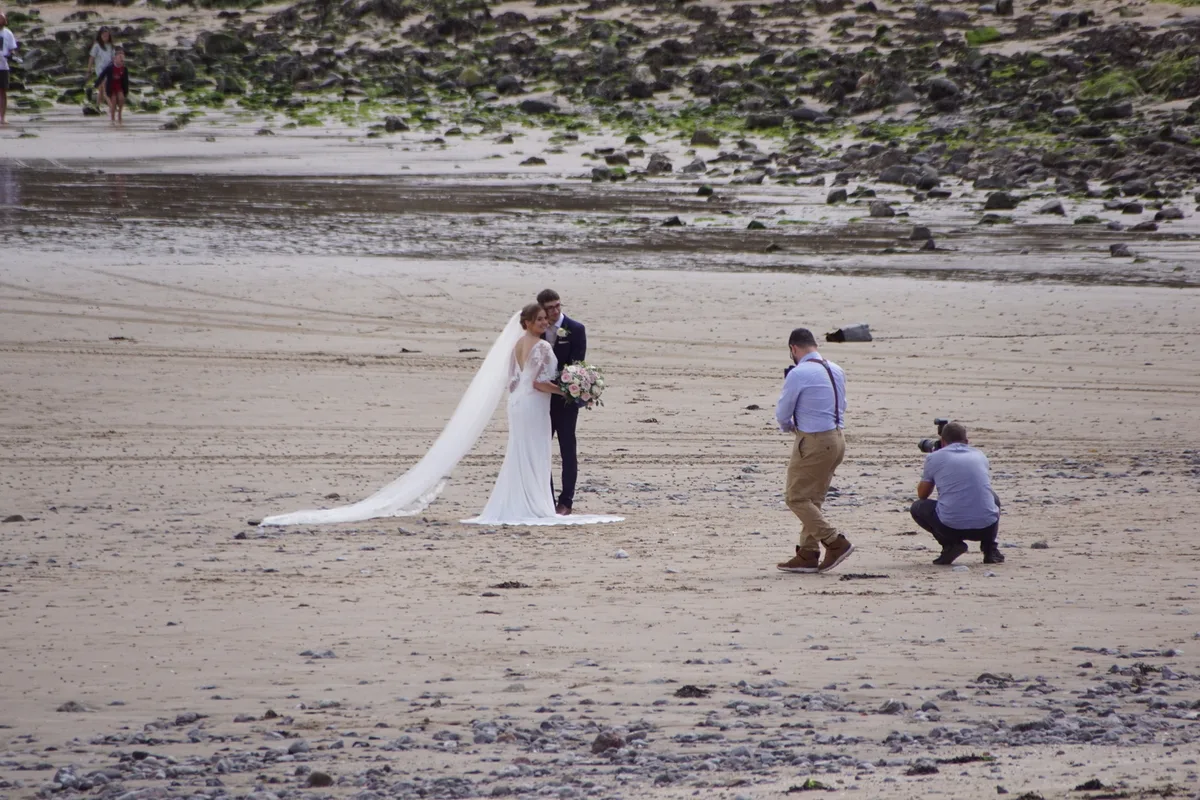
The ceremony lasts twenty minutes. The tide table, the permit application, and the rain plan take months. That is the honest shape of planning a beach wedding: the setting is free, but everything that makes the setting work — access, timing, shelter, and the people who haul chairs onto sand for a living — is not.
The real cost breaks into three buckets. First, the public side: permits, parking, and rules set by whatever agency manages that stretch of sand. Second, the weather side: a backup location, and the deposits you may lose if a storm week forces a change. Third, the vendor side: delivery fees, travel charges, and the premium some suppliers add for jobs far from their home base. None of these show up in the venue's headline price. All of them show up on the final invoice.
This guide walks through each bucket, in the order you should tackle them, and closes with the trade-offs worth knowing before you sign anything.
Which permits and rules apply to a beach ceremony?
Every beach has a manager — a town, a county park department, a state park, or a federal seashore — and each one writes its own rules for organized events. Some allow small ceremonies with a simple special-use permit and a modest fee. Others cap group sizes, ban arches and chairs, restrict ceremonies to off-season or off-hour windows, or prohibit events outright on swimming beaches in summer. The only reliable answer comes from the managing authority itself, in writing, before you book anything else. We covered a connected angle in When to Book a Beach Vacation: The Booking Windows That Actually Save Money, by Season.
Call or email the parks or recreation office for the exact beach and ask four questions: is a permit required for a ceremony of your size, what does it cost, what is the application lead time, and what is not allowed on the sand. Get the answer in an email you can forward to vendors. A permit that arrives late, or a rule you learn about after deposits are paid, is the most expensive mistake in this whole process.
There is a reason planners treat this as the first step rather than a formality. As the American Planning Association puts it in its explanation of the discipline, planning is "a roadmap that helps leaders make informed decisions" — the same logic applies at wedding scale: define the constraints first, then choose the route. The permit office, not the florist, sets the first constraint.
What does a weather backup really cost?
A beach ceremony needs a second location, full stop. Wind, a squall line, or a heat advisory can move an event indoors with a few hours' notice, and the backup has to be booked before the deposits go down — not improvised the morning of.
The backup itself is usually the cheapest insurance in the budget: a restaurant private room, a pavilion, a rented house with a covered porch. The costs that surprise people sit around it. Some vendors charge a change fee to move a setup indoors. Rental items delivered to sand often carry a handling premium, because crews carry chairs and arches by hand across soft ground. And if your date falls in hurricane season along the Atlantic or Gulf coast, your contracts — not just your mood — need a rebooking and refund clause. Our guide to planning a beach trip during hurricane season covers the same contract logic that applies to a wedding weekend.
Ask every vendor one question before signing: what happens to my deposit if weather forces a date change, and what is your cutoff for that decision? Write the answer into the contract. A verbal "we'll work with you" is not a clause.
Why do coastal vendors charge more than inland ones?
Three markups stack up on shore weddings. Delivery and travel fees rise with distance from the vendor's base, and coastal towns at the end of a barrier island can sit an hour from the nearest supplier's warehouse. Sand work itself carries a labor premium: a crew that can roll a cart into a hotel ballroom has to hand-carry the same load across dunes. And season compresses supply — in July and August, the same photographers, rental companies, and caterers that serve beach tourists also serve every wedding in town, and their calendars fill first.
None of this is a rip-off; it is arithmetic. But it means the cheapest quote is often the one from the vendor farthest away, once travel is added, and the cheapest date is often a weekday or a shoulder-season month, when the same crew is not competing with peak beach traffic. Our breakdown of weekday versus weekend beach trips explains why weekday pricing softens across coastal services generally — the same pattern applies to event vendors.
When you compare quotes, ask each vendor to itemize delivery, setup, teardown, and any travel or fuel charge separately. A quote that bundles them hides the number you can actually negotiate.
What does the tide and timing do to the plan?
The ocean sets your schedule whether you like it or not. A ceremony timed to low tide gains a wide, firm, walkable beach. The same spot at high tide can shrink to a strip of soft sand with waves at the dune line — and sometimes no dry ground at all for chairs. Our guide to tides and beach days explains how to read the tide table hour by hour; for a wedding, the short version is to pick your tide window first, then build the ceremony time around it. For related coverage, see Tides and Beach Days: How the Tide Table Changes Your Beach Plan, Hour by Hour.
Timing also decides light and comfort. Late afternoon gives softer photographs and cooler air than midday, when sand temperatures and UV readings peak. And public beaches keep working during your ceremony: sunbathers, dogs, and fishing lines do not pause for your vows. An off-peak month or a weekday slot buys privacy that no decor budget can.
What this means for your budget
Our analysis, reading the cost structure rather than any single quote: the beach itself is the cheapest line item and the most complicated. Budget in this order. Set aside money and time for the permit and the rules first, because they can change or kill the plan outright. Then fund the weather backup and the contract clauses that protect it. Then let the vendors bid, with delivery and setup itemized, and use date flexibility — shoulder season, weekday, morning tide window — as your main lever on price. Couples who reverse the order, booking a venue package before checking the permit rules, are the ones who lose deposits.
What the evidence here establishes is the structure of the cost: permits, weather protection, and vendor logistics are the three places shore weddings quietly spend. What it cannot establish is a dollar figure for your beach, because fees, group-size caps, and vendor rates are set locally and change by season. The managing authority's permit office and the vendors' itemized quotes are the two documents that turn this framework into your number.
One last habit worth borrowing: treat the itinerary as a promise and walk it before you commit. Visit the beach at the same hour and tide your ceremony will run, in the season you plan to marry. Note where guests park, where the wind comes from, and how far the nearest restroom sits. Forty minutes on site answers questions no vendor call will.