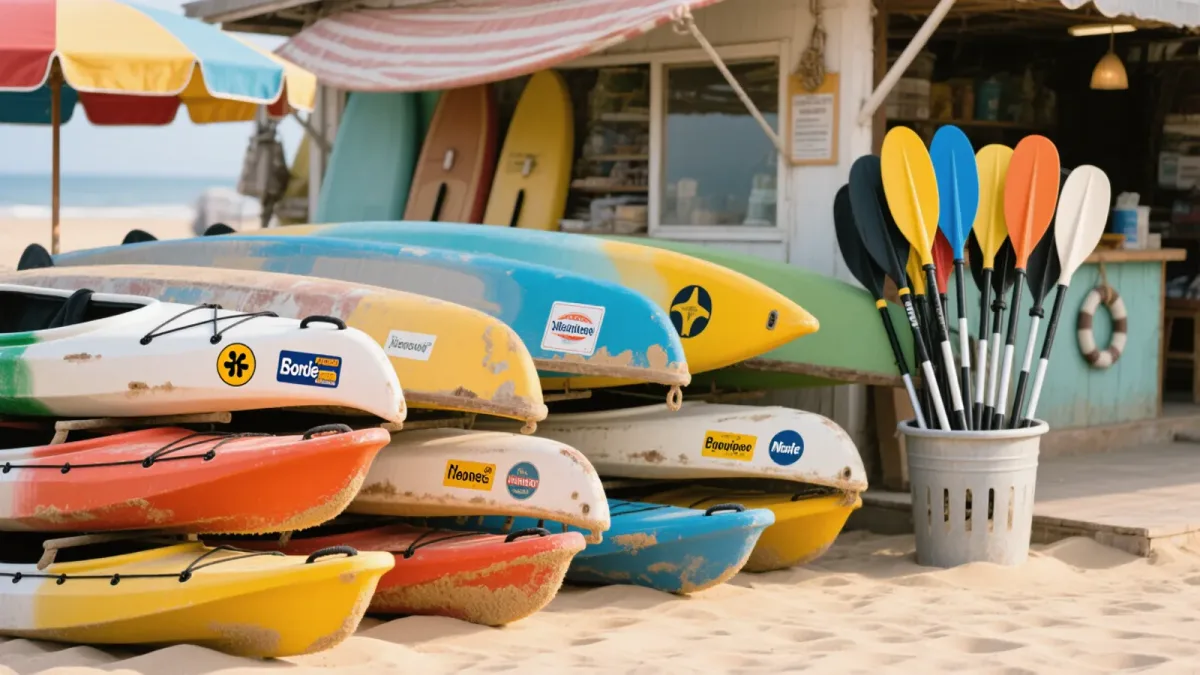
Renting beach gear beats hauling it in almost every scenario that involves a flight, a small car, or a week-long stay: daily umbrella-and-chair setups commonly run about $20-$50, kayaks roughly $15-$30 per hour or $60-$100 per day, and beach cruisers near $15-$30 per day at typical US beach-town shops, per the posted rate cards of rental operators. What separates a smooth rental from an expensive one is not the rate — it is the paperwork around it: deposits, damage policies, delivery fees, and the cancellation terms that high season makes matter. This guide walks the three big gear categories and the contract mechanics behind them.
Rates vary by town, season, and operator; the numbers here are market patterns, and the quote that counts is the operator's written one for your dates.
Umbrella, chair, and setup services: the day-rate base layer
The backbone of beach-town rentals is the umbrella-and-chair package. Two models exist. Shop rentals: pick up at the store, carry to the sand, return by closing — typically the cheaper of the two. Setup services: a crew installs an umbrella and chairs at your spot each morning and retrieves them in the afternoon, common in resort towns on the Gulf and Carolinas, priced at a premium but eliminating the 9 a.m. gear haul, per the standard offerings of these operators. Multi-day rates usually drop the per-day price meaningfully — the weekly package is often priced at four to five daily equivalents — so a four-day stay is frequently cheaper booked as a week than as four days, per posted multi-day pricing. Verify wind policy: operators routinely cap setups on windy days, and a stormy week should convert to credit rather than evaporate.
Kayak, paddleboard, and watercraft rentals: rates, tides, and skill gates
Paddle craft rent by the hour at a premium or the day at a discount — the pattern across rental operators puts single kayaks and paddleboards in the $15-$30 hourly band and $60-$100 daily band, with tandem boats and glass-bottom models higher. Three mechanics matter more than price. First, watercraft rentals run on water conditions: operators cancel or restrict rentals when wind or marine forecasts cross their thresholds, per their posted policies, so book early-morning slots — the calmest water of the day per NWS coastal patterns. Second, skill gates: many operators require a brief orientation or prior experience for open-water rentals, and guided tours replace the orientation with a guide, per operator standards. Third, the tide question: launching into a tidal creek or inlet only works within certain tide windows, and good operators tell you which; ask before booking the slot.
Beach bikes and boardwalk cruisers: the week-rate play
Bike rentals are the beach town's second economy, and their pricing rewards duration: cruisers run near $15-$30 daily but week rates often halve the per-day cost, per posted shop rate cards — the same duration logic as umbrellas. The mechanics to check: helmet inclusion (included in many shops, required for minors nearly everywhere per local ordinances), lock provision, night-riding restrictions, and flat-tire policy, since sand-adjacent riding eats tires and honest shops state who pays. Delivery is common: many bike shops drop a week's fleet at your rental and collect it at checkout, per standard service offerings, which converts the rental from errand to amenity.
Deposits, damage, and the waiver decision
The rental's fine print follows a pattern across the industry. Deposits: card holds, commonly $50-$200 per item for watercraft, released on return, per operator postings — a hold, not a charge, but it consumes card headroom, so bring the card that can carry it. Damage: operators distinguish wear (normal scratches, sand) from damage (cracks, lost paddles, bent rims), and the boundary is exactly where the argument happens — so photograph the gear at pickup and return, per consumer-protection guidance for any equipment rental. Waivers: optional damage waivers at a per-day fee cap your liability; they are worth it precisely when the activity risk is real — watercraft in surf, bikes with kids — and skippable for a beach-chair setup. Read the cancellation line: peak-season bookings often carry 24-to-72-hour cancellation windows, and weather clauses vary — some operators credit weather cancellations, others do not, per posted policies.
When does renting actually beat buying or hauling?
Run the simple math per item. Flying: anything oversized — paddleboards, canopies, coolers — costs baggage fees both ways, and a week's rental is usually cheaper, per airline oversized-bag fee schedules compared against rental rate cards. Driving short: a stocked car shifts the math toward hauling the cheap basics (towels, sand toys, a personal snorkel set) and renting the bulky. Stays of a week or more: weekly rental rates and delivery services close the case — the gear arrives, works, and leaves without touching your trunk. The honest exceptions, items worth owning and hauling: prescription-strength or personally fitted gear, quality snorkel masks that fit your face, and kids' items you will use at every beach for years.
How do you choose a rental operator you will not regret?
Four checks, ten minutes. One: the operator's own posted rate card and policies — no written rates means no fixed rates. Two: reviews that mention returns and refunds specifically, not just friendliness. Three: gear age — watercraft and bikes have service lives, and a well-run shop rotates fleet visibly. Four: the weather policy, stated in one sentence before you pay. Operators that pass all four are the norm in established beach towns; the towns run on repeat visitors, and the rental economy is built accordingly.