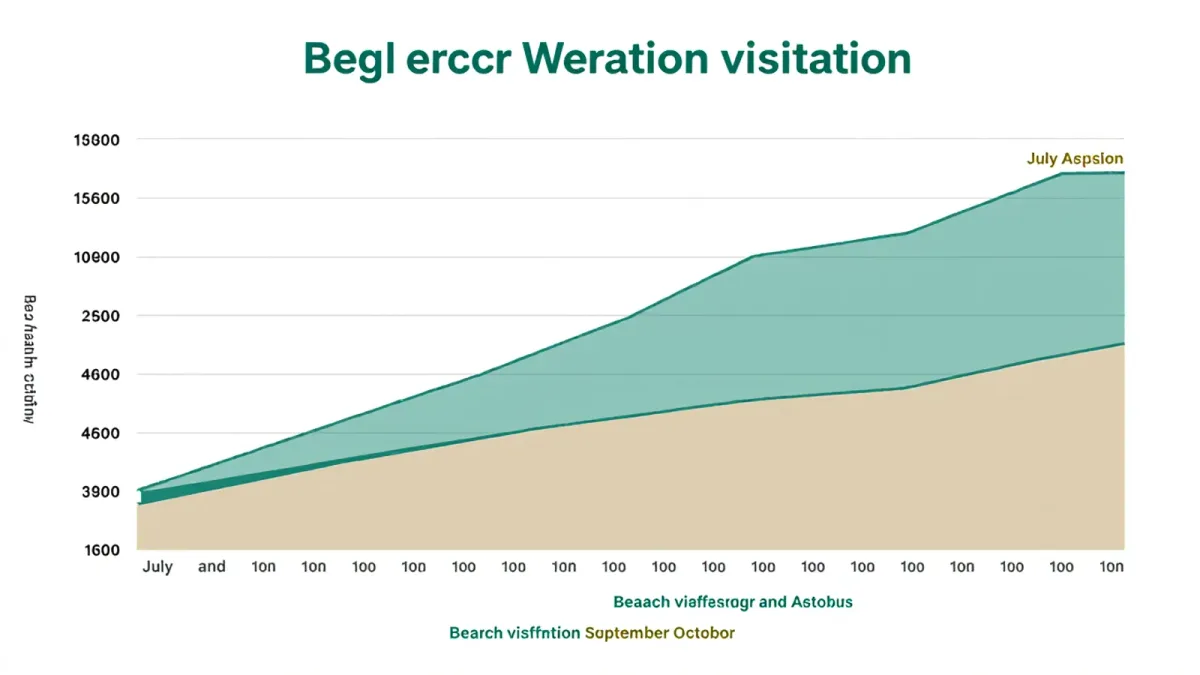
The best-kept schedule on the coast is the shoulder season — roughly May on the front end and the weeks from Labor Day through October on the back end — when visitation data from tourism boards and park agencies shows the year's crowds long gone but ocean temperatures, which lag the air by about a month, still hold their summer warmth. On the Mid-Atlantic and Southeast coasts, September water routinely runs warmer than June water per NOAA's long-term station climatology; on the Gulf, October remains comfortably swimmable; and the price signals follow the crowds, with lodging rates in most beach markets stepping down from their July-August peaks as soon as the school year starts. This explainer covers how the shoulder calendar actually works, region by region, and the trade-offs to plan around — shorter service hours and, in the fall, an eye on the tropics among them.
The logic behind the lag is simple ocean physics: water stores heat, so the sea reaches its annual maximum weeks after the air does, around August and September at most US stations, and cools just as slowly. The crowd curve is the inverse of the water curve — it peaks with school holidays in July and collapses in late August — and the gap between the two is exactly where the shoulder season lives.
What counts as shoulder season on each coast?
The definition flexes by region, set by school calendars and climate. In New England, the summer season compresses hard around July and August, and shoulder means June and September — with September the prize, when water approaches its annual high and the Cape and island crowds thin by half or more by visitation measures. The Mid-Atlantic runs May and September into October, with Ocean City, the Jersey Shore, and the Outer Banks towns quieting dramatically after Labor Day. The Southeast and Gulf stretch further: May and October both behave like shoulder months, and in Florida the entire late fall qualifies, when rates drop and the weather softens. Southern California barely has an off-season, but the September-October stretch still delivers the region's warmest water and clearest skies with thinner strands — the locals' month, by any visitor-count measure.
How much do prices actually drop?
Enough to plan around, though the shape matters more than any single percentage: weekly vacation rentals in most beach markets price by season tiers, and the shoulder tiers sit visibly below the summer peaks — the difference between a July week and the same house in late September is routinely the largest single lever on a trip's budget. Hotels step down more gently than rentals, but midweek stays in September and May often match the weekend rates of high season. Two cautions keep the math honest: seasonal pricing is set by owners and managers, so the tier boundaries vary street by street, and events — a festival, a fishing tournament — can flip a shoulder week into a peak week in one town while the next town stays quiet. The check is the actual calendar rate, quoted for your dates, compared against the same property in July.
What do you give up in the shoulder months?
Three things, each worth planning around. Service hours shrink: many beach towns cut lifeguard coverage to weekends or end it entirely after Labor Day — the town or park's own page states the schedule, and unguarded water changes the risk math for families. Restaurants and attractions drop to weekend or reduced schedules through fall, with full closing common in true off-season resort towns. And the fall shoulder on the Atlantic and Gulf coasts overlaps hurricane season, which runs officially through November 30 — travelers in September and October should hold flexible bookings and follow the National Hurricane Center during any named-system week, a planning matter rather than a reason to stay home. Water that is warm and uncrowded comes with slightly more self-reliance attached.
Is May or September the better shoulder month?
They solve different problems. May has fewer weather risks — it sits before the June 1 start of Atlantic hurricane season — and the year's best availability, but the water is on the way up: swimmable on the Gulf and in the Southeast, still cool on the Mid-Atlantic and cold in New England. September has the water advantage nearly everywhere, plus the social pleasures of harvest season in coastal towns, but it carries the tropics risk and shorter service days. The tiebreaker is geography: choose May for the Gulf and Southeast, September for the Northeast and the Great Lakes coasts, and take either in Southern California, where both work. Whenever you go, the two checks are the same: the official lifeguard and service schedule for the beach you plan to swim at, and the season tier on the booking calendar. Conditions change — check the official advisory before you go.
| Region | Shoulder windows | Water at its best (NOAA climatology) | Main trade-off |
|---|---|---|---|
| New England | June; September | Late August–September | Short season, cool water early |
| Mid-Atlantic | May; mid-Sept–Oct | Late August–mid-September | Lifeguards end after Labor Day |
| Southeast | May; October | August–September | Hurricane season overlap in fall |
| Gulf Coast | May; October | August–September, warm into October | Same tropical watch |
| Southern California | May; Sept–Oct | August–October | Few — mildest off-season trade-offs |