Labor Day weekend — Saturday, September 5 through Monday, September 7 in 2026 — is the beach year's last great crowd spike, and the week that follows it is arguably the coast's best-kept window: visitation falls off sharply after the holiday per the seasonal patterns state and local tourism trackers publish, rental rates step down from summer tiers, and ocean water, which lags the air by about a month, sits near its annual maximum at most US stations per NOAA's long-term station climatology. The weekend itself behaves like July with cooler nights — full lots, book-out lodging, and traffic that rewards early departures — while the post-holiday week trades the crowds for shorter service hours and the start of lifeguard-season wind-downs. This explainer covers how the crowd and price curves move around the holiday, what changes for swimmers on both sides of it, and the timing decisions that decide which of the two trips you actually get.
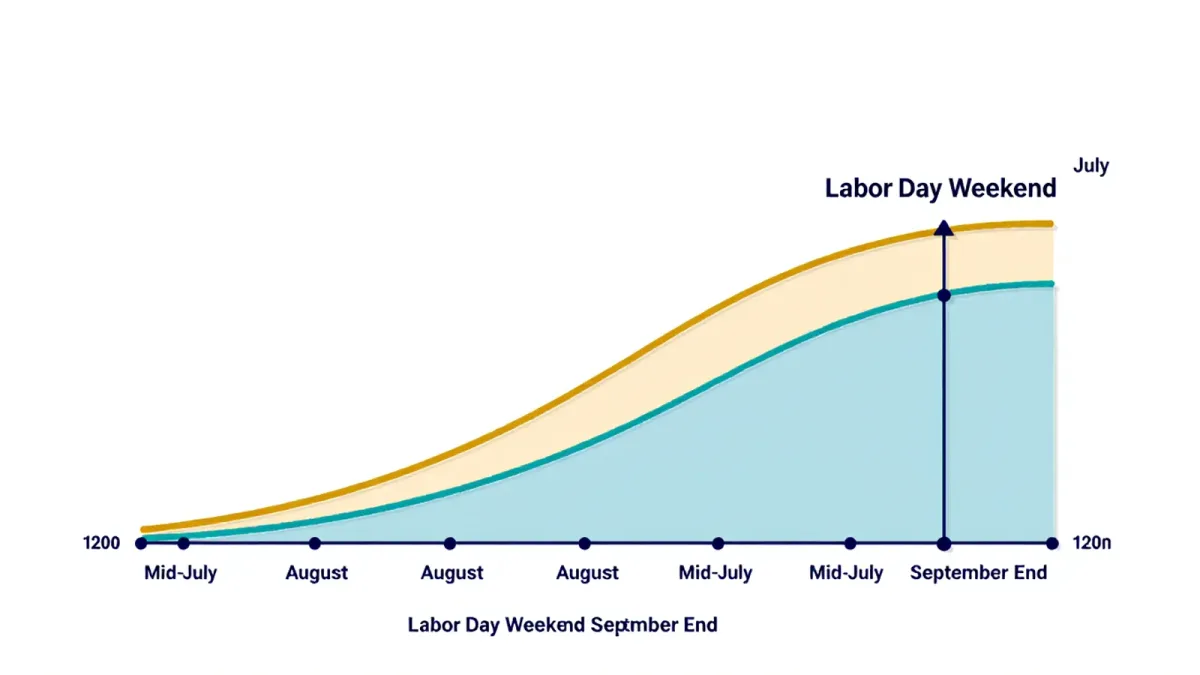
The holiday's mechanics matter because Labor Day is a demand cliff, not a gradual slope: the school calendar empties the beaches on a fixed date, and the pricing tiers that follow it are set by owners and managers months in advance — which is why the weekend and the week after it can price like two different seasons at the same property.
How crowded is Labor Day weekend, really?
It runs at summer peak levels, with one structural difference: the crowd is more compressed. Because the season is ending, the weekend draws both the regular summer crowd and everyone making a last trip, and the front-loaded pattern means Saturday and Sunday carry the heaviest beach hours while Monday empties by afternoon as the return traffic starts. The access points — lots, bridges, rental check-ins — feel the squeeze more than the sand does, and the standard summer counters apply at full strength: arrive at the beach before 9 a.m., travel outside the Friday-evening and Monday-afternoon windows, and expect park-beach lots to close when full. Towns with holiday events — fireworks, concerts, end-of-season festivals — add local spikes that the town's own calendar lists; the events are worth planning around in either direction.
What happens to prices after the holiday?
The tiers flip, usually on the weekend after Labor Day: weekly vacation rentals in most Mid-Atlantic and Northeast markets step down from summer rates to fall rates — the largest single-week price move of the season, per the rate calendars owners publish — and hotels follow more gently, with midweek availability opening up that had vanished since June. Two caveats keep it honest: seasonal tiers vary market by market, and event weekends can reprice an individual town overnight, so the real comparison is always the quoted rate for your dates against the same property's August week. The pattern travelers exploit: book the post-holiday week at the shoulder rate, and the water is at its warmest — the price curve and the temperature curve point opposite directions in the week after Labor Day, which is precisely what makes that week the value of the year on the northern coasts.
What changes for swimmers on both sides of the holiday?
Before the holiday, nothing changes — lifeguards run full seasonal schedules at every guarded beach, and the water is near its annual warmest at most stations. After the holiday, the wind-down begins: many towns reduce lifeguard coverage to weekends or end it for the season on a posted date in mid-September, and the town or park's page states it — unguarded water changes the risk math, particularly for families. Water temperature, meanwhile, moves slowly: NOAA station climatology shows the annual peak around late August and September, with warm-enough-for-swimming conditions persisting well into the month at Mid-Atlantic and Gulf stations. The combination — warm water, thinning crowds, shrinking services — defines the post-Labor-Day trip: go early in the month, check the guard schedule, and swim while the season's structures are still in place.
How should you time a Labor Day trip?
Three decisions settle it. If the trip is about the holiday atmosphere — the last full-amenity weekend, events, the season-closing energy — book early, arrive early, and accept the peak. If it is about the beach itself, shift one week later: the Tuesday-after-Labor-Day through mid-September window delivers the same water with a fraction of the people, at shoulder rates, with the caveat of checking lifeguard schedules and seasonal business hours before committing. And if the dates are fixed to the holiday weekend, build the trip around the mornings — early beach hours, early crossings, early dinners — because the weekend's crowds live in the middays. Whatever the choice, the two checks are the ones that end every beach plan here: the managing authority's service schedule, and the operator's current rates for your dates. Conditions change — check the official advisory before you go.
| Window | Crowds | Rates | Water | Services |
|---|---|---|---|---|
| Week before Labor Day | Summer peak | Summer tiers | Near annual peak | Full lifeguard and amenity schedule |
| Labor Day weekend (Sept 5–7, 2026) | Season's last spike, compressed | Peak | Near annual peak | Full, plus holiday events |
| Week after Labor Day | Sharp drop | Shoulder tiers begin | Warm — the lag persists | Wind-down begins; check guard schedules |
| Mid–late September | Low | Shoulder | Warm at southern and Mid-Atlantic stations | Weekend guards or none; hours shrink |