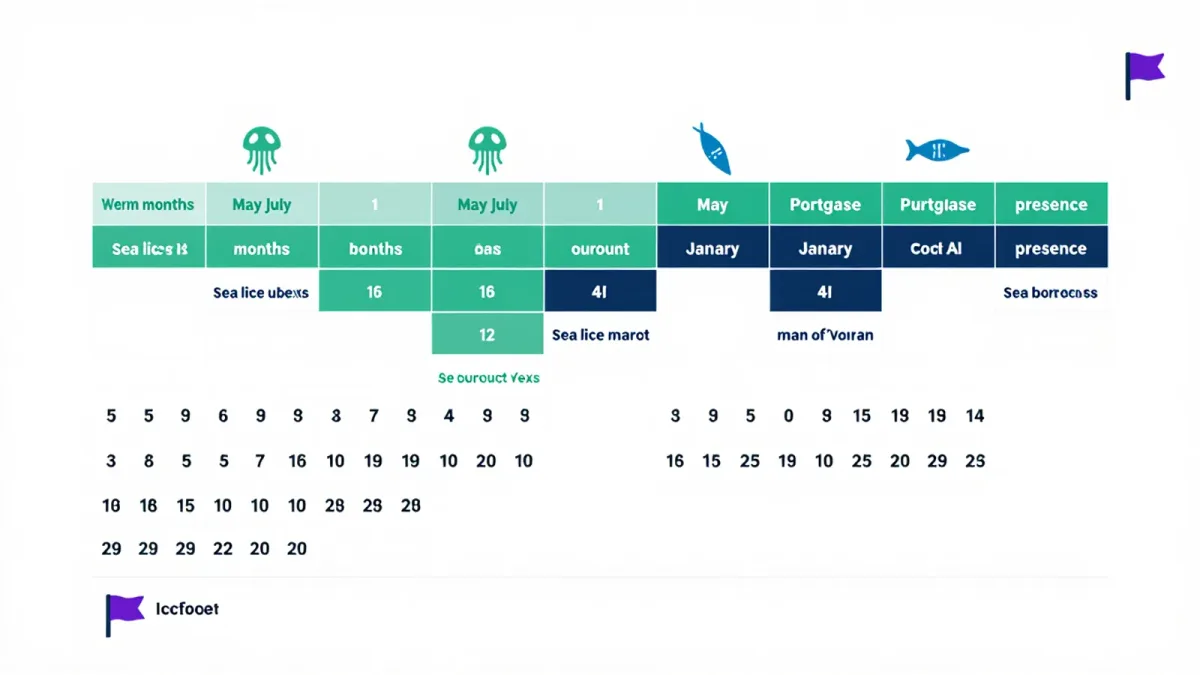
Florida's stinging-things calendar runs on two tracks: sea lice — the larvae of the thimble jellyfish — peak in the warm months from late spring through summer, when outbreaks of the pinhead-size stingers prompt the rash advisories that Florida lifeguards post each year between roughly March and August; and Portuguese man o' war, the blue-bottle colony with a painful sting, blows onto Atlantic beaches mostly in the cooler months and spring, when sustained onshore winds drive them ashore in fleets. Neither follows a schedule precise enough to plan against exactly — both follow wind and water temperature — but the seasonal shape is consistent enough to pack for, and the prevention steps are the same ones county lifeguards and the Florida Department of Health have published for years.
The two tracks are worth separating because they behave differently: sea lice are a swimming-season nuisance with a distinctive rash pattern under swimwear, while man o' war are a visible hazard — a blue float at the tide line — that injures mainly people who handle or step on them, including on days nobody is swimming.
What exactly is sea lice, and when is the season?
Sea lice are not lice at all: the term Florida beachgoers use covers the microscopic larvae of the thimble jellyfish, a Caribbean-and-Florida-Straits species whose larvae drift inshore in warm months. The outbreaks — concentrated historically along the Palm Beach to Broward coast but reported up and down the peninsula — run from spring into summer, with the heaviest reports in May, June, and July, and the irritant is the larvae stinging where swimwear traps them against skin: a rash that develops hours after swimming, concentrated under the suit, with chills or fever in heavier exposures. The seasonal driver is warm water and onshore drift, so the practical window advice is this: the season's edge months, March-April and August, see fewer outbreaks than the May-July core, and post-swim hygiene matters in every warm month. County health departments and lifeguard associations post outbreak notices when counts run high — the flag at the guarded beach is the on-site signal.
What actually helps against sea lice?
The steps lifeguards and health agencies repeat each season, in order of usefulness. Remove the swimsuit before rinsing — rinsing while still suited can trigger the trapped larvae to fire. Wash the suit with detergent and heat-dry it; larvae in a re-worn suit re-sting. Shower fresh, treat the rash as a simple irritant — over-the-counter hydrocortisone and oral antihistamines are the standard comfort measures people use — and resist scratching, which drives most secondary infections. The prevention half: skip the baggy T-shirt in the water during outbreak notices, since loose fabric traps larvae against skin better than a fitted suit does; some regulars rely on a topical barrier product applied before swimming. None of this is exotic — it is rinse-and-laundry discipline — and it is why the same beach can produce a rash report and a shrug on the same day.
When do Portuguese man o' war show up?
Mostly in the cooler months and spring on Florida's Atlantic beaches: the man o' war is a surface-drifting colony with a sail, and sustained onshore winds — most common from late fall through spring — push fleets onto the sand, where they remain venomous for hours or days after stranding. The sting is genuinely painful, handled with the widely published first-aid sequence: rinse with vinegar where available to inactivate remaining stinging cells, remove tentacle fragments with a tool rather than fingers, then hot-water immersion for pain relief — the heat-immersion step is the part backed by the strongest recent clinical evidence for jellyfish stings generally. What not to do is equally fixed: no urine, no fresh-water rinse for man o' war stings, no rubbing with sand. The beach rule covers the rest — a beached blue float stings, so do not touch it, and keep dogs on a short leash along the tide line in season.
How do you check conditions before a Florida beach day?
Three checks cover it. The guarded beach's flag: Florida's uniform beach warning flag system includes a purple flag for dangerous marine life — jellyfish among them — flown by lifeguarded beaches statewide, and it is the single most current signal on the sand. The local lifeguard or county beach-safety page, which posts outbreak notices and stranding reports in season. And the day's wind: an onshore breeze in the cool months means man o' war risk on Atlantic beaches, while warm-water months carry the sea lice track everywhere the current pushes. Severe reactions — difficulty breathing, chest pain, extensive stings — are emergency-care events on any timeline; everything else on this list is prevention and comfort. Conditions change — check the official advisory before you go.
| Hazard | Typical season | Where it concentrates | Key prevention |
|---|---|---|---|
| Sea lice (thimble jellyfish larvae) | Late spring–summer, peak May–July | Southeast coast beaches, warm water | Remove suit before rinsing; wash and heat-dry suits |
| Portuguese man o' war | Late fall–spring, wind-driven | Atlantic beaches after onshore winds | Watch the tide line; never touch stranded floats |
| Moon and other common jellies | Warm months, variable | Statewide, following wind and current | Purple flag awareness; shuffle, don't grab |