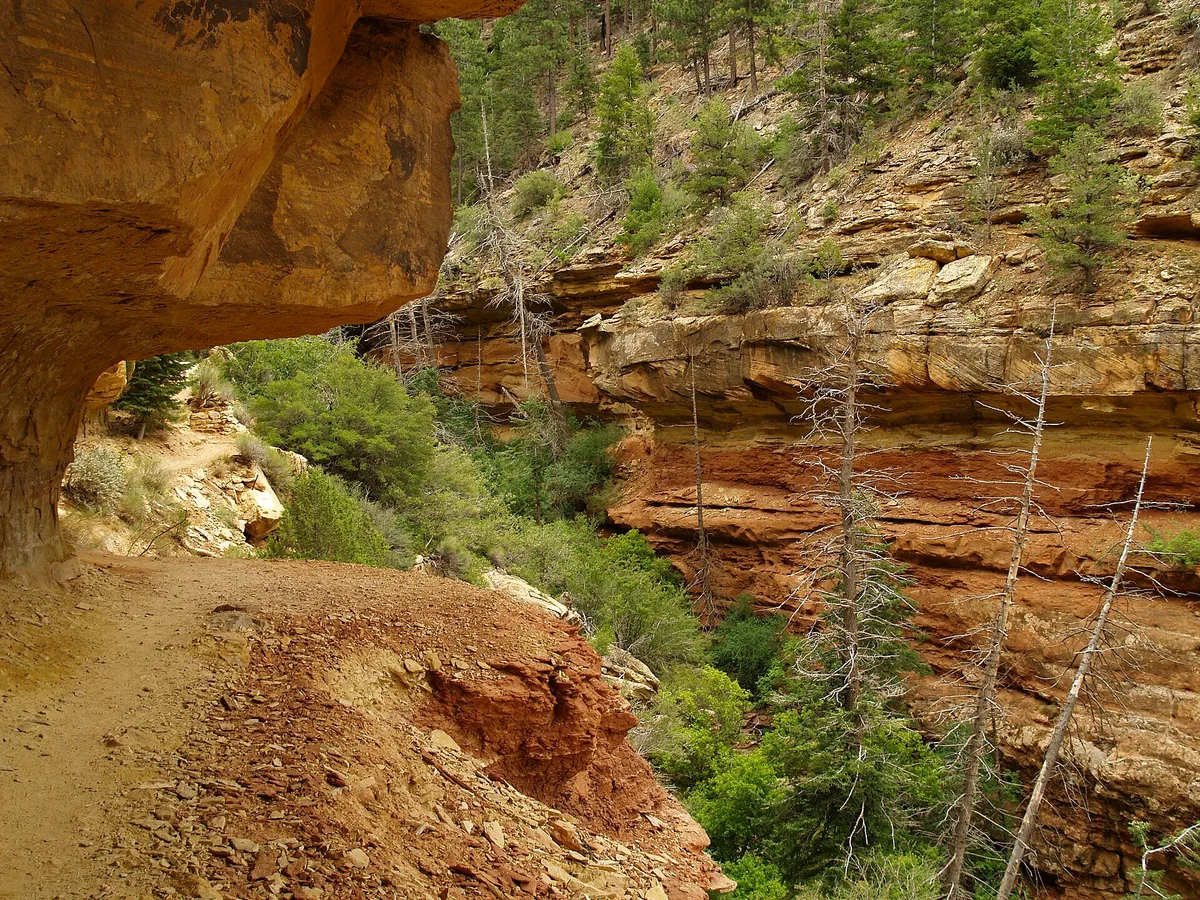
Spring hiking is a trade. You give up wildflower peaks and warm afternoons, and you get the trails almost to yourself. The best early-season spring hiking trails are the ones that dry out first: south-facing slopes, sandy or gravelly paths, and ridgelines that shed water instead of holding it. Save the muddy lowland loops and the high summits for late May.
The timing depends on where you are. In the United States and the United Kingdom, spring is generally counted as March, April, and May, according to Wikipedia's overview of the spring season, which also notes that ecologists skip the calendar entirely and read the season from living signs — blossoming plants, animal activity, soil warmth. That ecological reading is the useful one for hikers. The trail, not the date, tells you when it's ready.
When does hiking season actually start in spring?
Later than most people hope. Meteorologists define the seasons by average monthly temperatures, so spring runs March through May in the US and UK — but that's an accounting device, not a trail condition report. Wikipedia's seasonal overview also points out that different cultures and climates draw the lines differently; Ireland counts February as spring, and Sweden waits for a stretch of days when the average temperature finally clears freezing.
On the ground, the sequence is simple. Low, shaded, and clay-heavy trails thaw last and stay soggy longest. South-facing slopes catch the low spring sun and dry days or weeks earlier. Coastal paths, dune walks, and gravel rail-trails drain fast and are usually walkable well before the mountain roads even open. If you're planning around the calendar rather than the mud, the same shoulder-season logic that makes Fall on the Coast: Why Autumn Is the Shore's Secret Season such a good value play works in reverse here — the weeks before the peak are the quiet ones.
What is mud season, and why does it matter so much?
Mud season is the stretch between thaw and dry-out, when frozen ground melts from the top down. Water sits on top of still-frozen soil with nowhere to go. Every footstep punches a hole in that soft surface, and a trail walked by a hundred careless boots becomes a trench by June.
The damage isn't cosmetic. When hikers skirt a muddy stretch by walking on the vegetated edge, they widen the trail, kill the plants that hold the soil, and set up erosion that lasts years. Trail crews spend spring and summer undoing exactly this. The etiquette is blunt and simple, and it's the single most useful thing to know before an early-season hike.
- Walk through the mud, not around it. Stay in the center of the tread, even if it means wet boots. The trail was built to take it; the edge was not.
- Pick your footwear for puddles, not for looks. Waterproof boots and gaiters turn a mud walk from misery into routine.
- Save the fragile trails for later. Alpine summits, tundra, and high-elevation paths hold snow and ice into late spring. If a trail still has deep snowpack or ice, it isn't ready — go lower.
- Check conditions before you go. Local land managers and trail clubs post mud-season advisories, and some temporarily close the most vulnerable routes. A five-minute check protects the trail and your afternoon.
Which trails are ready first — and which ones to skip?
Think in surfaces and sun, not in specific famous names, because conditions vary by year and by latitude. The paths that dry first share a few traits you can spot on any map.
Go early for: coastal bluff and beach trails, where sand drains almost instantly; old rail-trails, whose crushed-stone beds were engineered for drainage; south- and west-facing ridgelines; and lower-elevation river walks on gravel. Dune walks and boardwalks pair nicely with a beach plan — our Beach Day Preparation: Your Pre-Season Checklist, Item by Item covers the packing side, and the same shoulder-season quiet shows up on the sand, as we noted in Shoulder Season at the Beach: When the Crowds Thin but the Water Is Still Warm. We covered a connected angle in Shoulder Season at the Beach: When the Crowds Thin but the Water Is Still Warm.
Hold off on: forested valley loops with clay soil, anything in a hollow near a stream, and — above all — high summits. Snow lingers on north faces into late spring, and ice on a summit ledge is a serious hazard, not an inconvenience. If you want the view without the risk, pick the sunny ridge at half the elevation.
What should you pack for early-spring hiking?
Spring weather is the least stable of the year. A morning that starts at freezing can end in the sixties, and a sunny forecast can turn to sleet by afternoon. Pack for the range, not the forecast.
- Layers, in synthetic or wool. Cotton holds water and cold. Start with a base layer, add an insulating mid-layer, and top it with a wind- and rain-proof shell.
- Waterproof boots and wool socks. Mud season is, first, a foot problem.
- Microspikes for anything icy. If early-morning frost or lingering snowpack is possible on your route, lightweight traction devices weigh almost nothing and prevent most spring slips.
- More water and snacks than you think you need. Cold suppresses thirst; hikers dehydrate on cool days without noticing.
- A headlamp and a map. Spring days lengthen quickly — Wikipedia's seasonal entry notes that daylight grows steadily from the spring equinox toward the summer solstice — but it's still easy to be out later than planned.
What this means for your spring hiking plan
Our analysis is straightforward: the hikers who enjoy April are the ones who match the trail to the thaw. Choose a draining surface with southern exposure, keep your ambitions modest, and treat mud as something to walk through rather than avoid. Do that, and you'll have the year's best trails in their quietest weeks — with your boots ruined in exactly the way the trail crew intended.
The season itself is generous with signals if you watch for them. In England, Wales, and Northern Ireland, the National Trust even runs a #BlossomWatch campaign asking people to share photos of blossom as an early marker of spring's arrival, as Wikipedia's seasonal overview records. You can borrow the same habit anywhere: when the trees along your local trail are flowering, the high paths are usually a few weeks behind, and the dry ones are ready now.
Conditions change fast in spring, and advisories change with them. Check the managing agency's current trail status before every early-season outing — it's the difference between a great mud-season hike and a bad one, for you and for the trail.