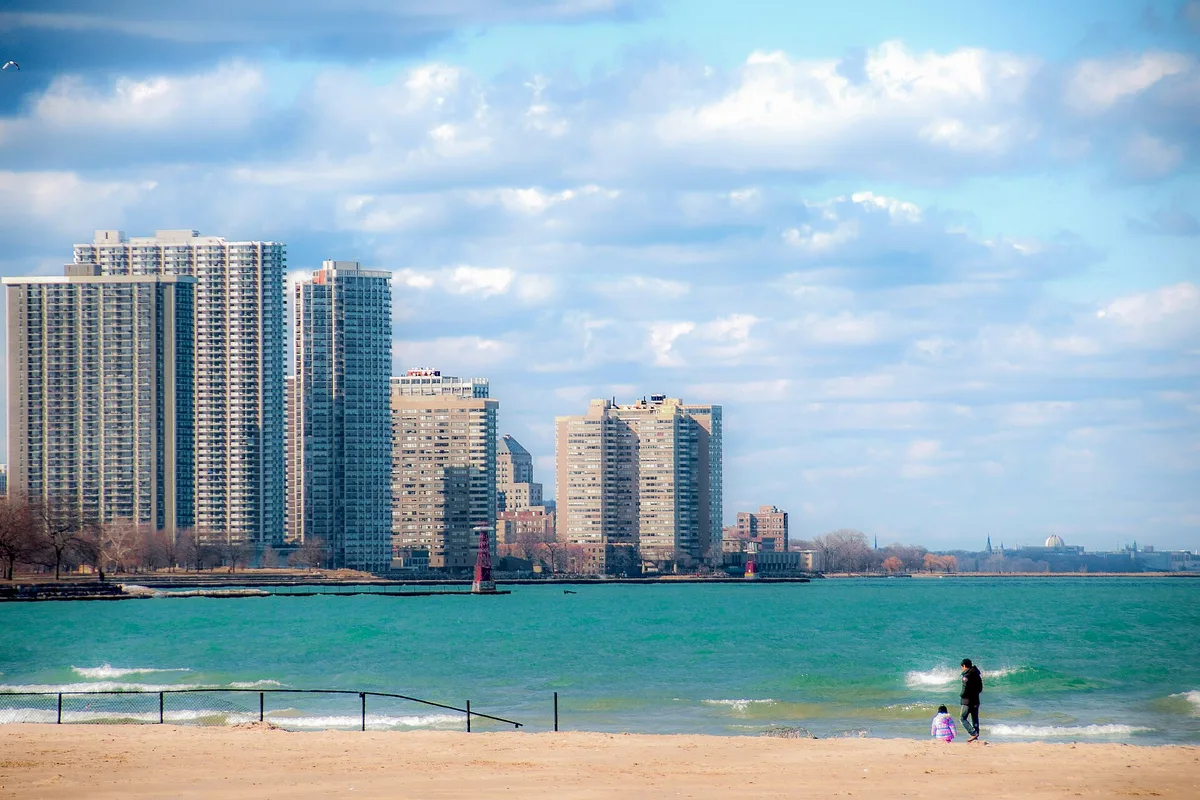
The best winter beach walk starts with an empty parking lot. In the season that runs, by the meteorological calendar, from December through February in the Northern Hemisphere, the boardwalk benches sit open and the sand holds only gull prints. That emptiness is the point: winter beach walks trade swimming and crowds for long sightlines, low light, and the sound of surf with nothing else in it.
The season is real, not just a mood. Astronomical winter runs from the December solstice to the March equinox, the coldest and darkest stretch of the year in temperate climates, when the hemisphere tilts away from the sun. On the coast that tilt shows up as a sun that stays low all day, so the light stays slanted and gold from mid-morning until mid-afternoon. Photographers chase it. Walkers get it for free.
This guide covers what the cold coast offers, what to wear, how to read a winter forecast before you plan a trip, and the safety habits that keep a quiet walk from turning into a cold emergency.
What makes a winter beach walk different?
Three things change when the season turns, and all three work in the walker's favor.
First, access. Summer rules relax in many places once the peak season ends: lifeguard stands empty, paid lots go unpicketed, and leash rules often loosen on the same schedule. That is a general pattern, not a promise. Access, fees, and rules come from the managing authority for each beach, so check the town, county, or park service page for the specific stretch of sand before you go. Readers following this should also see Labor Day at the Beach: The Season's Last Peak — and the Week Right After It.
Second, the water itself. Winter surf is often larger and colder, and the waves reshape the beach. A wide summer berm can be cut back to a narrow strip by a single nor'easter. Storm-watching from a safe, elevated spot is part of the season's appeal; walking at the waterline during or right after a storm is not. We covered a connected angle in Shoulder Season at the Beach: When the Crowds Thin but the Water Is Still Warm.
Third, the light and the wildlife. Low winter sun means long shadows on the dunes and a short, intense golden hour. It also means migratory season: on the Pacific coast, gray whales pass close to shore in winter, and our guide to the gray whale migration covers when and where to watch from land. Birders get their own season, with loons, scoters, and gannets working the nearshore water.
When exactly is winter on the coast?
It depends on which calendar you use, and the difference matters for planning. As Merriam-Webster defines it, winter in the Northern Hemisphere is usually December, January, and February, or, reckoned astronomically, the stretch from the December solstice to the March equinox. The Wikipedia overview of the season adds a third reckoning: the solar or Celtic calendar, which treats winter as November through January and tracks the season by sunlight rather than by temperature records.
The practical takeaway for a beach walker is that the coldest weeks typically land in January or February in the Northern Hemisphere, while the darkest evenings arrive around the winter solstice in late December. Daylight lengthens after the solstice, which is why late February walks feel surprisingly generous even on a cold day.
Coastal winters run milder than inland ones at the same latitude. Marine air buffers temperature swings, so a shore town can sit several degrees warmer on a January night than a town an hour inland. That moderation is a large part of why the cold coast stays walkable at all.
What does this winter's forecast suggest for coastal trips?
Long-range forecasts are a planning aid, not a guarantee, but they help you pick which coast and which weeks. According to The Old Farmer's Almanac winter forecast for 2026–2027, the season ahead looks mostly mild across the United States, with a colder stretch expected from central New England through the Appalachians and Ohio Valley. The Atlantic Corridor is projected to run above normal in temperature with slightly below-normal snowfall, while the Southeast and Florida lean milder and drier in their southern parts. Snowier-than-normal conditions are expected in parts of the Northeast and Appalachians, the Pacific Northwest, and Alaska.
What this means for a beach walker: the mid-Atlantic and southern coasts look like the gentler bets for a mild-season stroll, while a New England winter walk this year may mean packing for real cold and, in the forecast's snowiest periods, snow on the dunes. Check the forecast again close to your travel date. Long-range outlooks set expectations; the seven-day forecast sets the packing list.
What should you wear and bring on a cold-coast walk?
Winter beach walking is a layering problem. Wind off the water cuts harder than the thermometer suggests, so the standard kit is simple:
- A windproof outer layer. A shell matters more than insulation on a breezy beach.
- Warm mid-layers you can shed as the walk warms up.
- Waterproof footwear with real tread. Wet sand, shell hash, and icy boardwalk planks all punish smooth soles.
- A hat and gloves, even on days that look mild from the car.
- Water and a snack. Cold suppresses thirst, and dehydration still happens.
Practical steps for the walk itself: start earlier than you think you need to, because winter daylight ends abruptly. Tell someone your route if the beach is remote. Keep a dry layer in the car. And check the tide before you set out, because a high tide can close a narrow beach entirely and leave a walker pinned against a dune bluff.
How do you stay safe on an empty winter beach?
The same emptiness that makes the season appealing removes the safety net. Fewer people means fewer witnesses and slower help, so the winter walker carries the responsibility personally.
- Stay off the waterline during and after storms. Sneaker waves and storm surge are the season's real hazards, not the cold alone.
- Never turn your back on the surf on a beach known for sudden wave run-up.
- Respect closure signs and dune fencing; storm-damaged dunes and walkers do not mix.
- If you go onto ice or jetty rock in freezing conditions, reconsider. Sea spray freezes rock into a skating rink.
- Check the local beach advisory page for water quality and hazards before any trip that might involve contact with the water.
Cold water is the serious risk. Immersion in winter surf can incapacitate a swimmer in minutes, and a winter rescue is slower by definition. Watch the water from the sand and let the storm do its showing from a distance.
Our analysis: the quiet season is a different trip, not a lesser one
The evidence here points one way: winter does not close the coast, it edits it. The season's dates are fixed and well documented; this winter's regional outlook favors milder conditions across much of the country; and the practical demands are modest — layers, tides, and storm awareness. What remains unknown is any specific beach's day-to-day access and conditions, which only the managing authority and a current forecast can settle.
If summer is the coast at its busiest, winter is the coast at its most legible: you can see the dune grass move, count the fishing boats, and hear one wave finish before the next begins. For the fuller off-season picture — what stays open, what closes, and what gets cheaper — see our guide to the off-season beach town, and for the season just before this one, our piece on why autumn is the shore's secret season. Both pair well with the broader Seasons coverage and our beaches guides when you are ready to pick a stretch of sand.