A storm redraws a beach in a few hours. Sand that held your umbrella last week can be gone, cut into sharp steps by waves, or piled into new ridges. Walking a beach after a storm is one of the quiet pleasures of the coast, but the same forces that moved the sand can leave hazards behind.
The good news is that beaches telegraph their trouble. Coastal erosion is the loss or displacement of land, or the long-term removal of sediment and rocks along the coastline, driven by waves, currents, tides, wind-driven water, waterborne ice, and other storm impacts, according to Wikipedia's page on coastal erosion. Once you know what the process leaves behind, reading a storm-washed beach gets much easier.
What a Storm Does to a Beach
Waves do most of the work. Beaches protect the land behind them by dissipating wave energy on the foreshore, so when a storm strips sand away, that natural shield thins and the next set of waves reaches further inland.
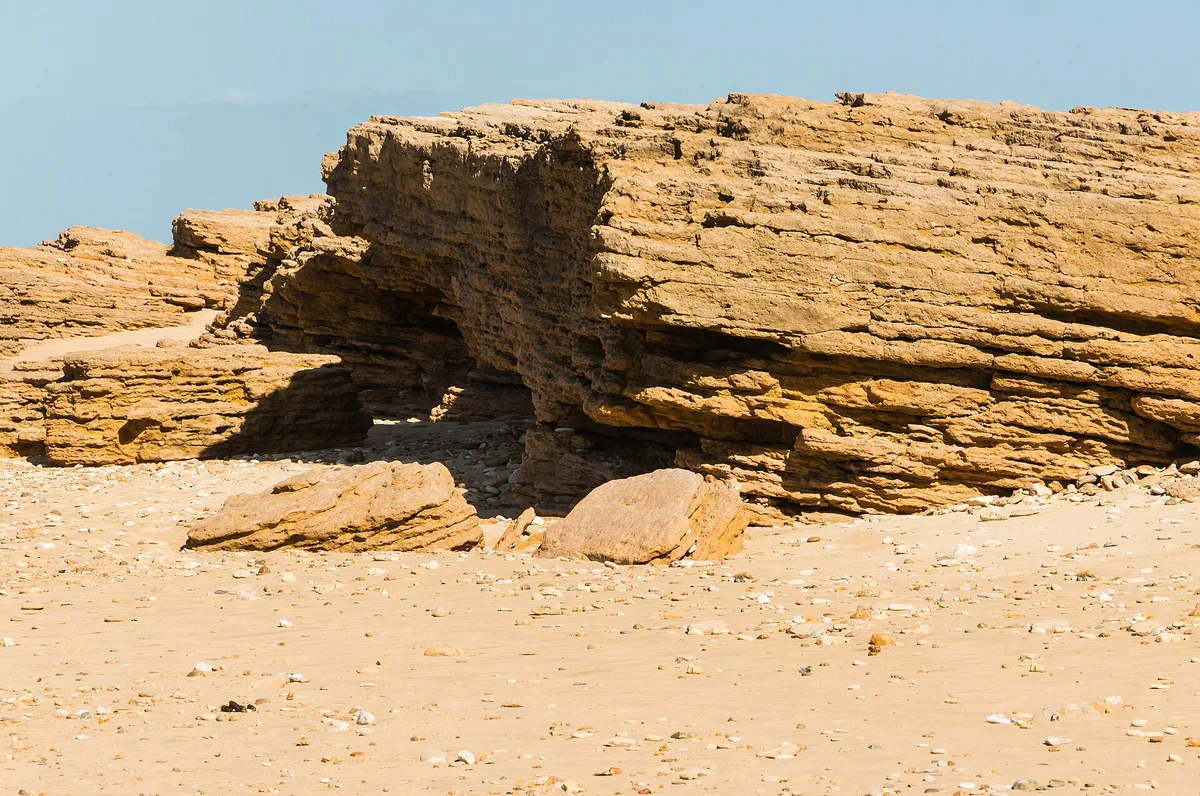
Not every shoreline gives way at the same pace. On coasts with mixed rock, softer areas erode much faster than harder ones, which over time forms tunnels, columns, and pillars. Erosion also runs fastest where strong winds meet loose sand and soft rock, and blowing sand even sandblasts and smooths the surfaces it hits. Readers following this should also see Avalon Closes More Beach Paths After Winter Erosion — and Bets on a Spring Sand Backpass.
Warning Signs in the Sand
Walk with your eyes on the ground and the waterline. Fresh cuts in the sand, new ridges of thrown sand, and a shoreline that ends abruptly all mark recent wave attack. Offshore, shoals and bars normally force storm waves to break early and lose energy before they reach the beach, but their positions shift, and the coastal erosion page notes that such shifts can move the worst erosion to a new spot along the shore. We covered a connected angle in How to Read a Rip Current Forecast Before You Swim, According to NOAA and the Flag on the Sand.
Watch the storm line of debris, too. Waves sort and redeposit fallen material across the foreshore, and fresh rubble can be unstable underfoot. If the beach is littered with it, treat that as evidence of recent erosion and step carefully around every pile.
Cliffs and Bluffs: Give Them Room
Cliffed coasts deserve the widest margin of all. Waves compress air in cracks on a cliff face, and that pressure can splinter and remove pieces of rock; over time the cracks grow, sometimes forming caves. Heavy marine erosion events, like photographed cliff falls, show how sudden the process can be.
Keep well back from the edge, and never climb on fresh piles of fallen rock. Wikipedia's coastal erosion page notes that cliff fall debris can be very persistent and take many years to disappear, so a rubble pile on the foreshore is not proof the cliff has finished moving.
Reading the Longer Trend
Shorelines retreat on clocks of tides, seasons, and other short-term cycles, and that retreat can be measured. The trend is not subtle: according to the IPCC, as cited by Wikipedia, sea level rise caused by climate change will increase coastal erosion worldwide and significantly change low-lying coastal areas.
Erosion has already grown along the Eastern seaboard of the United States, and Florida and its counties have raised budgets to replenish the eroded sands that draw visitors. Storms have even removed developed land: major storms destroyed beachfront houses in Pacifica, California, and erosion forced the relocation of a scenic overlook at Torrey Pines. That is the extreme case, but it shows how much a coastline can change.
Conclusion: Read the Beach Before You Walk It
A storm-washed beach is safe to walk when it shows no fresh scars. Look for cuts and ridges in the sand, unstable debris, and any shoreline that now ends where it used to slope. Stay well clear of cliffs with fresh cracks or rubble below, and remember that the beach itself is the land's shield. Give an eroded shore a few calm tides to settle, then enjoy the walk.