Hot sand, slick rocks, and sharp reef turn a beach day into a foot care problem fast. The right footwear solves most of it, but beach footwear is a family of designs, and each one protects differently. Here is what each type actually does for your feet.
Start with the baseline. Sandals are an open type of footwear: a sole held to the foot by straps over the instep or around the ankle, leaving most of the foot exposed. Open design is the feature and the limit at once. It keeps feet cool and dry in warm weather, and it reduces the risk of athlete's foot compared with enclosed shoes. What it does not do is shield the top of the foot from scrapes, and a thin sole passes heat and sharp edges straight through. For related coverage, see 7 Coastal Towns That Stay Open After Labor Day — and Why Fall Is Their Season.
Flip-Flops: The Beach Default
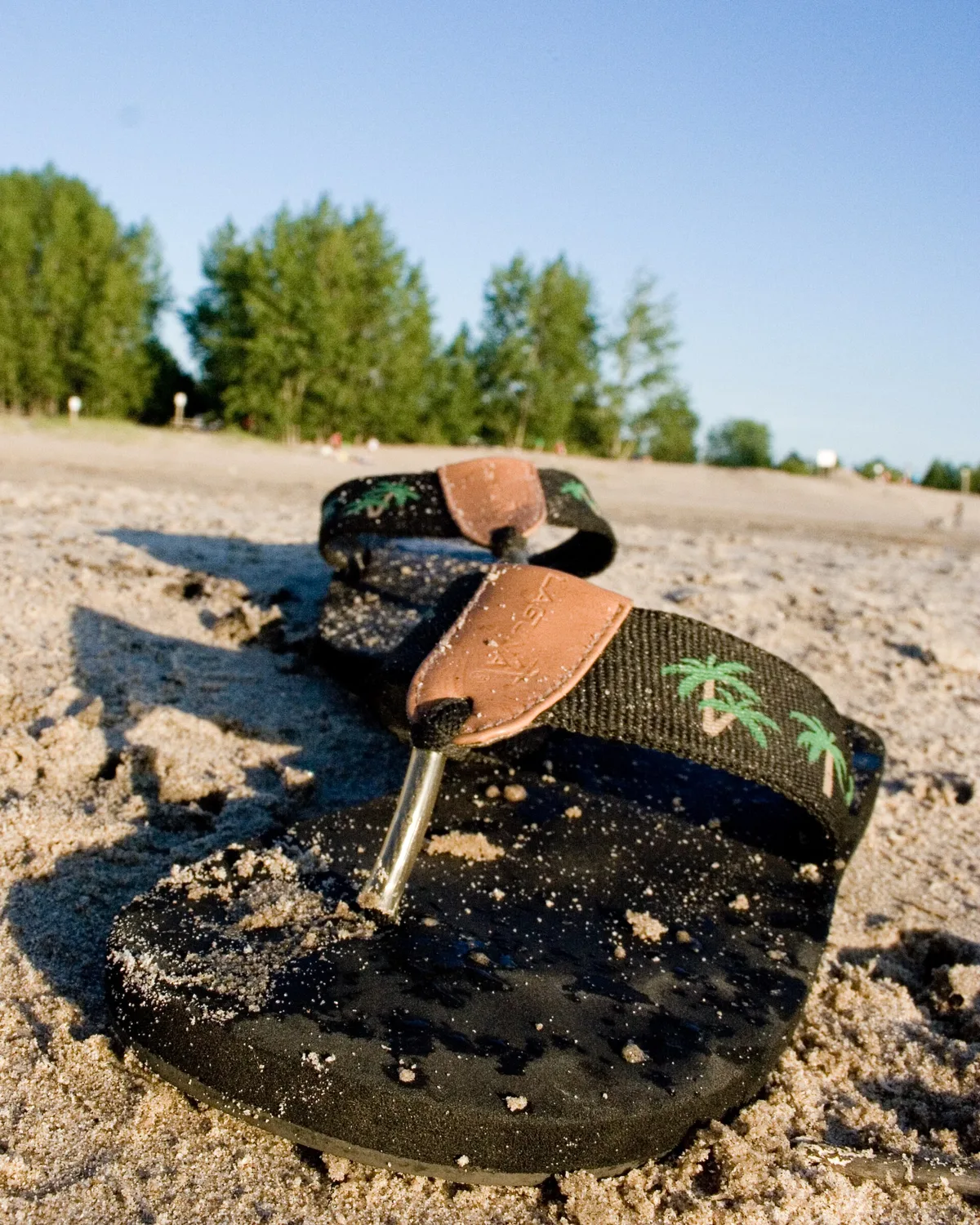
Flip-flops, called thongs in Australia, are the classic beach sandal: typically cheap and suitable for beach, pool, or locker room wear. They put a barrier between your skin and blistering deck or hot pavement, and they rinse clean in seconds. Their weakness is attachment and coverage. A single toe thong and a thin, flat sole offer little grip on wet rock, little shield over the arch, and little structure for long walks. They are a beach mat for your soles, not a trail shoe.
Water Shoes: Built for Wet, Rough Ground
A water shoe is designed for exactly the places sandals fail. Water shoes are usually made of mesh and have a hard sole used to prevent cuts and abrasions when walking in wet, rocky environments. That hard sole is the whole point on reef rock and shell-strewn shallows. Many designs add tiny holes in the sole or sides for drainage, which lets feet dry faster, keeps the shoe light, and extends the material's life. Most people wear them without socks.
Water Socks and the Barefoot Feel
At the lightest end of the range sits the water sock. It maintains the feeling of being barefoot during water activities and is ideal for swimming; some can even be worn inside scuba gear. Socks protect against scrapes and heat without adding structure. They suit sandy bottoms and calm entries better than jagged rock, since there is no stiff sole doing the shielding.
Trail-Ready Sandals for Mixed Days
Between the flip-flop and the full shoe sits the hiking sandal. Hiking and trekking sandals are built for hot and tropical climates with a robust rubber outsole suitable for any terrain and a softer foam insole, with arch support shaped into the footbed. The straps are usually polyester or nylon webbing, chosen because it dries quickly after exposure to water. That makes them a one-pair answer for days that mix boardwalk, shallows, and a rocky viewpoint.
Why the Sole Does the Work
Across every design, protection comes from the sole, not the straps. Sandal soles may be made from rubber, leather, wood, or rope, and thickness and tread decide what the shoe can handle. Water shoes add the hard sole specifically to stop cuts and abrasions, a real risk where sharp-rocked floors or sharp-edged mussels line the bottom; in some waters, wearing water shoes has become essential for that reason. The footwear tradition is ancient, too: the oldest known footwear is a pair of sagebrush sandals from Oregon dated to between 10,500 and 9,300 years ago.
Conclusion: Match the Sole to the Ground
Choose by surface. Sand and calm water welcome flip-flops or water socks. Rocky entries and reef flats ask for a water shoe with a hard sole. A full day of mixed terrain justifies a trail sandal with quick-drying webbing. Match the sole to the ground under your feet, and the beach stays fun from the parking lot to the waterline. This connects to our earlier piece, Avalon Closes More Beach Paths After Winter Erosion — and Bets on a Spring Sand Backpass.