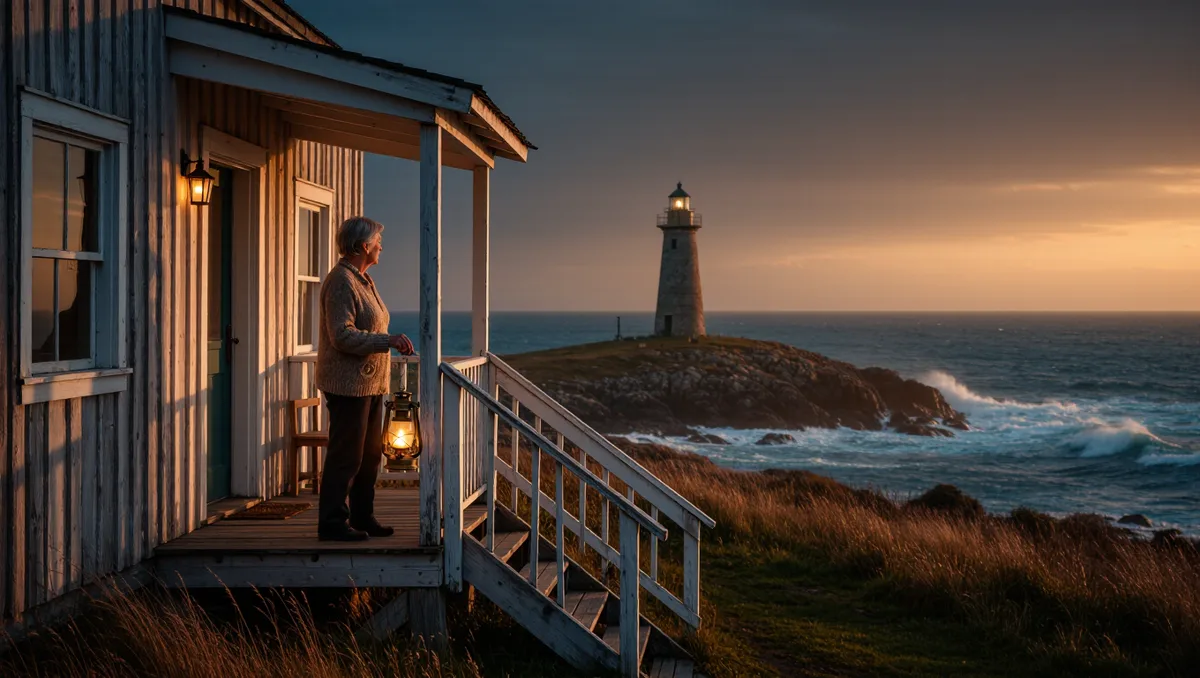
The coast collects ghost stories the way it collects driftwood. Old ports, storm-battered lighthouses, and inns that have stood for centuries all carry tales of phantom ships, restless keepers, and guests who checked in long ago and never left. These legends are worth retelling — not because anyone can prove a haunting, but because the stories hold a town's history in a way a plaque rarely does.
Belief itself is more common than skeptics might assume. According to Wikipedia's overview of ghost folklore, a 2009 Pew Research Center study found that 18 percent of Americans say they have seen a ghost. The same overview is blunt about the science: ghosts are not a testable concept, and centuries of investigation have produced no evidence that any place is actually inhabited by the spirits of the dead. That gap — between what people report and what can be verified — is exactly where coastal folklore lives.
For travelers, these stories are a seasonal pleasure. They pair naturally with fall, when the beaches empty out and the towns that stay open after Labor Day lean into their quieter, moodier side. Our fall seasons coverage follows the coast month by month, and ghost lore is part of that shoulder-season texture. This connects to our earlier piece, 7 Coastal Towns That Stay Open After Labor Day — and Why Fall Is Their Season.
What exactly is a ghost, in folklore terms?
The word covers more ground than most travelers realize. In folklore, a ghost is the soul or spirit of a dead person — sometimes an animal — that is believed to appear to the living. Descriptions vary widely, from an invisible presence to a wispy shape to a lifelike figure that looks fully human. The same family of terms includes apparition, phantom, specter, wraith, and poltergeist, a German word that literally means "noisy ghost" — a spirit said to move objects rather than show itself.
One detail from the folklore record is useful for anyone sorting local legend from local history: not every famous "ghost" was supernatural at all. Wikipedia recounts the Hammersmith Ghost case from England, illustrated in a magazine in 1804 — the "ghost" turned out to be a local cobbler in a white sheet, scaring people on purpose. Many shore-town tales probably have similar mundane cores: a storm, a shipwreck, a misunderstanding, retold until the facts wore smooth.
Why does the coast produce so many of these stories?
Geography does most of the work. Ports and fishing villages were, for generations, places where people died far from home and where news of a loss often arrived after the fact. A town that lost a ship might hear about it weeks later, when wreckage washed ashore. The story that filled the gap — a vessel seen sailing in weather no captain would choose, a lantern moving along the breakwater — became a legend because it answered a question the sea never did.
Buildings deepen the pattern. An inn that has hosted guests since the age of sail accumulates names, dates, and deaths. A lighthouse keeper's long isolation, and the very real danger of the work, made keeper legends almost inevitable. In folklore studies, ghosts are believed to haunt particular locations, objects, or people they were attached to in life — which is why the same inn room, the same lighthouse stair, or the same stretch of shoreline keeps reappearing in a town's stories.
Phantom ships: the coast's signature legend
If shore towns share one story type, it is the ship seen where no ship should be. The motif travels well: a vessel glimpsed under full sail in fog, or a crew that vanished and is said to appear on the horizon on the anniversary of its loss. These tales survive because they are retellable — a captain, a date, a storm, and a witness. The specifics change from town to town, and that is the point. Each port adapted the shape of the story to its own wrecks and its own weather.
Travelers should treat these as folklore, not maritime fact. What they genuinely document is a community's memory of loss at sea — often the most detailed local record of an event that official paperwork never captured.
How to enjoy coastal ghost lore on a trip
The legends are best experienced the way locals tell them: on foot, after dark, in the oldest part of town. Practical steps for planning it well: For related coverage, see Beach Erosion Flags: How to Tell If a Beach Is Safe to Walk After a Storm.
- Time it for the shoulder season. Fall is when many shore towns stay active without summer crowds, and when evening walks feel atmospheric rather than crowded. Our guide to coastal towns that stay open after Labor Day covers where that works best.
- Ask where the story came from. A good tale has a named ship, a named keeper, or a named guest. If a ghost walk cannot say who the story is about, it is atmosphere, not history.
- Book the old inn, not the ghost tour, if you must choose. The buildings carry the stories. A night in a centuries-old sea captain's house delivers more sense of place than an hour with a lantern.
- Check official sources for anything that affects your plans. Ghost stories are folklore; ferry schedules, beach access, and park hours are not. Our planning guides cover how to verify the practical details before a shoulder-season trip.
What this means for your itinerary: treat the legends as a lens, not a destination. A town's ghost stories map its oldest streets, its waterfront, and its worst storms. Walk that route at dusk and you get the town's history and its folklore in one trip.
Our analysis: why the stories deserve the retelling
Skeptics are right that no haunted inn has ever been verified, and the folklore record itself — including the observation that ghost hunting is classified as pseudoscience — makes no claim otherwise. But dismissing the stories misses what they do. They keep a town's hardest nights in circulation. They name the lost when gravestones have worn blank. And they give a visitor something no brochure can: a reason to stand at the harbor rail a little longer, wondering what the first watchers saw.
The evidence these tales establish is cultural, not paranormal. What remains unknown is what the original witnesses actually experienced — and that open question is precisely what keeps each generation retelling the story. On a quiet October evening, with fog on the water and the summer crowds long gone, that is enough.