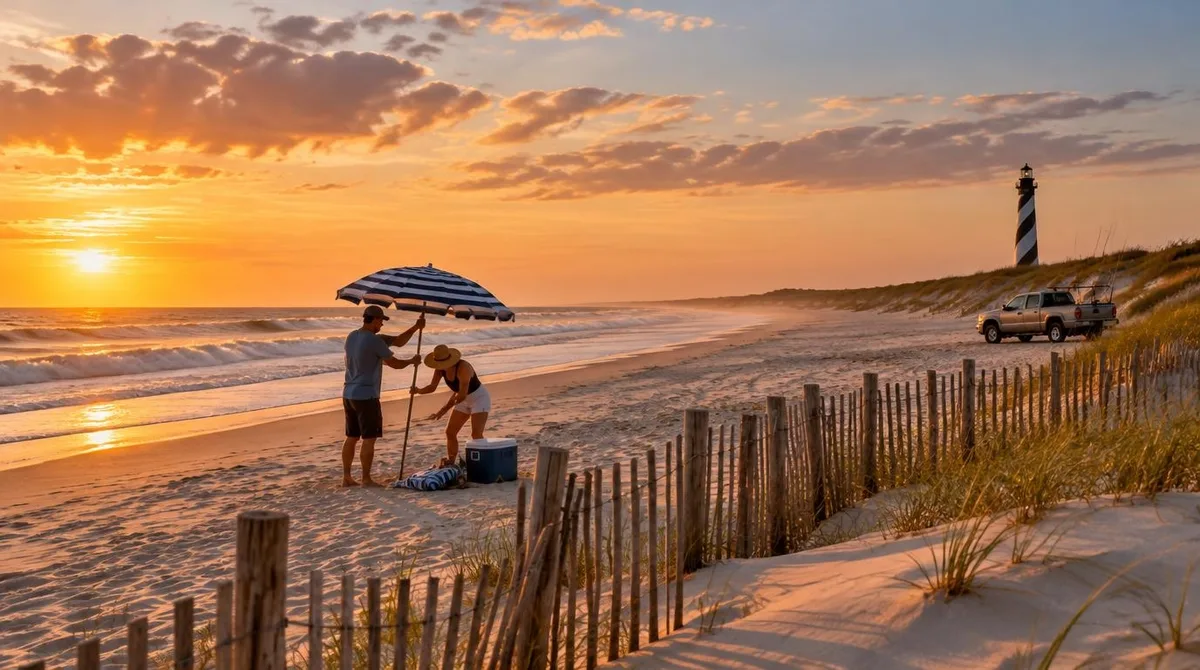
The best beaches in North Carolina run from the wild, four-wheel-drive-only stretches of the northern Outer Banks to the south-facing sand of Sunset Beach near the South Carolina line. For a first trip, Nags Head makes the easiest base: more than ten miles of coastline with over 40 public access points, plus the tallest living sand dune on the Atlantic coast next door. For quiet, the ferries to Ocracoke and Cape Lookout get you onto islands where the beach, not the town, is the point.
North Carolina has more than 300 miles of Atlantic coastline, so the real question is which kind of beach week you want: a lively town with a boardwalk, a secluded barrier island, or a family base with calm water and an aquarium a short drive away. This guide sorts the coast that way, beach by beach, with the practical details for each.
One timing note up front. According to National Geographic, the Outer Banks' shoulder season — April to May and September to October — brings average temperatures from the mid-70s into the 80s, off-season lodging rates, and far thinner crowds, since most everything stays open for business. If your dates are flexible, that window is where the value is. Our seasons coverage follows the same logic up and down the East Coast.
Which North Carolina beach is right for your trip?
Start with the trip you want, then pick the beach. Here is the short version, drawn from a recent roundup of the state's best stretches by travel editors compiling the state's top beaches.
| If you want | Go to | Why |
|---|---|---|
| Classic beach town | Nags Head, Carolina Beach | Boardwalks, pier, dozens of public accesses |
| Seclusion | Cape Lookout, Ocracoke | Ferry-access barrier islands, miles of sand |
| Family base | Atlantic Beach, Bald Head Island | Gentle water, easy drives, marine life nearby |
| Water sports | Wrightsville Beach | Surfing, scuba, fishing pier |
| Wildlife | Duck, Shackleford Banks | Wild horses, birding, sound-side paddling |
For a deeper comparison of how a national seashore trip differs from a state park or town beach week, see our guide to state park beaches versus national seashores. This connects to our earlier piece, State Park Beach vs National Seashore: Which US Coast Trip Fits Your Week, Compared.
What makes the Outer Banks different from the southern coast?
The Outer Banks is a chain of barrier islands stretching 175 miles along the coast, per National Geographic's shoulder-season guide. The northern beaches around Duck and Corolla are residential and quiet; half of the northern Outer Banks' 25 miles of beach are reachable only by 4x4, and you need a beach parking permit before driving onto them. The central islands — Nags Head, Coquina Beach, Cape Hatteras National Seashore — carry the classic town-and-lighthouse mix. Ocracoke sits at the middle of the chain, reachable only by ferry from Hatteras, Swan Quarter, or Cedar Island.
The southern coast, from Atlantic Beach down to Sunset Beach, is a different animal: shorter drives from inland cities, causeway access, and towns built around boardwalks and piers rather than long empty islands. If you are flying in or road-tripping from the southeast, the southern beaches cost you less time on the road.
Which Outer Banks beaches are worth the drive?
Nags Head is the practical anchor. More than ten miles of sand, over 40 public access points, and hotels, restaurants, and shops close to many of them. The signature sight is Jockey's Ridge State Park, home to the tallest living sand dune on the Atlantic coast — alive because it keeps changing shape and size. You can rent a sandboard, try hang gliding, or walk the nature trail.
Duck is quieter and more exclusive. Its beaches are accessible only to residents, overnight vacationers, and their guests, so book a beachfront home or the Sanderling Resort, which sits on the narrow strip between the Atlantic and Currituck Sound. The resort rents kayaks and stand-up paddleboards in summer, and 4x4 tours run to the wild horse beaches of Corolla and Carova.
Ocracoke is the escape hatch. Sixteen miles of white-sand beaches, plus fishing, kayaking, sailing, and surfing. Rent a boat or golf cart to get around the village, and end the day watching the sunset over Silver Lake Harbor. May is a particularly good month there — the Ocracoke Tourism Authority's executive director, Helena Stevens, told National Geographic that businesses are open, the beaches are still quiet, and the ferry arrival gives the trip a slower feel.
Cape Lookout National Seashore is the wildest of all: 56 miles of beach across several barrier islands. Shackleford Banks, good for swimming, is home to more than 100 wild horses. The Cape Lookout Lighthouse, painted in a diamond pattern and standing 163 feet high, anchors the seashore; ranger-guided tours, kayaking, birding, beachfront cabins, and camping fill out the options.
What about the southern beaches, from Wilmington down?
Carolina Beach sits about 20 minutes from historic Wilmington and offers three moods in one town. North, you can take in the view from the Carolina Beach Pier or buy a day pass to drive a 4x4 onto the sand at Freeman Park. South, the boardwalk runs past bars, restaurants, arcades, and bike and surfboard rentals. Nearby Carolina Beach State Park has hiking trails including the Flytrap Trail, named for the Venus flytraps that grow there.
Wrightsville Beach is the water-sports hub, with central access points to soft white sand. Johnnie Mercers Fishing Pier rents rods for pompano, bluefish, or king mackerel — note there is a small fee to walk it — and local operators run surf lessons and scuba trips to sunken ships offshore. For quiet, head north to Shell Island, a more secluded stretch popular with beachcombers.
Atlantic Beach, on the Crystal Coast across the causeway from Morehead City, is the family pick. Sandcastle territory by day, chartered fishing by choice, and sea turtles nesting in the sand from May through October. The North Carolina Aquarium at Pine Knoll Shores is a ten-minute drive away.
Bald Head Island is car-free: ferry over from Southport, then get around by golf cart, bicycle, or foot. Around 14 miles of white-sand beaches ring the island, which juts into the Atlantic where it meets the Cape Fear River. The gentle waves at South Beach suit families; East Beach has bigger swells.
Sunset Beach closes out the state on its south-facing shore near the South Carolina border. From late fall through early spring, you can watch the sun both rise and set over the water — a rare trick on an East Coast beach. Nearby Bird Island is best known for the Kindred Spirit Mailbox, where visitors write their wishes and thoughts in the notebooks inside. For related coverage, see Best Walkable Beach Towns: What Makes a Beach Town Walkable? The Criteria Behind Our Shore Rankings.
When should you go, and what should you check before you swim?
Our analysis: the shoulder-season case is strongest on the Outer Banks, where the weather holds into the 80s and off-season rates apply, but it works south too — the southern towns trade summer crowds for milder light and easier parking. If you are camping, National Geographic notes that Cape Hatteras National Seashore, America's first national seashore, has campgrounds such as Oregon Inlet with 107 sites starting at $28 per night, and private options like Hatteras Sands Campground in Hatteras Village.
Before any swim, check the day's conditions the way you would anywhere on the Atlantic: read the posted warning flags at the access and check the rip current forecast. Our explainer on how NOAA's rip current forecast works covers what each risk level means, and our guide to beach warning flags decodes the colors you'll see on the pole.
Planning a North Carolina beach trip: the takeaways
The evidence points to a simple split. Book the central Outer Banks — Nags Head, Coquina Beach, Cape Hatteras — if you want access, lighthouses, and dunes within a short drive. Take the ferries to Ocracoke or Cape Lookout when seclusion and wild horses are the goal. Head south to Carolina Beach, Wrightsville, Atlantic Beach, Bald Head, or Sunset Beach when drive time, boardwalks, and family logistics lead.
Conditions change with every storm and season, so check the managing authority's current advisory before you go — the National Park Service for the seashores, the town or county for town beaches. And if this coast hooks you the way it hooks most people, our beaches coverage runs from Rhode Island to Portugal for the next trip.