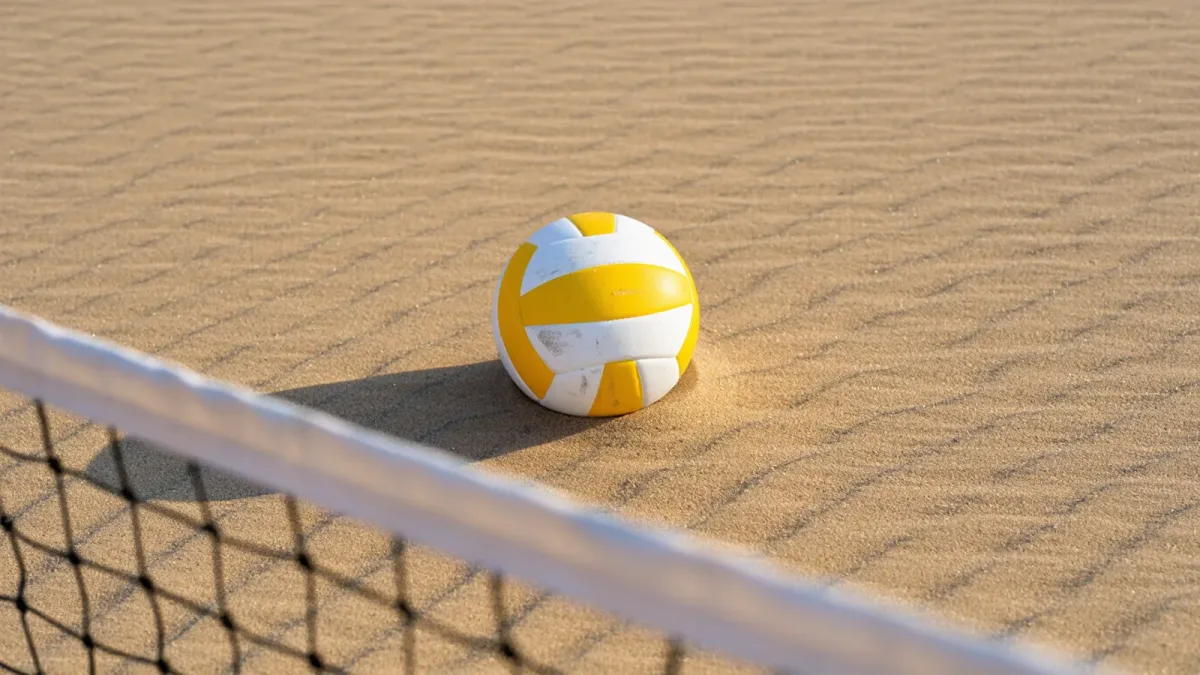
The deepest public beach volleyball scene in the United States runs through Southern California — Manhattan Beach in particular, where decades of two-on-two tradition earned the town its reputation as the sport's spiritual home — but you can find a legitimate pickup game on a dozen coastal cities' sands, from Santa Barbara's East Beach to South Beach in Miami. The modern professional tour, the AVP, traces its structure to 1983 and still stages its summer events on open beach sand, which means a well-timed vacation can pair morning pickup games with watching the country's best players on the same kind of court. This guide covers where the scenes run deepest, how the drop-in etiquette works, and what to know before your first game on unfamiliar sand; court rules and event dates are set by the local parks department and tour operators, so the check-before-you-go rule applies.
Beach volleyball's vacation appeal is its low entry cost: public courts are free in most cities, sand forgives the knees, and the standard greeting is a simple "next game?" What changes town to town is culture — how games are organized, whether courts are first-come or lined and netted, and how seriously the morning crowd plays.
Why is Manhattan Beach the reference point?
Manhattan Beach, south of Los Angeles, hosts one of the sport's most storied strands of public courts — rows of lined courts just south of the pier that have produced a remarkable share of professional and Olympic players. The city's parks department maintains the courts and posts their rules, and the scene runs on an informal hierarchy: morning games skew to dedicated regulars, weekend afternoons bring mixed drop-in crowds, and the annual Manhattan Beach Open, a championship event with roots reaching back to the sport's early professional era, remains the title many pros want most. Travelers should know the rhythm: arrive early on summer weekends for a court, call your own fouls, and rotate off after each game when players are waiting — the queue culture is strict and self-enforcing.
What do Santa Barbara, Hermosa, and the LA strand offer?
East Beach in Santa Barbara is the friendliest of the big-name venues: a long run of courts above the sand, a mix of college players and visitors, and a drop-in culture where visitors get pulled into games quickly. Hermosa Beach, adjacent to Manhattan, carries the same lineage with slightly less intensity, and the courts along the LA strand — Playa del Rey, Dockweiler — stretch the scene for miles. San Diego's South Mission Beach and the courts near the Ocean Beach pier round out Southern California: both hold regular games most mornings, both are free, and both are steps from the swim beaches that make a full beach day work. Across all of them, the same two practical notes apply: bring your own ball if you want to warm up independently, and expect wind — the onshore breeze that arrives by late morning is part of the sport, and reading it is a skill the regulars have years ahead of you.
Where can you play on the East and Gulf coasts?
Miami's South Beach runs the East Coast's most visible scene: public courts and nets set up seasonally between the lifeguard towers, with a mix of locals, travelers, and Latin American pickup traditions that keep games running all day. Fort Lauderdale's beach courts and the long-running nets at Clearwater and St. Pete Beach give the Gulf Coast its anchors, and in the Southeast, the courts at Folly Beach and Virginia Beach's oceanfront sustain smaller but genuine scenes. The Northeast is seasonal by definition: New York's Rockaways and the courts at Ocean Park in Santa Monica's counterpart, Manhattan Beach in Brooklyn — yes, the name is shared — run full nets from late spring through September, with the city parks department scheduling the installations each year. Everywhere off Southern California, the same pattern holds: nets go up on the parks department's calendar, so confirm what is up before you plan a trip around it.
How do you drop into a pickup game?
Show up with a ball, claim space politely, and ask the nearest court "who's next?" — the phrase works in every scene in the country. The unwritten code is consistent: winners stay, losers rotate, and everyone calls their own infractions; there are no referees below the pro level, and the culture depends on that. If you have never played on sand, expect the first game to be humbling — the jumps are shorter, the movement slower, and the sun a real opponent — so hydrate and use sunscreen you can reapply with sandy hands. Morning sessions beat the wind and the UV; late afternoon is the social peak. Barefoot is standard, sunglasses leave tan lines, and hats blow off — small details that regulars have solved and visitors relearn.
When can you watch professional beach volleyball live?
The AVP professional tour stages its events on open beaches each summer, with the season generally running from late spring through early fall and the tour publishing its schedule on its own site; championship events in the Los Angeles area and Chicago's Oak Street Beach have historically anchored the calendar. College beach volleyball, now a full NCAA championship sport, offers another high-level option in the spring, with the coastal programs in Southern California and Hawaii playing dual matches that are often free to attend. Both calendars are set annually — check the current schedule rather than assuming a date — and both reward the same planning instinct: buy nothing in advance for pickup courts, but book the pro-event weekend's lodging early, because the host beaches fill.