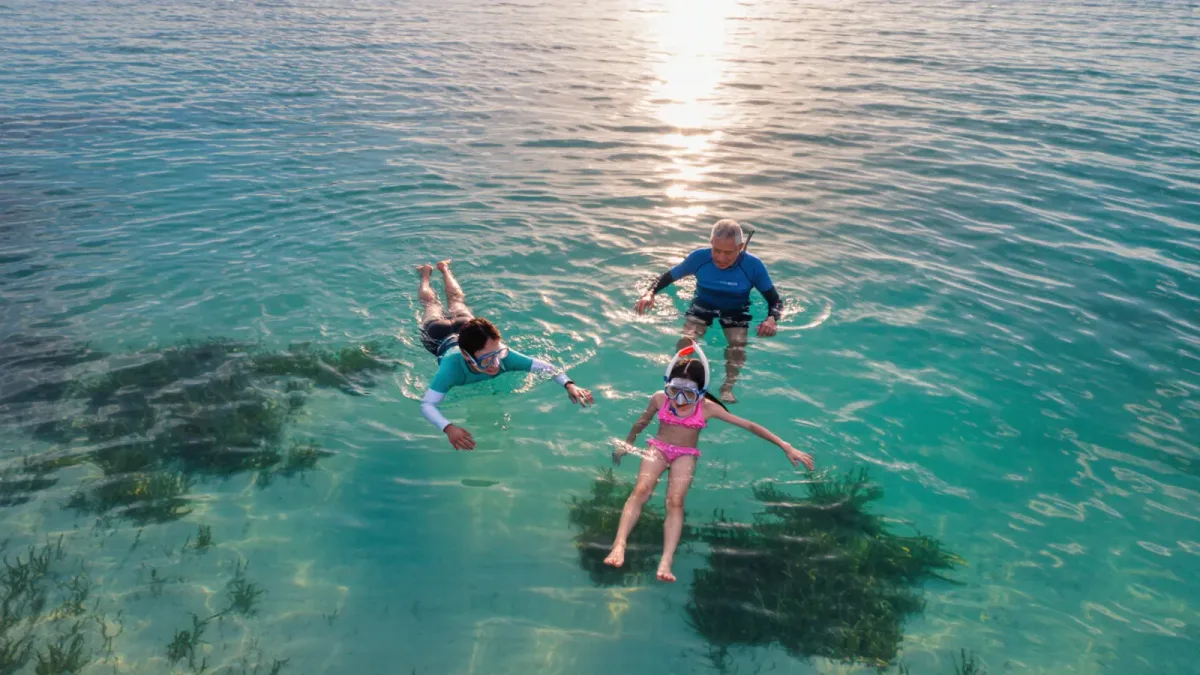
The easiest rewarding snorkeling in the Florida Keys starts at John Pennekamp Coral Reef State Park in Key Largo — America's first undersea park, designated in 1963 — where glass-bottom boats and catamaran trips reach shallow coral reef in under an hour. Down the island chain, six spots cover every skill level, and all of them sit inside or beside the Florida Keys National Marine Sanctuary, which NOAA manages across roughly 2,900 square nautical miles of protected water. This is a guide, not a survey: rankings below weigh access, crowds, and how forgiving the water is, with the managing authority named for each entry. Conditions offshore change with wind and season, so the check-before-you-go rule applies everywhere.
A practical note before the list: the sanctuary's rules are the operating system for every trip described here. In Sanctuary Preservation Areas, fishing, collecting, and touching coral are prohibited, and mooring buoys — white with a blue stripe — mark where boats tie off instead of dropping anchor. Per NOAA's sanctuary guidance, standing on or anchoring to coral is both harmful and subject to federal penalties. Casual visitors mostly need one rule: look, don't touch, and never stand on the reef to adjust a mask.
Which Keys snorkeling spot is best for beginners?
John Pennekamp Coral Reef State Park, at Mile Marker 99.9 in Key Largo, earns the top beginner slot on access alone. The park's concession runs daily snorkel tours to shallow reef areas, plus glass-bottom boat trips for swimmers who would rather stay dry, and the park's own lagoon and cannon beach allow in-water practice before committing to an offshore trip. Florida's state park system notes the park spans about 70 nautical miles of coral reefs, seagrass beds, and mangroves together with the adjacent sanctuary waters. Arrive early: tour seats and parking both thin out by mid-morning in high season, and winter cold fronts can cancel offshore trips on short notice — the park's counter posts the day's status.
Where do you find the healthiest coral close to shore?
Sombrero Reef, off Marathon at Mile Marker 47, is the classic answer. A 1930s-era lighthouse marks a reef famous for elkhorn and staghorn coral arches in water often less than 15 feet deep, and a dense line of sanctuary mooring buoys keeps tour boats orderly. Most Marathon dive shops run twice-daily trips, and the swim from the mooring field follows sand channels between coral spurs that make navigation simple for mixed-ability groups. Sombrero is a Sanctuary Preservation Area, so the no-touch, no-collect rules are strictly enforced. The reef sits roughly a mile offshore — swim-able only in very calm conditions, which is why most visitors go by boat.
What makes Looe Key worth the boat ride?
Looe Key, about six nautical miles south of Big Pine Key, is a fully formed fringing reef — a shallow reef crest, a spur-and-groove zone, and a deeper fore-reef where larger fish patrol. The area is managed by NOAA as a Sanctuary Preservation Area with an inner no-take zone, and it consistently delivers the most dramatic fish life on the Middle Keys itinerary: parrotfish, snapper, barracuda, and seasonal rays over the sand. Boats from Big Pine Key and Marathon reach it in 20–30 minutes. The reef crest is shallow enough to make first-time snorkelers nervous on choppy days, so pick a morning trip when wind is typically lightest, and check the marine forecast from the National Weather Service Key West office before booking.
Can you snorkel straight off a beach in the Keys?
Limited, but real. Bahia Honda State Park on Big Pine Key offers the Keys' best beach-based snorkeling: the water under and beside the old railroad bridge holds substantial fish life, and rental gear is available at the park concession. It is not a coral garden — seagrass and rocky bottom rather than reef — but for families mixing beach time with mask time, it works. Farther afield, Dry Tortugas National Park, roughly 70 miles west of Key West, pairs the Civil War-era Fort Jefferson with reef snorkeling right off the beach at Garden Key; access is by ferry or seaplane, and the National Park Service advises swimmers about currents around the moat wall. The reward is visibility that in-shore Keys beaches cannot match.
What about Biscayne National Park and the Upper Keys reefs?
Biscayne National Park, at the mainland edge of Miami, protects the northernmost stretch of the Florida reef tract, and about 95 percent of the park is water. Concession tours from the Dante Fascell Visitor Center reach reefs such as Elkhorn and the Maritime Heritage Trail sites on calm days; the National Park Service describes the park as one of the largest marine parks in the National Park System. It is the right pick for travelers based in Miami who want a reef day without driving the Overseas Highway. For a self-planned Upper Keys trip, the shallow patch reefs off Key Largo reached by Pennekamp and private charter boats remain the benchmark: short rides, protected water, and dense fish populations.
When is the best time of year to snorkel the Keys?
Two windows stand out. Late spring through early summer brings the calmest, clearest water and warmest sea temperatures; visibility is often at its annual best between fronts. Winter — the season this article runs in — trades some warmth for thin crowds: water temperatures in the Keys typically settle in the low-to-mid 70s Fahrenheit, which most swimmers find comfortable with a shorty wetsuit, per long-term NOAA coastal climatology. The honest caveat for any winter booking is wind: cold fronts roll through roughly weekly, and operators cancel or reroute to in-shore spots when small-craft advisories are posted. Book the first morning slot of the day, when seas are statistically calmest.
What should you bring, and what are the rules of the water?
Pack reef-safe sunscreen — applied well before entering the water — a rash guard for long sessions, and a defogged mask from home if you own one; rental fit is the most common complaint from first-timers. In the water: never touch, stand on, or collect coral or shellfish inside the sanctuary, keep fins clear of the bottom in shallow patches, and give sea turtles, nurse sharks, and queen conch generous space — several are protected species under federal law, and NOAA's sanctuary regulations spell out the prohibitions. Operators brief each trip, but responsibility is personal. The managing authorities for every spot on this list post current rules and closure notices online; conditions change, so check the official advisory before you go.
| Spot | Nearest town | Access | Managed by | Best for |
|---|---|---|---|---|
| John Pennekamp reefs | Key Largo | State park boat tours, glass-bottom option | Florida State Parks / NOAA sanctuary | Beginners, families |
| Sombrero Reef | Marathon | Dive-shop boats, mooring buoys | NOAA, Sanctuary Preservation Area | Coral scenery close to shore |
| Looe Key | Big Pine Key | Charter and dive boats | NOAA, Sanctuary Preservation Area | Fish life, confident swimmers |
| Bahia Honda State Park | Big Pine Key | Beach entry | Florida State Parks | Beach-and-snorkel days |
| Dry Tortugas | Key West (ferry/seaplane) | Beach entry at Garden Key | National Park Service | Visibility, fort-plus-reef day |
| Biscayne NP reefs | Homestead/Miami | Concession boat tours | National Park Service | Miami-based travelers |