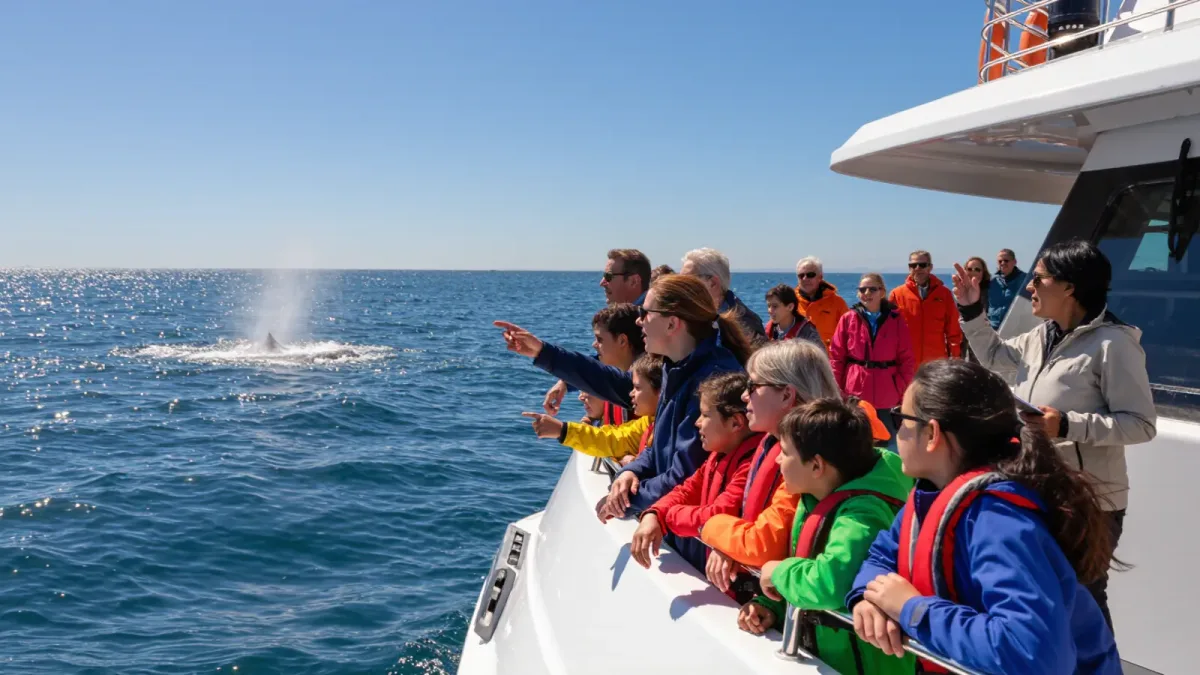
Summer is feeding season on Cape Cod: humpback whales gather on Stellwagen Bank — the shallow plateau at the mouth of Massachusetts Bay, protected as a National Marine Sanctuary by NOAA — from late spring through October, and July and August are the most reliable months for a sighting, which is why the whale watch boats running from Provincetown, Barnstable, and Boston fill their summer trips to the rail. The mechanics are consistent year to year: a high-speed vessel runs roughly an hour to the bank, a naturalist narrates while the crew follows the sanctuary's cooperative watching guidelines, and a good trip returns with spouts, flukes, and — on the summer bank's best days — lunge-feeding at the surface. This explainer covers why the whales come, how the season runs, what a trip looks like port by port, and the etiquette that keeps the fishery worth visiting; conditions at sea decide each day, so the operator's go/no-go call is the final check.
Why Stellwagen works is food: the bank's shallows force nutrient-rich water and bait fish upward, drawing sand lance and the whales that eat them — the same productivity that made the area a historic fishing ground now makes it one of the world's most reliable whale-watching grounds, and the sanctuary status gives the watching its rulebook.
When is whale watching season on Cape Cod?
The season runs from early spring through October at the edges, with the core reliability in June through September. Humpbacks — the showpiece species — arrive as the bait sets up in late spring and stay through the fall feeding season; fin whales, the second-largest animal on Earth, are present through the season; minke whales appear regularly; and white-sided dolphins join the cast in passage. Two calendar distinctions matter to planners: North Atlantic right whales use Cape Cod Bay mostly in late winter and spring, a season separate from the summer trip and governed by strict federal protections that keep commercial watching at distances — travelers who want right whales need a different month and a shore-based or specially sanctioned format. And within the summer, the morning trips have the calmest seas; July and August afternoons can build a chop that bothers passengers more than whales.
Where do the boats leave from, and does it matter?
Three ports, three trade-offs. Provincetown, at the Cape's tip, is closest to the sanctuary's richest areas — the run is shortest, and the town makes the trip's best full-day pairing with Commercial Street's afternoon. Barnstable Harbor, mid-Cape, runs the long-standing high-speed operation with easy parking and a shorter drive from Boston and Providence. Boston's boats reach the same bank from the north, running past the harbor islands — a longer trip that fits a city-based itinerary without a Cape drive. The sighting records are broadly similar across ports because all of them work the same bank; the naturalist quality and vessel comfort differ more by company than geography, and the companies post season dates and trip times on their own pages. Booking the morning slot and arriving forty minutes early covers the standard boarding rhythm.
What actually happens on a trip?
A whale watch is a naturalist's field trip crossed with a boat ride: after a run of forty-five minutes to an hour, the crew slows where spouts are reported — often by radio cooperation among boats — and drifts in viewing position while the naturalist identifies individuals, many of them known by name from a fluke catalog maintained over decades of research in the sanctuary. Humpbacks on the summer bank show the classic behaviors: fluking dives, surface lunges through bait patches, and the occasional breaching that turns a boat into applause. Trips run three to four hours total, seasick-prone passengers should eat lightly and stand mid-deck in the air, and every operator runs on the sanctuary's whale-watching guidelines — courses and distances that keep the animals in control of the encounter. Most companies post a guarantee: a free return trip if no whales are sighted, which is worth reading at booking rather than at the dock.
How should you plan around the season's edges?
Book the summer core if whales are the trip's point, and the shoulder months — May, early June, late September — if the point is the Cape in miniature: smaller crowds, migrating bait, and whales that are present but less predictable. September deserves a special word: the bank's fall feeding can be spectacular, the water is warmest for passengers who care, and the summer crowds thin after Labor Day. Whatever the month, dress for a sea ten degrees cooler than the dock — the bank is always colder than the brochure — and check the operator's status the morning of, because fog and sea state cancel trips on short notice. Conditions change — check the official advisory before you go.