Winter is when the coast's arithmetic flips: in the beach towns from the Mid-Atlantic through New England, weekly rental rates drop from summer tiers to a fraction of the peak per owner-set calendars, parking meters go dark, and the boardwalk arcade locks its doors — while the beach itself, free and enormous, stays exactly where it was. The same months run the other direction in Florida and the desert-edge resorts, where December through April is the high season, priced accordingly. Understanding off-season beach travel is mostly about knowing which of those two economies you are walking into, and what a town actually closes when the crowds leave: this explainer covers the pricing mechanics, the service changes, and the genuine advantages — because on the quiet-season coast, several things are better, not just cheaper.
A definitional note first: "off-season" here means the deep winter months, roughly December through March, distinct from the shoulder seasons of May and September covered separately on this site. Deep off-season is a different product — some towns are effectively closed, others are fully functioning small cities with empty beaches, and the difference is a matter of whether the local economy depends on tourism alone.
How do off-season prices actually work?
Vacation-rental pricing is the clearest signal: most beach markets use seasonal tiers, and the winter tier in Mid-Atlantic and Northeast towns typically sits far below the July peak — often half or less for the same house, per the rate calendars owners and managers publish. Hotels follow more gently, but their midweek winter rates run the lowest of the year. Three wrinkles matter for planning: minimum-stay rules shorten, so a one- or two-night weekend that needs a week's commitment in summer books easily in February; refundable rates become the norm rather than the exception; and taxes and fees shrink proportionally, which quietly amplifies the discount. The comparison that tells the truth: pick one property, pull its July rate and its February rate from the same calendar, and read the two numbers together — that spread is the off-season's price.
What is actually closed in the off-season?
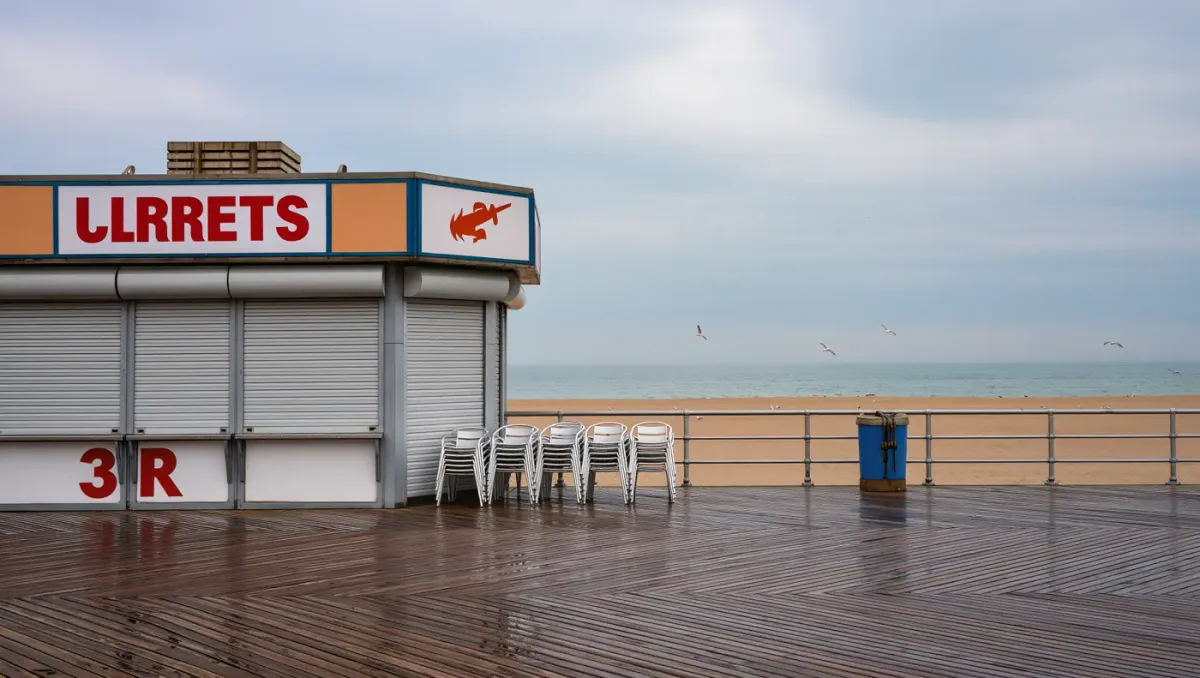
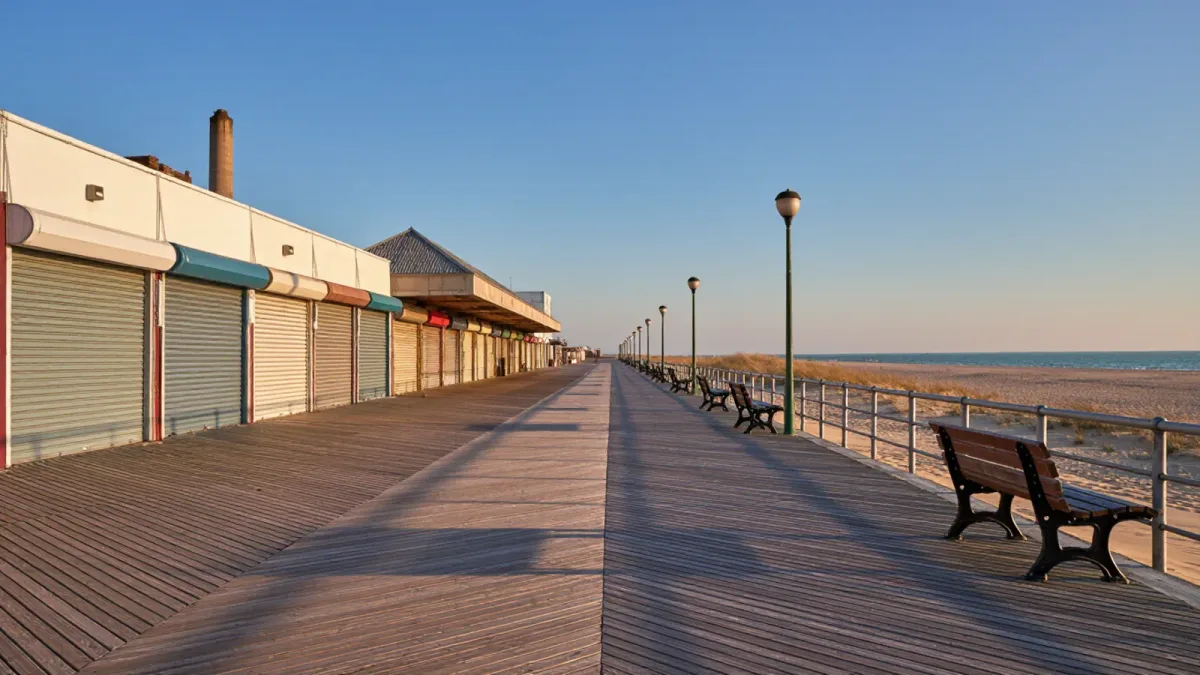
In the resort towns that live on summer alone — the Wildwoods' boardwalk economy, parts of the Jersey Shore, the Cape's tourist villages — winter means shuttered arcades and amusement piers, restaurants on weekend-only or closed schedules, and motels that board up until spring. In towns with year-round populations — Virginia Beach's oceanfront, Rehoboth, Ocean City in Maryland's case with its convention calendar — most restaurants stay open, grocery stores run normally, and the seasonal closures concentrate in ice cream stands and rental shops. Services on the beach itself change everywhere: lifeguard coverage ends for the winter at nearly all of these beaches, restrooms and bathhouses close or reduce hours, and some towns charge no winter parking fees at all. The town's own site lists the seasonal schedule; the reliable pattern is that the beach's natural assets stay open while the commercial layer thins to match demand.
What is genuinely better off-season?
Four things, and regulars plan trips around them. Beach walking and birding: empty sand changes the experience entirely, and the winter coast hosts its own wildlife season — sea ducks and loons offshore in the Northeast, shorebirds on southern beaches. Dog rules relax: many beaches that ban dogs in summer allow them on-leash or off-season-free from October through March, per each town's ordinance. Photography light: low winter sun and dramatic front-clearance skies are the coast's best light of the year. And the towns themselves: parking is free and plentiful, dinner reservations are unnecessary, and the locals — reliably friendlier when the traffic is gone — run their actual lives in view. What you trade: swim-warm water (winter ocean temperatures run in the 40s and 50s Fahrenheit in the north per NOAA climatology — wetsuit territory for surfers, out of range for casual swimming), short days, and weather risk that argues for refundable rates.
Why is Florida the opposite case?
Florida's winter is high season, and the mechanisms mirror the north's in reverse: snowbird demand and the escape market fill the coasts from December through Easter, weekly rates hit their annual peaks, and the beaches run at full amenities — lifeguards staffed, restaurants crowded, parking at a premium. The state's off-season runs May and September through November, when the weather is hot and the rates step down. The planning translation: a winter beach bargain in the US means going north or to the Southeast's shoulder, not to Florida; a Florida bargain means late fall. Check the rates rather than the folklore — the seasonal calendars published by each destination's tourism office lay out the tiers town by town. Conditions change — check the official advisory before you go.